
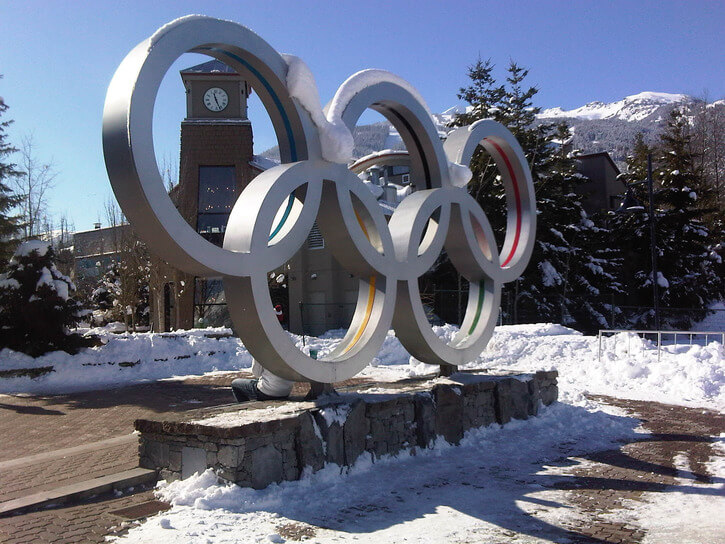
Every two years, the Olympics remind us of something that’s easy to forget in everyday life: performance at the highest level is rarely about a single result—let alone a single season.
We see athletes at the top of their game, producing incredible performances, often on the verge of impossible (especially when a medal is decided by a hundredth of a second).
But the beauty of the Games is in what we don’t see—the journey to the Games that often relies on decades of quiet, unglamorous work behind. The moments we witness are just the tip of an iceberg. What is not visible (and thereby often forgotten) are years of patient development, lots of extensive and seemingly boring training, long stretches where progress is slow or non-existent, maybe even seasons spent rebuilding after injuries. But above all else, passion for the growth process.
Longevity, in sport and in life, is never linear.
That’s true for Olympians and is just as true for the resilient athletes training quietly in the background—people chasing mastery not for headlines, but to achieve the ultimate athletic experience: one where physical and mental bodies are aligned.
The courage to step back…
I’ve been around endurance sport long enough to see countless athletes come and go. Some leave soon after achieving a big goal (think Nils van der Poel who did so after winning two Olympic golds). Others burn out under the weight of constant pressure. Many slowly drift away as life naturally pulls them in different directions.
The athletes who last are rarely the most aggressive or the most obsessed. They’re not necessarily the ones willing to suffer the most. They are the ones who can endure long periods where nothing seems to work.
Not a bad workout or a rough race, but months, or even an entire year, where effort doesn’t translate into results. You’re doing the right things. Showing up. Training intelligently. And yet fitness plateaus. Races go backward. Injuries or illnesses creep in. Motivation fades, not because you don’t love the sport, but because it seem to ‘stop loving you back’.
That’s where most people leave. Not because they’re weak, but because prolonged uncertainty is hard to endure.
The mistake many athletes make is treating a bad season as a verdict, rather than as a chapter—sort of, a dent in self-belief and confidence in their ability, age, or even potential. Longevity in the sport doesn’t come from avoiding these periods, but embracing those.
Resilient athletes don’t think that way. They understand that setbacks are part of the process and an opportunity to step back to leap forward. They don’t think in single seasons or specific race blocks. They operate on a time horizon that spans at least 5-10 years, covering not one, but two or even three Olympics.
…and plan ahead
That long view changes everything.
A disappointing result isn’t a verdict, it’s valuable experience and insight into what area needs development. For some, it will be physical capabilities (i.e., to be faster, stronger, more agile) for others, the emotional side (to handle pressure or self-regulation). When zooming out far enough, setbacks stop looking like dead ends and start looking more like detours on the way to the goal. A disappointing season doesn’t erase the years of work before it.
This perspective is just as valuable for non-elite athletes. If you want to train for decades, you must stop judging yourself by isolated outcomes and start evaluating whether you’re still moving towards the ultimate athletic experience overall, even when progress is hard to see.
Having the courage to try
Lindsey Vonn’s recent downhill crash at this year’s Olympics at Milan Cortina is a powerful reminder of what resilience actually looks like.
Downhill skiing is one of the most unforgiving sports in the world. The margin between a winning line and catastrophic injury can be measured in inches. In Lindsey’s words, it was exactly five inches that separated her from not capping that pole.
What’s most incredible is not the crash itself, or even the severity of the injury. It’s how she framed the experience afterward. She didn’t blame her training, her age, her body or even the ACL she tore just a week ago. She didn’t express regret for taking the risk. Standing at the start gate, knowing she had a chance to fight was already a victory. She understood the risk. She accepted it. She chose to try anyway.
“I tried. I dreamt. I jumped.”
That statement captures something essential about resilience that often gets “lost in translation.” Being resilient doesn’t mean being overly cautious or, on the other hand, completely blind to the risk. It means understanding the situation, taking calculated action and staying true to what’s important to you, not anyone else.
Shifting standards
As athletes age, the relationship with risk inevitably changes. Recovery takes longer. Consequences are more serious. The margin for error narrows. Wisdom grows, but it can quietly turn into overprotection if we’re not careful.
Naturally, the goal shifts from squeezing out every last ounce of performance to building a relationship with training that can last.
However, that doesn’t mean lowering standards. The most resilient athletes don’t eliminate risk. They refine it. They become more selective about where and how they push, but they don’t stop pushing altogether. They continue to place themselves in situations where outcomes are uncertain, because that’s where growth lives.
Resilient athletes redefine success from external results to internal motivation. Showing up consistently. Adapting to life’s demands. Exploring other activities, they are not proficient in. Remaining engaged even when progress slows.
The real failure isn’t finishing off the podium. It’s stepping away because the path got uncomfortable.
The athletes who endure long careers learn something subtle but powerful during their darkest stretches. Progress rarely announces itself loudly. It shows up quietly: a pain-free week, a session that feels good, a small return of confidence. They learn to notice those moments, stack them patiently, and to trust that momentum can rebuild even when it feels fragile.
This isn’t about blind optimism or forced motivation. It’s about perspective, patience, and purpose. Remembering that a single bad season doesn’t define a career, just as a single great result doesn’t guarantee anything that success will last.
What every person can take away from the Olympics
Life, like sport, involves risk. We commit to paths without guarantees. We invest effort without knowing exactly how things will turn out. Sometimes we fall short. Sometimes we fall hard. However, what defines a meaningful journey isn’t the absence of failure, but the willingness to stay engaged despite it.
That’s why Lindsey Vonn’s words resonate so deeply. Not because of the injury, but because of the clarity. The only true failure isn’t falling—it’s never stepping into the start gate at all. For the resilient athlete, longevity isn’t about clinging to past versions of yourself or chasing outcomes at any cost. It’s about continuing to evolve. Continuing to try. Continuing to place yourself in situations that require courage, even when the outcome is uncertain.
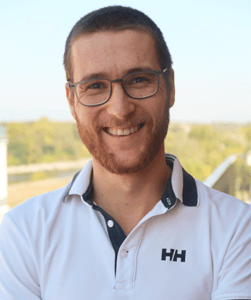
Andrejs Birjukovs is a certified coach and multisport athlete with a background in swimming, kayaking, marathon and trail running, as well as long-distance triathlons. Throughout his professional athlete and coaching careers, Andrejs has learned the value of reinventing oneself through physical exercise and lifestyle changes. He is an IRONMAN certified coach and runs The Athlete Blog where he shares his training and coaching experience with the world. He is the author of The Resilient Athlete.