
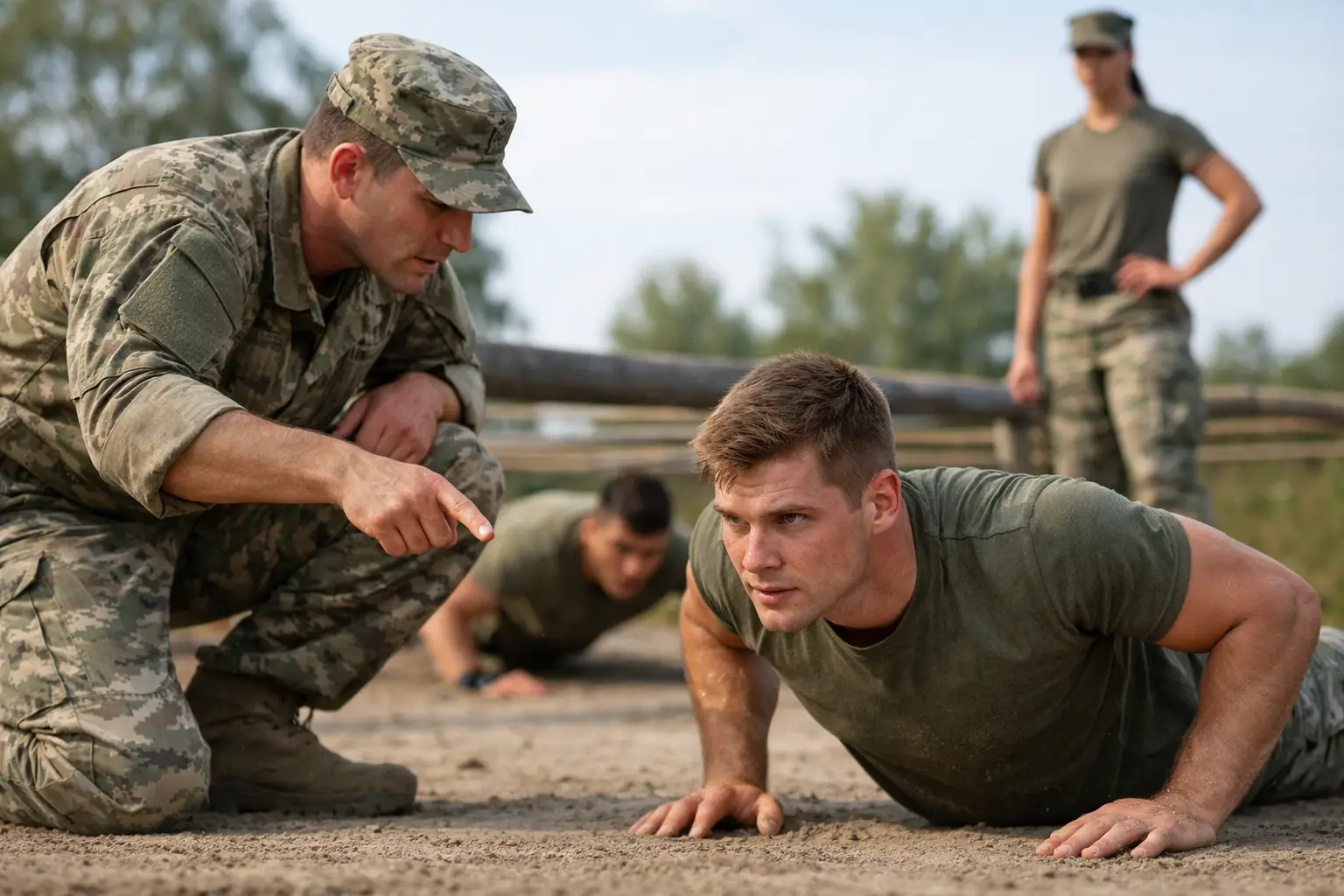
A military-style workout can look intimidating from the outside: fast runs, endless push-ups, heavy packs, and someone yelling for one more rep. But military fitness training for beginners does not need to copy the hardest part of boot camp. The useful lesson is simpler: train your whole body, build work capacity gradually, and show up often enough that movement becomes something you can rely on during a demanding week.
For a parent fitting in 30 minutes before school pickup, a shift worker training around changing hours, or anyone returning after a long break, the goal is not punishment. It is practical strength, steadier energy, and confidence in what your body can do.
Table of Contents
- What military fitness actually trains
- How to start military fitness training for beginners
- A simple four-week plan
- Recovery, food, and injury prevention
- Frequently asked questions
What Military Fitness Actually Trains
The best military fitness programs develop several physical qualities at once. You need strength to lift, carry, push, pull, and get up from the ground. You need cardiovascular endurance for sustained effort. You also need mobility, coordination, and mental composure when you are tired.
That combination is why this style of training can be appealing. Instead of chasing one body part or one number on the scale, you are practicing useful movement patterns. Squats, lunges, push-ups, rows, carries, planks, and walking or running all have a place.
Still, there is a meaningful trade-off. High-intensity military workouts can improve conditioning, but doing them too often can leave beginners sore, discouraged, or injured. Fitness grows during recovery, not only during effort. A smart plan starts below your maximum and increases only when your body is adapting well.
How to Start Military Fitness Training for Beginners
Think of your first month as preparation, not a test. You are learning pacing, form, and consistency before adding more distance, load, or speed.
1. Set a baseline without turning it into a verdict
Choose a day when you feel reasonably rested. Time a comfortable one-mile walk or jog, then note how many controlled bodyweight squats, incline push-ups, and plank seconds you can complete with good form. Stop before your technique falls apart.
These numbers are not a grade. They simply help you notice progress that a mirror or scale may miss. If you can walk farther with less effort or perform two more clean push-ups in a month, your training is working.
2. Build around four core movements
A beginner military-inspired routine should include a squat or lunge, a push, a pull, and a carry or core exercise. This creates balance and helps avoid the common mistake of doing lots of push-ups while neglecting the back, hips, and legs.
Use the version that fits your current ability. Box squats are a valid starting point. Push-ups against a countertop can be more useful than floor push-ups done with a sagging back. For pulling, try resistance-band rows, dumbbell rows, or a cable row if you have gym access. Carries can be done with grocery bags, dumbbells, or a backpack loaded lightly and held close to your body.
3. Add cardio at a conversational pace
Military fitness often brings running to mind, but running is not required on day one. Brisk walking, cycling, rowing, swimming, and incline treadmill walking all build aerobic fitness with different levels of joint impact.
Aim for a pace where you can speak in short sentences. This easier effort may feel less dramatic than an all-out circuit, yet it builds the aerobic base that makes future intervals, hills, and longer workouts feel more manageable.
4. Keep hard days truly limited
One challenging conditioning session per week is enough for many beginners. That could be short walk-jog intervals, hill repeats, or a timed circuit with generous rest. The other sessions should feel controlled enough that you could repeat them tomorrow if needed.
A useful rule: finish most workouts feeling like you had two or three more good reps in you. This is not settling. It is how you create enough room to train again next week.
5. Practice the mindset, not the punishment
Military-style training is often associated with toughness. Real toughness includes knowing when to modify a workout, rest after a rough night of sleep, and return after you miss a session. It is not ignoring sharp pain, dizziness, chest discomfort, or exhaustion that is affecting daily life.
If you have a heart condition, uncontrolled blood pressure, a recent injury, are pregnant or postpartum, or have been inactive for a long time, check with a qualified health professional before starting a new high-intensity routine.
A Simple Four-Week Beginner Plan
Train three days per week on nonconsecutive days when possible. Each strength session should take about 25 to 40 minutes. On other days, an easy walk and a few minutes of mobility can support recovery without turning your schedule into a full-time project.
Days 1 and 3: Full-body strength
After a five-minute warm-up of easy walking, arm circles, hip hinges, and bodyweight squats, complete two rounds of the following:
- 8 to 12 squats to a chair or bodyweight squats
- 6 to 10 incline push-ups
- 8 to 12 resistance-band or dumbbell rows per side
- 8 reverse lunges per side, holding a chair if needed
- 20 to 30 seconds of a plank, elevated plank, or dead bug
- 30 to 60 seconds of a light carry or brisk march in place
Rest as needed between exercises. During weeks three and four, add a third round only if you are recovering well and your form remains solid.
Day 2: Conditioning
Start with five minutes of easy walking. Then alternate one minute of brisk walking or easy jogging with two minutes of easy walking for 18 to 24 minutes. Finish with a relaxed cooldown.
If jogging bothers your joints, keep the brisk intervals as walking, use a bike, or choose an incline treadmill. The best conditioning option is the one you can repeat consistently without dreading it.
By week four, you may shorten the easy intervals slightly, add a few minutes, or increase your walking incline. Change only one variable at a time. More is not automatically better when your body is still learning the workload.
Recovery, Food, and Injury Prevention
Your workout is only one part of the program. Sleep, meals, hydration, and stress all affect how training feels. If you are running on four hours of sleep after a difficult work shift, an easy walk may be the wiser choice than a hard interval session.
Support training with regular meals that include protein, carbohydrates, colorful produce, and enough fluids. You do not need a perfect meal plan or expensive supplements to begin. A yogurt and fruit snack, eggs with toast, beans and rice, or chicken with potatoes can all help replenish energy after activity.
Pay attention to the difference between normal training discomfort and warning signs. Mild muscle soreness that improves over a day or two is common. Sharp, worsening, or one-sided pain is a reason to stop and reassess. Good shoes, gradual progress, and a brief warm-up do more for injury prevention than forcing yourself through pain.
Frequently Asked Questions
Do I need to run for military-style fitness?
No. Running is one option for endurance, not a requirement. Walking hills, cycling, rowing, swimming, or using an elliptical can build the same cardiovascular foundation while better fitting your joints, preferences, and access to equipment.
Can I do military fitness training at home?
Yes. Bodyweight exercises, a resistance band, a sturdy chair, and a backpack can cover most beginner needs. A gym may offer more options, but progress comes from a repeatable routine, not a specific setting.
How many push-ups should a beginner do?
Start with the number you can perform with control, even if that is three incline push-ups. Add reps slowly or lower the incline over time. Clean repetitions build more strength than rushing through a larger number with poor form.
Is this type of training good for weight loss?
It can support body-composition goals because it combines strength and cardio, but it is not a quick-fix weight-loss plan. Your results will also depend on sleep, stress, food habits, medications, and many other factors. Track improvements in energy, strength, and daily function alongside any scale changes.
What if I miss a week?
Resume with a slightly easier version of your last workout rather than trying to make up every missed session. Consistency is built by returning, not by being perfect.
A Steadier Way Forward
The most valuable part of military-inspired training is not proving how hard you can go. It is learning that you can carry yourself through a busy life with more strength, endurance, and self-trust. Start where you are, keep the next session realistic, and let the small repetitions become evidence that you are getting stronger.