
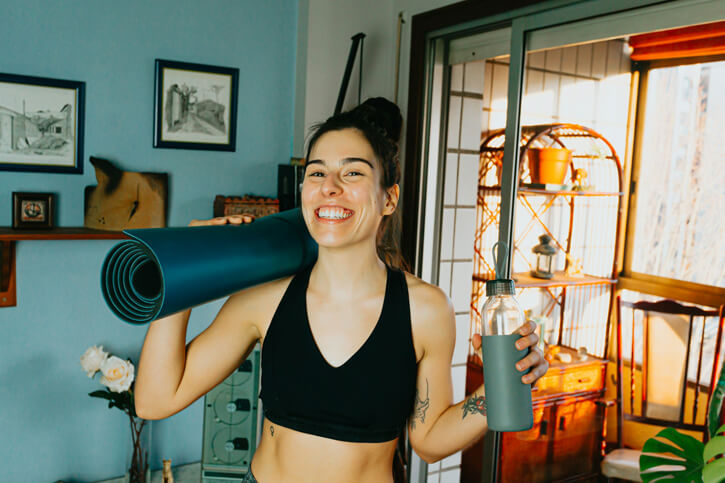
I’m 63 and I’ve been an athlete my whole life. Running, skiing, cycling, Pilates—if it involved movement, I was all in. But somewhere in my mid-50s, my body started sending me different messages. The endless cardio that used to work didn’t, and suddenly my metabolism laughed at it. Push too hard? I’d get injured and couldn’t work out at all.
So, I did something that felt counterintuitive: I slowed down. I added strength training. I stopped trying to prove I could still do what I did at 40.
And you know what? I feel fitter now than I have in years. Not because I’m working harder, but because I finally started listening to what my body actually needed instead of what I thought I should be doing.
That distinction—what you should do versus what you actually need—is everything. And it’s exactly why most fitness routines fail.
When Good Intentions Meet Harsh Reality
Here’s the thing about New Year’s fitness resolutions: they’re almost always should-goals dressed up as ambition.
“I should lose 15 pounds by March.”
“I should work out five days a week.”
“I should finally get that beach body.”
Should-goals sound like commitment. They feel like discipline. But after years of coaching ambitious professionals (and falling into this trap myself), I’ve learned that should-goals are shame dressed up as motivation. And shame is a terrible personal trainer.
A client once told me about her resolution to “join a gym and work out five days a week.” By January 15th, she’d been twice. She felt like a failure, which triggered a shame spiral that made her avoid the gym entirely. By February, she’d canceled her membership.
Even our best-intentioned resolutions are fraught with both joy and dread: The JOY of a fresh start and the DREAD of sustaining the good habits we’ve earnestly set for ourselves.
What was missing wasn’t discipline. It was compassion. And the understanding that sustainable change doesn’t come from forcing yourself into someone else’s idea of fitness—it comes from discovering what actually works for YOUR body, YOUR life, YOUR season.
The Tyranny of Should-Goals
Should-goals are shame dressed up as ambition because they sound like this:
- “I should lose weight.”
- “I should work out more.”
- “I should finally get serious about my health.”
Notice the energy? It’s constricting. Punishing. Rooted in the belief that who you are right now isn’t good enough.
Should-goals come from external expectations—what the fitness magazines say, what your doctor told you, what everyone else seems to be doing. They’re built on guilt and comparison, which makes them nearly impossible to sustain.
And here’s the kicker: even when you achieve a should-goal, it doesn’t feel like victory. It feels like relief that you finally met the standard you were “supposed” to meet all along.
What If You Tried Gift-Goals Instead?
Gift-goals are different. They come from curiosity, self-care, and genuine desire. They’re expansive rather than constricting. They honor where you are NOW instead of punishing you for where you’re not.
Gift-goals sound like:
- “I’m curious what would happen if I added strength training twice a week”
- “I want to see if I feel better when I move my body regularly”
- “I’d love to build enough stamina to hike with my grandkids without getting winded”
Notice the difference? Gift-goals invite you forward. They’re rooted in self-compassion and genuine interest in what’s possible.
When I shifted from “I should keep up my cardio intensity” to “I’m curious what strength training could do for my aging body,” everything changed. I wasn’t forcing myself anymore. I was experimenting. Learning. Honoring the body I have NOW, not the one I had twenty years ago.
The Name, Claim and Reframe® Approach to Gift-Goals
This is where cognitive reframing becomes essential. In my book Name, Claim & Reframe (we just released an Audible version—perfect for listening during your workout!), I walk through a systematic process for transforming should-goals into gift-goals.
Here’s how it works:
- NAME the should-goal and the shame driving it
- CLAIM what you actually want (the gift)
- REFRAME toward curiosity and self-compassion
Transforming Common Fitness Should-Goals
SHOULD-GOAL: “I should lose 15 pounds”
- NAME the shame: “I’m not acceptable at this weight. I need to fix myself.”
- CLAIM what you really want: “I want to feel energized. I want my clothes to fit comfortably. I want to feel strong in my body.”
- REFRAMED as a gift-goal: “I’m curious how I’ll feel if I focus on building strength and eating foods that make me feel good. I’m experimenting with what serves my body best.”
SHOULD-GOAL: “I should work out five days a week”
- NAME the shame: “I’m lazy if I don’t. Everyone else manages it. What’s wrong with me?”
- CLAIM what you really want: “I want movement to feel sustainable. I want to avoid injury. I want to actually enjoy exercise again.”
- REFRAMED as a gift-goal: “I’m starting with three days a week of movement I genuinely enjoy. I’m building a practice I can sustain for years, not just January.”
SHOULD-GOAL: “I should finally get serious about my health”
- NAME the shame: “I’ve been irresponsible. I need to punish myself into better behavior.”
- CLAIM what you really want: “I want to feel good in my body. I want energy to do the things I love. I want to age with vitality.”
- REFRAMED as a gift-goal: “I’m choosing one small change this month that honors my body—treating myself with the care I’d give someone I love.”
What Changes When You Shift to Gift-Goals
When I stopped trying to maintain the fitness routine of my 40s and started asking, “What does my 60-something body actually need?” things shifted not only in my body but in my mindset. I discovered that adding strength training to my weekly routine did more for my metabolism than five days of cardio ever did. Plus, I swapped my intense cardio sessions for early morning walks with our Labrador, Maggie. Turns out, being outside in the fresh air, moving at a gentler pace, and starting my day grounded did more for my overall well-being than pushing through another brutal interval workout ever could.
But here’s what surprised me most: when I started doing strength classes 2-3 times a week, I also joined a like-minded community of women of all ages, all of us working to be fit and healthy from the inside out. That mind-body connection—showing up with people who shared the same gift-goal approach, who celebrated progress over perfection—made all the difference. Fitness stopped being something I did alone in punishment mode and became something I did in community with intention and joy.
I learned that rest days weren’t lazy—they were essential for avoiding the injuries that would sideline me completely. More importantly, I found that honoring my body’s needs made me more consistent than forcing myself into someone else’s program ever could.
Gift-goals don’t make you soft. They make you strategic. They give you permission to experiment, to learn, to adjust based on what’s actually working rather than what you think should work.
Shifting Your Perspective
Look at your current fitness goals. Ask yourself: Is this a should-goal or a gift-goal?
Should-goals feel constricting, punishing, and rooted in shame.
Gift-goals feel expansive, curious, and rooted in self-care.
Try this reframe: Take one should-goal and run it through the process:
- NAME the shame driving it: What are you trying to fix about yourself?
- CLAIM what you actually want: What would feel like a gift to your body?
- REFRAME toward curiosity: How can you experiment rather than force?
The Permission You’re Waiting For
You don’t need to punish yourself into fitness. You don’t need to force your body into someone else’s program. You don’t need to achieve should-goals to prove you’re worthy of care.
What if the most strategic thing you could do for your fitness isn’t working harder—but listening more carefully to what your body actually needs?
That’s not a weakness. That’s wisdom.
And it’s the difference between another failed resolution and a sustainable practice you’ll still be doing years from now.

Andrea Mein DeWitt, M.Ed., PCC, CPCC, is the Global Authority on Cognitive Reframing and author of Name, Claim & Reframe: Your Path to a Well-Lived Life, recognized by NBC’s TODAY Show as 2023’s best motivational read (now available as an audiobook), and the companion Name, Claim & Reframe Workbook, that provides practical exercises for applying these principles. Through her coaching, workshops, and writing, she helps ambitious professionals transform their perspectives to unlock their full power and potential. Learn more at andreadewittadvisors.com.