
There comes a point in every athlete’s life when the question shifts. It’s no longer “How much can I squeeze out of myself?” but rather “How do I keep doing this well for as long as possible?”
That moment usually arrives sometime after 40 (for some as early as 30). Not because the love for sport fades – if anything, it deepens – but because life gets fuller. Careers peak, parents age, families need attention, strength wanes and recovery slows down. The body is not betraying us. It’s simply asking for a more thoughtful approach.
This is the domain of the so-called masters athletes: people training for wellness and longevity, many of whom still care about performance – but not at any cost. The goal is no longer to abuse the body, but to build a system that is sustainable, resilient, and adaptable.
The good news? With smart training, we can continue performing at a remarkably high level for decades. But the rules do change.
Focus on Foundational Habits, Not the ‘Hacks’
One of the most overlooked aspects of training after 40 is context. Training stress doesn’t exist in isolation – it stacks on top of work stress, family obligations and emotional load.
In our teens or twenties, we could often “sleep off” a hard workout or ignore a minor niggle. Now, those same stressors linger. That doesn’t mean the body is weaker – it means the total stress budget is fuller.
For masters athletes, progress depends less on how hard we can train and more on how well we manage the variables that support recovery. Which is why if we want sustainable performance, we must control the variables (habits) that matter most.
Sleep
Sleep is not just rest. It’s a biological process that restores our body and re-energizes our mind. It’s not a luxury, but our most powerful recovery tool. Often sleep is the only time of the day when the body has the opportunity to calm the nervous system down and provide space for positive adaptations.
Seven to eight hours per night should be the target, not the exception. Even an extra 30 minutes a few nights per week can meaningfully improve recovery, hormonal balance, and injury resistance. Sleep is where adaptation actually happens; without it, even the best training plan will fall short.
Nutrition & Hydration
Fueling adequately becomes more important – not less – with age. Nutrient-dense foods support recovery, immune function, and muscle maintenance. Protein intake spread across the day matters more than perfect timing, as it helps to stabilize cortisol levels and manage blood sugar. Periodic blood work can help catch deficiencies (like iron or vitamin D) before they turn into problems.
Fuel is non-negotiable. We can’t under-eat and expect to recover well and feel good. A consultation with a registered dietitian is a very good investment. But so is eating more fiber and less processed foods.
Meditation & Breathwork
Recovery isn’t only physical. Simple breathwork or short meditation practices help regulate the nervous system, lower baseline stress, and improve heart rate variability (HRV) – one of the most powerful biomarkers for overall health.
Even a few minutes of deep focused breathing (focusing the mind on diaphragmatic inhale and strong exhale) every day can shift the body out of a chronic “fight-or-flight” state and into a more relaxed one that allows adaptation to occur. Over time, this spreads into all areas of life and improves sleep quality, emotional regulation, and even our ability to absorb training.
Daily Mobility
Daily mobility isn’t about stretching randomly – it’s about regularly moving joints through their full ranges of motion. This helps prevent stiffness, preserves tissue quality, and keeps stabilizing muscles engaged and strong. When mobility is neglected, the body compensates elsewhere, increasing injury risk.
A few minutes each day can maintain the freedom of movement that allows you to train well and pain-free. My personal favorite is to start with 5-10 minutes of sun salutation yoga flow.
Train Smarter, Not Harder
Here’s the good news: endurance declines very little with age, which is why there are so many world-record performances in distance events around the age of 40. What fades faster is power. That means a small, well-placed dose of intensity goes a long way.
Organize Your Training Intensity
The foundation for any sport event should be low-intensity, aerobic volume. Even if the event itself if very short, a strong aerobic base will allow the athlete to recover faster and absorb more training load. Easy training allows you to accumulate more work with less stress on joints, tendons, and the nervous system, which for masters athletes comes in very handy. Moderate and hard sessions still matter—but they should be strategic, intentional and well-executed.
Rather than stacking intensity, aim to separate harder sessions with very light days. This improves recovery, preserves motivation, and allows the body to absorb the stimulus from a key workout. When in doubt, lean towards slightly less intensity and slightly more consistency.
Protect the Key Workouts
As recovery capacity decreases slightly, spacing out intense sessions becomes more important. So is fueling well for (and after) them. That doesn’t mean doing less – it means being more deliberate.
Cross-training is a great strategy here. Cycling, elliptical, or even hiking can maintain aerobic capacity while reducing the impact load. Sometimes sacrificing an aerobic run to preserve a quality speed or threshold session is the smarter move. Consistency beats ego.
Strength Training is No Longer Optional
If endurance training is the engine, strength training is the chassis that keeps everything together.
One of the most significant age-related changes is the gradual loss of tendon stiffness and muscle mass. A healthy tendon is stiff – it stores and releases energy efficiently. This doesn’t mean tight ankles; mobility still matters. But it does require developing strength under load. For example, doing negative single-leg calf raises (straight and bent knee), isometric holds (20–30 seconds) or heavy but controlled lifting with good form.
For runners, short hill strides or gentle plyometrics (i.e. low double and single-leg hops) once every 7-10 days reinforce good mechanics, build power, improve tendon health, bone density, and neuromuscular coordination. They’re effective, and are lower-risk than flat sprinting.
Maintain the Right Perspective
There was a time when training came above all. But for most masters athletes, that’s no longer true – and that’s okay. The physical changes of aging are real – but mindset determines how well we navigate them. Progress doesn’t disappear because the body ages, it is lost when we refuse to adapt.
Pursue Joy
Training should always bring joy. The structure, the routine, the present moment – chasing that is part of who we are as athletes. Yes, some sessions are tougher and that doesn’t disappear with age; we simply evolve. The lessons sport teaches us become deeper and more transferable to life.
Train Where You Are
We will get incrementally slower over time. Maybe not right away at 40, but at some time. That’s not failure – it’s biology. The mistake is looking at training from the perspective of who we used to be instead of who we are today. Let’s meet ourselves where we are and work on what we actually need – that’s where progress actually happens.
Keep Challenging Yourself
Longevity doesn’t mean complacency. Many masters athletes are more motivated than ever. The challenge might not be to beat the previous personal best, but rather to become the best version of yourself. And see how good we can be now.
Know Your Tribe
Sustainable training is a team effort. Family & friend support, engaging in a community (physical or virtual), honest communication, and shared priorities. Strong and resilient athletes are rarely solo projects.
The Takeaway
Masters athletes don’t need less ambition – they need better frameworks.
When training supports our life instead of competing with it, performance follows naturally. With thoughtful planning, purposeful training, adequate recovery, and a mindset rooted in joy and realism, we can remain strong, capable, and fulfilled for decades.
The goal isn’t to train to stay forever young. It’s to keep training to stay resilient and feel young.
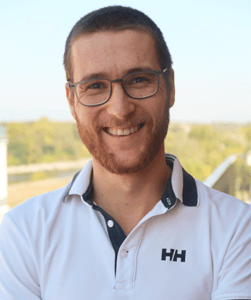
Andrejs Birjukovs is a certified coach and multisport athlete with a background in swimming, kayaking, marathon and trail running, as well as long-distance triathlons. Throughout his professional athlete and coaching careers, Andrejs has learned the value of reinventing oneself through physical exercise and lifestyle changes. He is an IRONMAN certified coach and runs The Athlete Blog where he shares his training and coaching experience with the world. He is the author of The Resilient Athlete.