

Given up your New Year resolution yet?
A majority of people have given up on the habits from their New Year resolution by February.
Whether it is around 50% as some studies indicate or as high as 80% does not really matter. What matters is that we can change it. Let’s start by looking at what a habit is.
Habits are a foundation in creating lasting change, and research from Duke University suggests that habits account for about 40% of our behaviors on any given day. So if we want to improve our well-being, habits is a great place to start.
A habit can be defined as:
[a settled or regular tendency or practice, especially one that is hard to give up], or simply put - a usual way of behaving, something that a person does often, in a regular way.
Habits are something that we learn, not something that we do by nature. Breathing is not a habit, while brushing our teeth is a habit.
Why most people fail creating new habits
A lack of discipline and willpower is not the main reason why we often give up on new habits, or have a hard time giving up on old habits. It is rather about not having a strong foundation, and making it too hard for ourselves. Common pitfalls include e.g.:
- Not having a clear intention
- Everyone else is meditating, I‘‘ll start too.
- Trying to change multiple habits at once
- I will quit smoking, start reading more books, and start biking to work.
- Choosing too big habit changes
- I will go to the gym 5 times per week.
- Being too focused on the result
- I will drop 20 pounds of weight.
- Being too vague
- I will stop spending so much money on clothes.
- Not changing the surrounding environment
- I will stop drinking but still go out with my friends every Friday and Saturday.
How to create lasting habits for your well-being
Think about the habit of brushing your teeth. At first when you are a child, someone reminds you and helps you do it. Over time, you take over—until it’s automatic. That’s how habits are built.
There are plenty of tricks to succeed in building habits. Here are some:
- Set an intention: Know why it matters to you.
- Define it clearly: Make it specific (what/when/where).
- Start tiny: So easy you can’t fail.
- Build accountability: Tell someone or do it with a buddy.
- Stack it: Attach it to an existing routine (“after X, I do Y”).
- Be patient: Results often come later.
- Reflect and adjust: Tweak the habit to keep it realistic.
- Stay consistent: Every repetition makes it easier.
- Make it easy: Prep, remove friction, use cues (like a sticky note).
- Use tech wisely: Reminders and alarms can support you.
- Shape your environment: Design surroundings that support the habit.
- Be flexible: Missed once? Restart the same day.
- Make it fun: Choose a version you actually enjoy.
- Reward progress: Celebrate small wins to keep momentum.
Which well-being habits do you want to form?
- Think of something in your life that you want to change and write it down, it can be on a high level
- Write down why you want to change it, the impact of the change on yourself, and who else will benefit as a result and how?
- Write down the smallest possible change you can imagine that takes you in the direction of the change you want to create
- Look at the building blocks above and create your habit plan
- Create accountability by telling someone about it, and set yourself up for success by making it easy, fun and memorable.
I’m sharing regularly on the topic of how technology is impacting our lives and how to find a better balance. Check out this earlier post for a great place to start your journey towards tech-life balance as well as my book Tech-Life Balance: 101 Ways to Thrive in a Digital World.
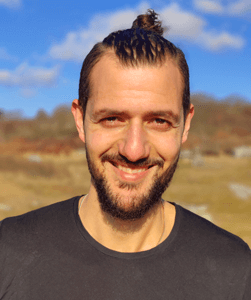
Taíno Bendz is the founder of Phone Free Day and his own consulting business, and his message on mindful and intentional technology usage has reached and inspired hundreds of thousands of people around the world. He is a public speaker, workshop facilitator, and conducts research on digital technology usage. Taíno holds a Master’s Degree in Industrial Engineering and Management and has spent the last 10 years working in technology sectors such as renewable energy, healthcare IT, and software automation. He currently lives in Sweden with his family. He is the author of Tech-Life Balance.