
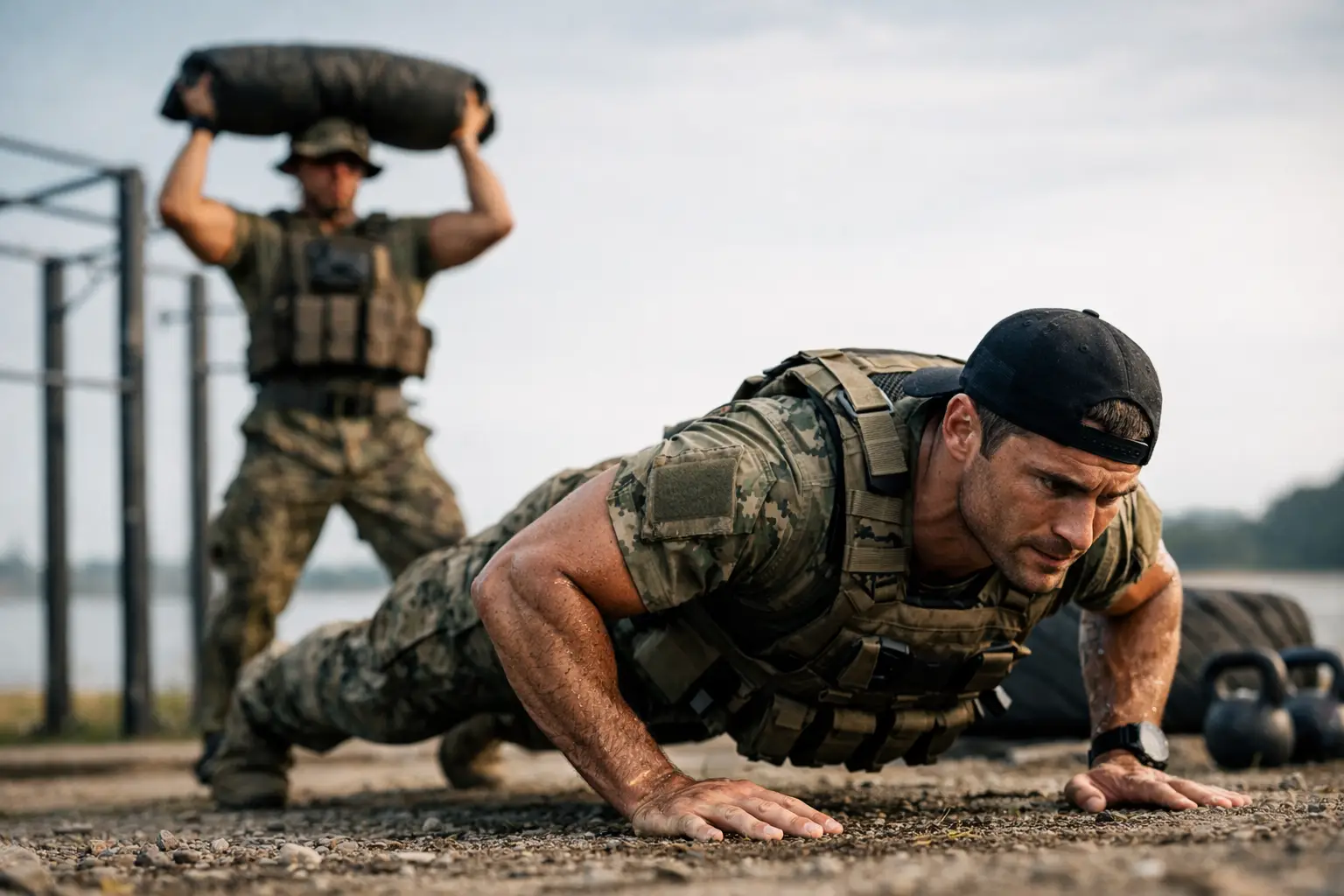
A Navy SEAL workout example can be motivating because it emphasizes qualities many of us want: stamina, functional strength, composure under pressure, and the ability to keep going when a day gets hard. But it should not become a test of your worth or a reason to ignore pain, sleep, family demands, or a body that needs a slower starting point. The useful lesson is not to train like you are preparing for selection. It is to train with purpose.
Table of Contents
- What makes a Navy SEAL-style workout different
- Who should use this workout and how to scale it
- A Navy SEAL workout example for general fitness
- How to schedule it without burning out
- Recovery, safety, and progress
- Frequently asked questions
What Makes a Navy SEAL-Style Workout Different
Military fitness training is built around readiness. That often means running, swimming, calisthenics, loaded movement, and the ability to perform while tired. A useful civilian version takes the spirit of that approach without copying the extreme volume, sleep deprivation, environmental stress, or injury risk that can accompany military preparation.
The focus is simple: move your body in more than one way, build a strong aerobic base, and practice basic exercises often enough that they feel reliable. Push-ups, squats, lunges, planks, running, swimming, and carries all have a place because they train skills that transfer beyond the gym. Carrying groceries, climbing stairs, playing with your kids, and getting through a long shift all ask for some combination of strength and endurance.
The trade-off is that high-repetition bodyweight work can irritate wrists, shoulders, knees, or lower backs when technique breaks down. More work is not always better work. The goal is to finish a session feeling challenged and capable, not flattened for the rest of the week.
Who Should Use This Workout and How to Scale It
This plan suits adults who already have basic exercise clearance and can walk briskly for 20 to 30 minutes without concerning symptoms. If you are returning after a long break, recovering from an injury, pregnant or postpartum, managing a chronic condition, or dealing with chest pain, dizziness, or unusual shortness of breath, get personalized guidance before starting a demanding routine.
Beginners can use incline push-ups with hands on a counter or bench, bodyweight squats to a chair, and fast walking instead of running. Experienced exercisers can increase distance, add a weighted backpack for carries, or use more challenging push-up variations. The best version is the one you can repeat next week with solid form.
A quick effort check helps. Most of the workout should land around a 6 or 7 out of 10 effort: you are working, breathing harder, and still able to say a short sentence. Save all-out efforts for occasional tests, not every training day.
Navy SEAL Workout Example: A Scalable Full-Body Session
Plan for about 45 to 60 minutes. Do it two days per week at first, with at least one rest or low-intensity day between sessions. If you also run, cycle, or play a sport, keep that total workload in mind. A hard workout can be productive; stacking hard days when life is already stressful usually is not.
1. Warm Up for 8 to 10 Minutes
Start with five minutes of easy walking, cycling, jogging, or rowing. Then complete 8 to 10 repetitions each of arm circles, hip hinges, bodyweight squats, reverse lunges, and shoulder blade squeezes. Finish with a few gentle push-ups against a wall or bench.
This is not filler. A warm-up gives your joints time to move, helps you notice stiffness, and lets you adjust before intensity rises. If something feels sharp, unstable, or distinctly wrong, change the exercise or stop.
2. Build Strength-Endurance With a Simple Circuit
Complete the following circuit for three rounds. Rest 60 to 90 seconds between rounds, or longer if your form needs it. Move at a steady pace rather than racing the clock.
- Push-ups: 8 to 15 reps. Use an incline or drop to your knees if needed. Keep your body in a straight line and stop before your hips sag.
- Bodyweight squats: 15 to 20 reps. Sit your hips back, keep your feet rooted, and use a chair target if depth or balance is challenging.
- Reverse lunges: 8 to 12 reps per side. Hold onto a wall or chair for balance if necessary.
- Plank: 20 to 45 seconds. A high plank or elevated plank is a smart modification, not a lesser choice.
- Backpack or dumbbell carry: 30 to 60 seconds. Walk tall, keep ribs stacked over hips, and choose a load that does not pull you sideways.
This circuit asks your upper body, legs, trunk, and grip to work together. It also builds a skill that matters in real life: maintaining control as fatigue builds. If you can do the top end of every range with clean form for two weeks, add one or two reps per exercise or a fourth round, not both at once.
3. Add Aerobic Conditioning
Choose one option based on access, preference, and your current fitness.
For running or walking, complete six rounds of one minute moderately hard followed by two minutes easy. A moderately hard interval should feel purposeful, not like a sprint. New runners can do the hard portions as brisk uphill walks.
For swimming, complete six to 10 lengths at an easy-to-moderate pace, resting as needed between lengths. Swimming can be an excellent low-impact conditioning option, but only if you are comfortable in the water and have appropriate supervision. Never treat fatigue in the pool casually.
For a no-equipment indoor option, alternate one minute of marching quickly, step-ups, or low-impact shadowboxing with one minute of easy walking for 12 to 18 minutes. This is a practical choice for busy parents, shift workers, or anyone training in a small space.
4. Cool Down and Check In
Walk slowly for three to five minutes, then take a few calm breaths. You do not need a long stretching routine, but gentle calf, hip-flexor, chest, and upper-back stretches can feel good if those areas are tight.
Before moving on with your day, ask one useful question: how did this session affect me? If you feel energized and your soreness is manageable, your dose was probably appropriate. If you are exhausted for days, losing sleep, or dreading every session, reduce rounds, repetitions, or interval intensity.
How to Schedule It Without Burning Out
Consistency has more value than occasional heroic effort. A realistic week might include two Navy SEAL-style full-body sessions, two easy cardio days, and at least one full rest day. Easy cardio can be a walk at lunch, a relaxed bike ride, or a swim that leaves you feeling better than when you started.
For example, try strength-endurance training on Tuesday and Saturday, an easy walk or jog on Thursday, and mobility work whenever you have 10 minutes. If your work week explodes or your child is sick, one shorter circuit still counts. Fitness is built through return trips, not perfect calendars.
Sleep, food, and hydration are part of the program. Aim for regular meals with protein, fiber-rich carbohydrates, colorful produce, and enough fluids to support your activity. You do not need a punishment meal plan to earn a tough workout. Underfueling can make recovery, mood, and performance worse.
Recovery, Safety, and Progress
Track a few practical markers: the number of quality push-ups you can do, how quickly you recover after intervals, whether stairs feel easier, and how your energy holds up after training. The scale may change, or it may not. It is only one data point.
Every four to six weeks, consider a lighter week. Cut your circuit rounds in half, keep cardio easy, and focus on technique. This is especially valuable during high-stress seasons at work or home. Recovery is not stepping away from progress. It is what allows progress to continue.
Frequently Asked Questions
Do Navy SEAL workouts require hundreds of push-ups?
No. High-volume push-up training is specific to certain performance goals and can be too much for many shoulders and wrists. Build from a volume you can complete with controlled form, then progress gradually.
Can I do this workout without running or swimming?
Yes. Brisk walking, cycling, rowing, stair climbing, and low-impact intervals can develop aerobic fitness. Choose the activity you can perform safely and consistently.
How many days a week should I train this way?
Two full-body sessions per week is enough for many people to build strength and conditioning, especially when paired with easy movement on other days. More can work for experienced exercisers, but only if sleep, soreness, and daily energy remain steady.
Is this a preparation plan for Navy SEAL training?
No. This is a general-fitness workout inspired by the foundational movements common in military-style conditioning. Actual military preparation has specific standards, coaching needs, and a much higher physical and mental demand.
Build this practice around the life you actually have. A strong workout is one that helps you show up with more energy, confidence, and resilience for the people and responsibilities that matter to you.