
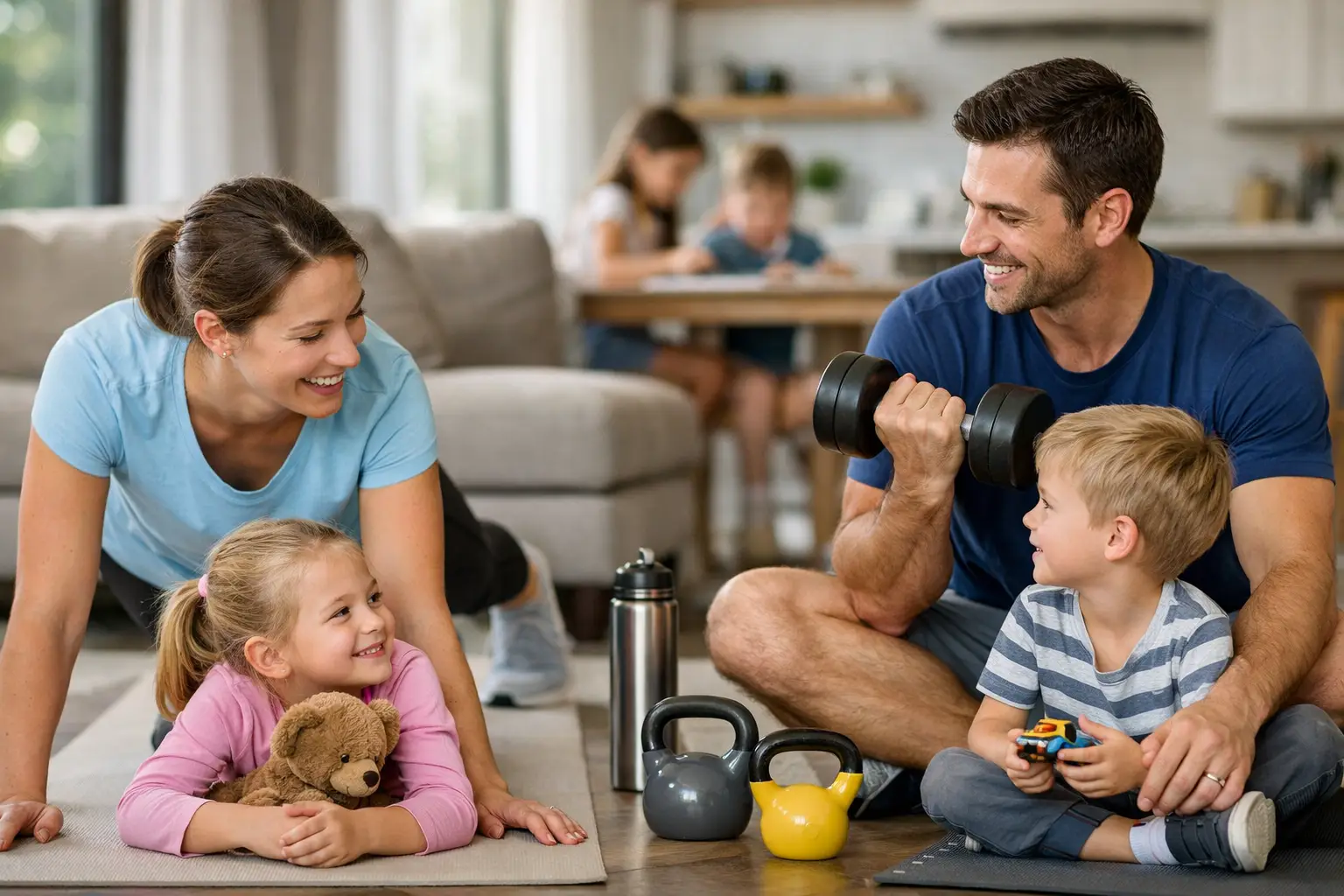
The best exercises for busy parents are not necessarily the hardest, longest, or trendiest. They are the ones you can return to after a school drop-off, between meetings, while dinner is in the oven, or on a Saturday when everyone needs something from you at once. A plan that respects your real schedule will do more for your energy, mood, and strength than an ambitious routine that only works in an imaginary, interruption-free week.
Table of Contents
- Why short workouts work for parents
- The best exercises for busy parents
- How to build a flexible weekly routine
- Making movement easier to repeat
- Frequently asked questions
Why short workouts work for parents
Many parents assume exercise only counts if it lasts 45 minutes or more. That belief can turn movement into another unfinished task on an already crowded list. The better target is consistency: regular activity that challenges your muscles, raises your heart rate sometimes, and helps your body move well.
A focused 10- to 20-minute session can improve strength, support cardiovascular health, and create a useful mental reset. It may not replace every kind of longer training, especially if you are working toward a specific endurance or performance goal. But for general health, short sessions add up. Three 15-minute workouts, a few walking breaks, and active play with your kids can create a meaningful week of movement.
The key is choosing exercises that deliver a lot without requiring a complicated setup. Think full-body patterns: squatting, pushing, pulling, hinging, carrying, and moving your core. These movements reflect everyday parenting, too, from lifting a toddler to carrying groceries and getting up from the floor.
The best exercises for busy parents
You do not need to do every exercise below in one workout. Choose four or five movements, perform them with care, and rotate your choices across the week. If you are new to exercise, have joint pain, are pregnant or postpartum, or are returning after an injury, a clinician or qualified fitness professional can help you tailor the plan.
1. Bodyweight squats or chair squats
Squats train your legs, hips, and core while improving the basic ability to sit, stand, and lift safely. Stand with your feet about hip-width apart, send your hips back, and bend your knees as you lower. Press through your feet to stand tall.
A chair behind you can make the movement feel more secure. Tap it lightly with your hips, then stand without dropping your weight into the seat. Aim for 8 to 15 controlled repetitions. Once that feels comfortable, hold a backpack, dumbbell, or child-free laundry basket close to your chest for added resistance.
2. Incline push-ups
Push-ups strengthen the chest, shoulders, arms, and trunk, but floor push-ups are not the only version that counts. Place your hands on a sturdy kitchen counter, bench, or the back of a stable couch. Walk your feet back, keep your body in a long line, lower your chest toward your hands, and press away.
The higher the surface, the easier the exercise tends to be. As you gain strength, use a lower surface. Incline push-ups are often a smart choice for parents who want to build upper-body strength without irritating their wrists, shoulders, or low back.
3. Hip hinges or glute bridges
The hip hinge teaches your hips to do more of the work when you bend and lift. With soft knees, push your hips back as if you are closing a car door behind you. Keep your back long, then squeeze your glutes to return to standing. This pattern can later progress to deadlifts with dumbbells or a loaded backpack.
If hinging does not feel natural yet, start with glute bridges. Lie on your back with knees bent and feet on the floor. Press through your heels and lift your hips until your body forms a gentle line from shoulders to knees. Pause, lower slowly, and repeat for 10 to 15 reps.
4. Rows with a resistance band or backpack
Parents often spend a lot of time leaning forward: over laptops, car seats, strollers, and kitchen counters. Rows strengthen the upper back and can balance some of that forward posture.
Anchor a resistance band safely at about chest height, or hold a loaded backpack in both hands. Pull your elbows back toward your ribs, pause as your shoulder blades gently come together, then return with control. Do not shrug your shoulders toward your ears. Eight to 15 repetitions is plenty when the resistance is challenging.
5. Step-ups
Step-ups build leg strength and get your heart rate up without requiring much space. Use a stable step, staircase bottom step, or low platform. Step up with one foot, drive through that foot to stand tall, then step down slowly. Alternate sides or complete all repetitions on one side before switching.
Start low and hold a wall or railing if balance is a concern. Step-ups can be more practical than jumping exercises when you live above neighbors, have sleeping children nearby, or want lower-impact cardio.
6. Dead bugs and side planks
Core training is not about punishing your abs. A useful core helps you resist unwanted motion while you carry, reach, twist, and move through daily life.
For a dead bug, lie on your back with arms raised and knees bent above your hips. Slowly lower one heel toward the floor while reaching the opposite arm overhead, keeping your low back comfortably supported. Return and switch sides. For a side plank, rest on your forearm with knees bent or legs straight, then lift your hips and hold for 15 to 30 seconds per side.
7. Brisk walking
Walking deserves a place in every conversation about practical fitness. It supports heart health, can ease stress, and requires little recovery compared with intense workouts. A 10-minute walk after lunch, during a child’s practice, or after dinner is real exercise.
To make it more challenging, add hills, stairs, short faster intervals, or a stroller walk at a purposeful pace. If your day has been emotionally heavy, an easy walk may be the most supportive choice. Not every session needs to leave you exhausted.
Build a flexible weekly routine
Instead of assigning workouts to fixed days and feeling defeated when life changes, use a simple weekly menu. Your goal is to complete a few movement categories whenever openings appear.
- Do two or three strength sessions. Choose four exercises from the list above. Complete two or three rounds of 8 to 15 repetitions, resting as needed. This can take 15 to 25 minutes.
- Add short cardio where it fits. Walk briskly, climb stairs, dance with your kids, or do step-ups for 10 to 20 minutes on two or more days.
- Keep a five-minute fallback option. On chaotic days, do one round of squats, incline push-ups, glute bridges, and a short walk around the block. A smaller workout protects the habit.
- Include mobility when your body asks for it. A few minutes of gentle hip stretches, shoulder circles, or slow breathing can be a better choice than forcing an intense workout after poor sleep.
If you have 30 minutes, add more sets or take a longer walk. If you have 10 minutes, do one circuit. The workout changes, but the identity stays the same: you are a person who makes room for your health.
Make movement easier to repeat
Friction is often the real obstacle, not motivation. Keep a resistance band where you can see it, save one short routine on your phone, or decide in advance what your minimum workout looks like. If childcare is limited, choose activities your children can safely be near, such as a living-room strength circuit while they draw or a family walk after dinner.
It also helps to release the idea that exercise must be private, polished, or perfectly timed. Your child may interrupt a plank. You may need to pause a workout to answer a question or clean up a spill. That does not mean the session failed. It means you are fitting health into a full life.
Pay attention to recovery, too. If you are regularly sleeping poorly, feeling run-down, or dealing with major stress, more intensity is not always the answer. Short strength sessions, walking, nourishing meals, hydration, and earlier bedtime routines may offer more benefit than trying to push through a punishing program.
Frequently Asked Questions
Is a 10-minute workout enough for busy parents?
Yes. Ten minutes is enough to practice strength, improve your mood, and reinforce a sustainable routine. Longer sessions can be useful, but they are not the only sessions that matter. Over a week, several brief workouts can create substantial activity.
Should I work out every day?
Not necessarily. Many parents do well with two or three full-body strength sessions each week, plus walking and other enjoyable movement. Rest is part of training, particularly when sleep and family demands are unpredictable.
What if I am too tired to exercise?
First, consider what kind of tired you are. If you are mentally drained but physically able, a gentle walk or a few minutes of mobility may improve your energy. If you are sick, severely sleep-deprived, or unusually sore, rest may be the healthier decision. Fitness should support your life, not demand that you override your body.
Can I exercise with my kids nearby?
Often, yes, as long as the space and equipment are safe. Walking, dancing, bodyweight squats, and light resistance work can be family-friendly. Avoid leaving weights, bands, or unstable equipment within a young child’s reach, and choose simple movements when distractions are likely.
Your health does not need a perfect schedule to deserve attention. Start with the next available 10 minutes, choose a movement that meets you where you are, and let repetition do the work that willpower cannot.
For more training and recovery tips, read The Resilient Athlete: A Self-Coaching Guide to Next Level Performance in Sports & Life by Andrejs Birjukovs.