
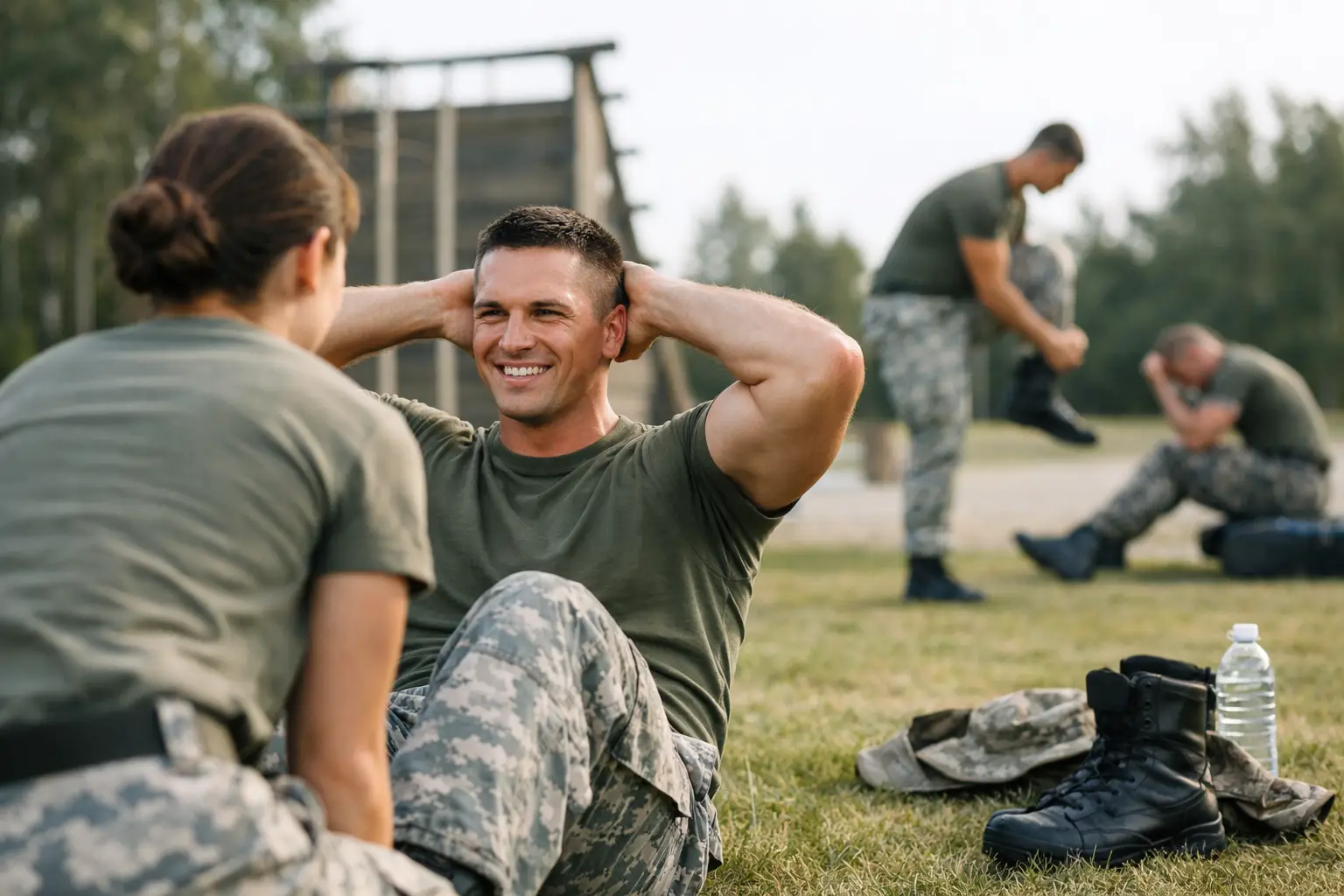
A 6 a.m. workout before work can feel heroic. So can pushing through one more mile after a long shift. But military fitness is not about proving you can suffer on command. At its best, it is practical training for strength, stamina, movement quality, and calm under pressure – abilities that support the life you actually lead.
For a parent carrying groceries and kids, a nurse working overnight, or a desk-bound professional trying to feel capable again, the appeal makes sense. The mistake is assuming you need punishing workouts to earn those benefits. You do not. You need a clear purpose, progressive training, and enough recovery to keep showing up.
Table of Contents
- What military fitness is designed to develop
- Five ways to train with military-inspired purpose
- A realistic weekly training framework
- When to scale back
- Frequently asked questions
What Military Fitness Is Designed to Develop
Military training must prepare people for unpredictable demands: moving for long periods, lifting awkward loads, changing direction quickly, and making decisions while tired. That creates a broad fitness profile rather than a single goal like bigger muscles, a faster 5K, or a lower number on the scale.
For civilians, the useful takeaway is not to copy a service member’s schedule or attempt special operations workouts from social media. Service members train within a job system, often with coaching, medical support, and performance expectations that may not fit your body, experience, or current stress level. The smarter approach is to borrow the principles: build a strong base, practice useful movement patterns, and prepare gradually.
A well-rounded military fitness plan usually includes aerobic endurance, strength, muscular endurance, mobility, speed or power, and mental discipline. That does not mean every workout needs all six. It means your week should not depend on one hard circuit repeated until your joints or motivation give out.
5 Ways to Build Military Fitness That Lasts
1. Start with your real mission
Before choosing exercises, decide what you want fitness to make easier. Maybe you want energy for a demanding job, confidence hiking with friends, less strain when lifting at home, or a better foundation for a fitness test. A specific mission helps you choose training that serves you rather than chasing someone else’s highlight reel.
Write down one performance goal and one life goal. For example: complete a comfortable two-mile run and have enough energy to play outside with your children afterward. This keeps training connected to well-being, not punishment.
2. Build strength around basic movement patterns
Military-style strength is useful strength. Focus on squatting, hinging, pushing, pulling, carrying, and bracing your core. These patterns build capacity for everyday tasks as well as training demands.
Two or three full-body strength sessions per week work well for many people. A session might include goblet squats, dumbbell rows, push-ups at an appropriate incline, Romanian deadlifts, and farmer carries. Begin with loads and repetitions you can control with solid form. Leaving one or two repetitions in reserve is not taking it easy – it is how you build skill and come back ready to train again.
If you have a history of back, shoulder, knee, or pelvic floor concerns, modify movements with a qualified professional. The strongest plan is the one your body can tolerate consistently.
3. Train your engine at more than one pace
Long, steady cardio builds an aerobic base, which supports recovery between hard efforts and makes daily activity feel less draining. Brisk walking, cycling, swimming, rowing, and jogging can all count. Aim for a pace where you can speak in short sentences, not one where you are gasping.
Then add a smaller dose of faster work once your base feels reliable. For example, after a warm-up, alternate one minute of brisk effort with two minutes easy for six rounds. This teaches your body to handle intensity without turning every workout into a test.
Running is common in military fitness, but it is not mandatory. If impact bothers your joints or you are returning after a long break, use incline walking, a bike, or an elliptical while you build capacity. Fitness is the goal, not loyalty to one modality.
4. Carry, crawl, and move in different directions
Many standard gym plans are built around moving straight ahead. Real life is less tidy. Carrying a suitcase, stepping around a toy on the floor, reaching into a back seat, or reacting on a trail requires coordination beyond a barbell lift.
Add loaded carries, step-ups, lateral lunges, crawling variations, and balance work in small doses. A farmer carry, for instance, develops grip, posture, core control, and walking mechanics at once. Start with a weight that lets you stand tall and breathe normally for 20 to 40 seconds.
These movements can make training feel more athletic, but they also demand attention. Do not rush them to make the workout look tougher. Controlled movement is what transfers to everyday resilience.
5. Practice discipline without turning it into self-punishment
The mental side of military fitness is often misunderstood. Discipline is not ignoring pain, skipping sleep, or treating rest as a character flaw. It is following through on the next useful choice, especially when your schedule is imperfect.
That may mean taking a 20-minute walk when a full workout falls apart. It may mean eating a balanced meal after training instead of restricting food to compensate. It may mean choosing mobility and an earlier bedtime after a stressful week. Consistency is built through flexibility, not rigid rules.
A Realistic Weekly Training Framework
Your exact schedule depends on your fitness level, sleep, work demands, and preferences. Still, this simple structure gives most adults enough variety without making exercise a second job:
- Two or three full-body strength sessions, with at least one day between hard lifting sessions.
- Two aerobic sessions, including one easy, longer effort and one session with short intervals if recovery is good.
- One short mobility session focused on areas that feel restricted, such as hips, ankles, upper back, or shoulders.
- Daily low-intensity movement, such as walking, taking stairs, or a few minutes of stretching between meetings.
You can combine elements when time is tight. A 35-minute session of strength followed by a 10-minute easy walk is meaningful training. On the other hand, if you are new to exercise, begin with two strength days and regular walks before adding intervals, loaded carries, or high-volume bodyweight work.
Know When to Scale Back
Hard training has a place, but persistent exhaustion is not a badge of honor. Pull back for several days if your performance is dropping, soreness is lingering, sleep is disrupted, or you feel unusually irritable and unmotivated. These signals do not mean you lack grit. They may mean your total load – work stress, caregiving, travel, illness, and exercise combined – is temporarily too high.
Scale back by reducing weight, sets, pace, or workout length. Keep an easy walk, gentle mobility, or a few technique-focused lifts if they feel good. This preserves the habit while giving your system room to recover.
Sharp pain, chest pain, dizziness, fainting, or significant shortness of breath deserve medical attention rather than a tougher mindset. If you are managing a chronic condition, are pregnant or postpartum, or have been inactive for a long time, check in with your health care professional before starting a demanding plan.
The Point Is Readiness, Not Punishment
The best military-inspired training makes your world bigger. You feel more capable moving through a busy day, more steady when plans change, and more trusting of what your body can do. It does not require exhaustion, perfection, or a life organized around workouts.
Choose a few repeatable sessions, fuel yourself adequately, protect your sleep when you can, and adjust when life gets heavy. That is a disciplined approach worth keeping.
Frequently Asked Questions
Is military fitness good for beginners?
Yes, if it is scaled to your current abilities. Beginners should start with walking, basic bodyweight or dumbbell strength movements, simple carries, and manageable cardio. Avoid high-repetition boot camp classes or advanced rucking until you have built movement skill and recovery capacity.
Do I need to run or ruck to do military fitness training?
No. Running and rucking can be effective, but neither is required. Rucking, or walking with a weighted pack, can stress the feet, knees, hips, back, and shoulders when load increases too quickly. Walking hills, cycling, swimming, or using a rower can develop endurance with a different impact profile.
How many days a week should I train?
Three to five movement days works for many adults, but the right number depends on your starting point and life demands. Two well-planned workouts plus regular walking can create real progress. Build a routine you can sustain through busy seasons, then add more only when recovery and motivation remain strong.