
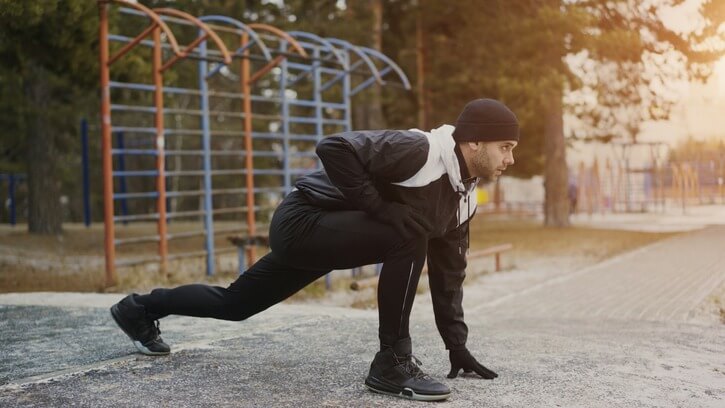
Improving flexibility doesn’t have to involve long, intense stretching sessions or uncomfortable static holds. In fact, many people are discovering that short, targeted movements can be far more effective for keeping their muscles healthy and their joints moving freely. One of the most efficient approaches for maintaining mobility is Active Isolated Stretching (AIS)—a method centered on gentle, controlled stretches lasting only two seconds each.
In this guide, based on a lower‑body routine demonstrated by Coach Will, we’ll break down how AIS works, why it may be more effective than traditional static stretching for many people, and how to follow a complete lower‑body sequence using just a strap.
What Is Active Isolated Stretching?
Active Isolated Stretching is built on a simple but powerful principle: Use short-duration stretches, paired with activation of the opposing muscle group, to increase flexibility without triggering protective tension.
When you stretch a muscle for too long, your body activates the myotatic stretch reflex—a protective mechanism that tells the muscle to tighten up to prevent overstretching. Holding a static stretch for 20 to 30 seconds can sometimes activate this reflex, causing discomfort or even restricting progress over time.
AIS avoids that problem by using a stretch that lasts only two seconds—just long enough to lengthen the muscle, but not long enough to trigger a defensive contraction. At the same time, you activate the opposite muscle (for example, the quadriceps when stretching the hamstring), which neurologically encourages the target muscle to release. This combination allows for faster improvements in flexibility with less strain on the body.
Another bonus: short-duration stretching does not impede blood flow, unlike longer static stretches that can temporarily reduce circulation to the muscle. This makes AIS especially beneficial before workouts or in situations where you want to maintain supple, oxygenated muscle tissue.
About the Lower-Body Routine
The lower-body routine demonstrated by Coach Will uses a simple strap—a yoga strap, belt, or any non-stretchable band works fine. Each movement is repeated for 10 repetitions, with each repetition including a brief contraction and a two‑second stretch.
The session covers:
- Hamstrings (straight and bent-leg variations)
- Outer and inner leg muscles
- Quadriceps
- Hip flexors
- Lower back
Let’s walk through each stretch in detail.
1. Hamstring Stretch – Straight Leg
Begin by lying on your back and looping the strap around the arch of your foot. Keeping your leg straight, gently contract the quadriceps to help the hamstrings lengthen. Then use the strap to lift your leg toward the ceiling.
Hold the stretch for one, two, then release.
This dynamic approach helps improve mobility without overstraining the hamstring or causing the hips to lift off the ground.
2. Hamstring Stretch – Bent Knee Variation
Still lying on your back, bend your knee slightly while keeping the foot in the strap. Lock the knee in place and lift the leg again for a two‑second stretch.
This variation targets different fibers of the hamstring group and can be especially beneficial for people with tightness near the knee or lower glute area.
3. Outer Leg Stretch
Wrap the strap around the outside of the leg and allow the leg to move gently across the body. This targets the outer hamstring, IT band region, and hip stabilizers.
Again: contract, stretch one, two, and return.
The goal isn’t to crank the leg across your body but to allow a controlled, repetitive motion that increases range progressively.
4. Inner Leg Stretch
Next, wrap the strap around the opposite direction so the leg moves outward, away from the body.
This stretch activates the hip adductors and inner thigh muscles. By using the strap to create support, you can control the stretch without placing unnecessary strain on the hip joint.
5. Quadriceps Stretch
Flip onto your side or position yourself in a way that allows you to bend your knee comfortably. Wrap the strap around your foot and gently pull your heel toward your glutes.
Because AIS relies on short holds, you’ll contract the hamstring and glute, bring the heel close, hold for a two‑count, then release.
This stretch is particularly beneficial for reducing anterior knee tightness and improving hip extension patterns.
6. Hip Flexor Stretch
The hip flexors are one of the most commonly tight muscle groups, especially for people who sit often or do a lot of running. For this stretch, extend one leg behind you and use the strap to assist in bringing the opposite leg forward while stabilizing your pelvis.
As with the other movements, activate the glute of the back leg to encourage the hip flexor to release, then ease into a brief two‑second stretch.
Repetition is the key here—each gentle movement helps restore mobility to a chronically tight area.
7. Lower Back Stretch (Optional)
If you want to finish by releasing your lower back, wrap the strap around both feet and gently draw your knees toward your chest.
This move isn’t technically AIS but pairs well with the sequence because it resets the lumbar spine and releases residual tension.
Why AIS Works So Well for Lower Body Flexibility
This approach is particularly effective for the lower body because the hips and legs contain some of the largest and most powerful muscles in the body. These muscles often become tight due to modern habits (like sitting) or athletic demands (like running, cycling, or lifting).
AIS offers:
- Safe, controlled movement
- Improved neuromuscular coordination
- Better circulation
- Reduced risk of overstretching
- Faster flexibility gains compared to static holds
Because each stretch is repeated multiple times, AIS also warms the area through gentle motion, making it a great preparation routine before physical activity or a recovery method afterward.
Final Thoughts
Active Isolated Stretching provides a smart, efficient way to enhance mobility without discomfort or risk. This lower-body routine is quick, effective, and accessible for anyone—from athletes to beginners looking to loosen up tight muscles. All you need is a strap, a bit of space, and just a few minutes of mindful movement. Try incorporating this routine into your day, whether as a warm‑up, cool‑down, or a standalone mobility session, and feel how consistent two‑second stretches can transform the way your body moves.


WILLIAM SMITH, MS, NSCA, CSCS, MEPD, completed his B.S. in exercise science at Western Michigan University followed by a master’s degree in education and a post-graduate program at Rutgers University. In 1993, Will began coaching triathletes and working with athletes and post-rehab clientele. Will has advanced specialty certifications in cancer, post-rehab exercise and athletic development. He is the author of Exercises for Better Balance, Exercises for Parkinson’s Disease, and many other health-related books.