
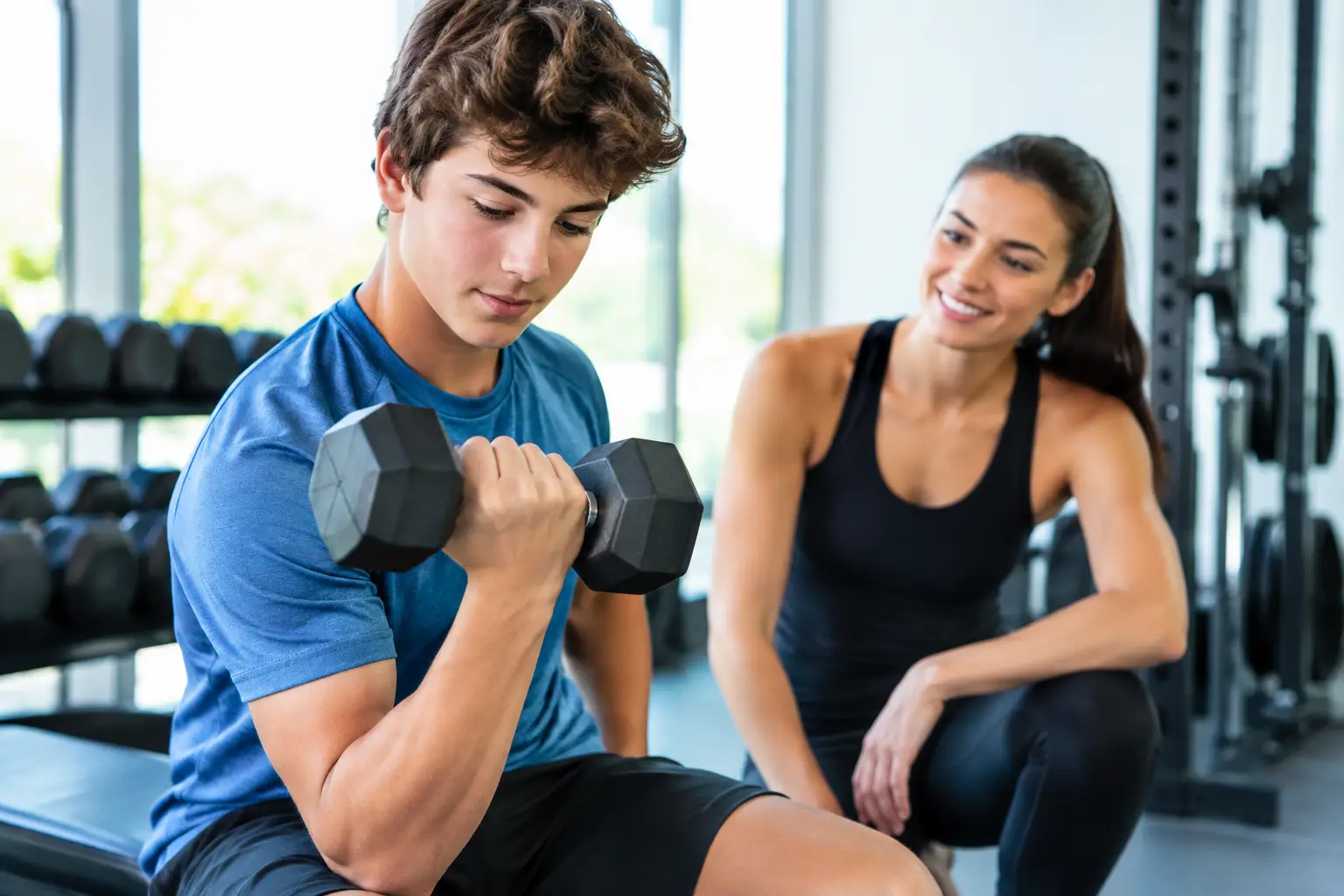
A teenager may ask for a gym membership because they want to feel stronger for soccer, carry a heavy backpack more easily, or simply stop feeling awkward in their body. Then the warnings arrive: “Don’t lift, it will stunt your growth.” For families already sorting through social-media fitness advice and body-image pressure, that can feel confusing. Can teens lift weights? Yes – when training is appropriately taught, supervised, and built around skill rather than proving something. Here is how to help a teen build strength without turning exercise into another source of stress.
Table of Contents
- Why strength training can be safe for teens
- Start with movement skills, not heavy weights
- Build a simple teen-friendly routine
- Use supervision and progressive progression
- Protect recovery, confidence, and a healthy relationship with exercise
- When to pause and ask for professional guidance
- Frequently asked questions
1. Why Strength Training Can Be Safe for Teens
The idea that all weight training damages growth plates is outdated. Injuries are more often linked to poor technique, trying to lift too much too soon, lack of supervision, or equipment used carelessly – not to sensible, age-appropriate resistance training itself.
Strength training can support bone health, coordination, muscular endurance, and confidence. It may also make sports and everyday activities feel easier. A teen does not need to play a sport or pursue a certain look to benefit. Strength is useful for the dancer, the gamer, the student who rides the bus, and the teenager navigating a body that seems to change every few months.
That said, “safe” does not mean every workout trend is appropriate. Max-effort lifts, punishing daily challenges, and programs designed for fully grown competitive lifters are not the starting point. The goal is to practice controlled movement and gradually get stronger over time.
2. Start With Movement Skills, Not Heavy Weights
Before adding a barbell, a teen should be able to move with reasonable control. Think of this as learning the alphabet before writing an essay. Bodyweight exercises, resistance bands, light dumbbells, and cable machines can all teach the basics without making a workout intimidating.
A strong foundation includes squatting, hinging at the hips, pushing, pulling, carrying, and bracing the trunk. For example, a teen might begin with a bodyweight squat to a bench, a hip hinge with a light kettlebell, an incline push-up, a band row, and a farmer carry with light dumbbells.
Form does not have to look perfect to be worthwhile. Bodies have different limb lengths, mobility levels, and training histories. But a teen should be able to move without sharp pain, hold steady positions, and follow coaching cues before adding load. Stop an exercise if there is pain in a joint, numbness, dizziness, or a feeling that something is wrong. Muscle effort and mild next-day soreness are normal; pain is not a toughness test.
A useful first-session rule
Choose a weight that allows the teen to finish a set with about two or three good repetitions still possible. They should not be straining, holding their breath for long periods, or losing control to complete the final rep. Finishing with confidence beats barely surviving a set.
3. Build a Simple Teen-Friendly Routine
For most beginners, two or three full-body sessions a week on nonconsecutive days is plenty. Sessions can last 30 to 45 minutes, including a short warm-up. More training is not automatically better, especially when school, sports, sleep, and family demands are already full.
A practical workout might include five or six movements: a squat or split squat, a hip hinge, a push, a pull, a carry, and an optional core exercise. Start with one or two sets of 8 to 12 controlled repetitions for most exercises. Carries can be done for a short, comfortable distance or time.
Here is an example of a beginner session:
- Five minutes of easy movement, such as walking, cycling, or jumping rope, followed by a few practice squats and arm circles.
- Goblet squat or sit-to-stand: 2 sets of 8 to 10 reps.
- Dumbbell Romanian deadlift or light kettlebell hinge: 2 sets of 8 to 10 reps.
- Incline push-up or dumbbell chest press: 2 sets of 8 to 12 reps.
- Band row or cable row: 2 sets of 8 to 12 reps.
- Farmer carry and a plank variation: 2 short rounds each.
This is not a test of character. It is practice. If a teen is exhausted from exams, a late shift, a hard practice, or poor sleep, it is completely reasonable to do fewer sets, use lighter weights, or take a walk instead. Consistency grows from flexibility, not from forcing every workout to happen exactly as planned.
4. Use Supervision and Gradual Progression
A qualified coach, physical education teacher, certified trainer experienced with youth, or knowledgeable adult can make a major difference. They can teach equipment setup, watch technique, and help a teen separate useful challenge from risky ego lifting. In a busy gym, supervision also means knowing how to use racks, pins, benches, and machines safely.
Progress should be boring in the best way. When the current weight feels controlled for all planned repetitions, add a small amount of weight, one or two repetitions, or an extra set. Change only one thing at a time. A training log can help, but it does not need to become an obsession. A simple note on a phone – exercise, weight, reps, and how it felt – is enough.
Parents and caregivers can set a healthier tone by praising effort, patience, and technique rather than body changes. Comments like “You looked really focused on your form” land differently from “You’re getting bigger.” Teens absorb more messages about appearance than adults often realize.
5. Protect Recovery, Confidence, and a Healthy Relationship With Exercise
Teen bodies need recovery, and teen minds do too. Sleep, regular meals, hydration, rest days, and enjoyable movement are part of strength training, not distractions from it. Skipping meals to look leaner, using supplements without medical guidance, or training through exhaustion can undermine both performance and well-being.
Protein matters, but a teen does not need a cabinet full of powders and pre-workout products. Most can support training with regular meals that include protein, carbohydrates, fruits or vegetables, and fats. If there are questions about nutrition, growth, or eating patterns, a pediatrician or registered dietitian can offer individualized support.
Watch the emotional side as carefully as the physical side. A teen may need a reset if exercise becomes tied to guilt, panic around food, fear of missing workouts, or constant body checking. This is especially relevant for teens recovering from bullying, family criticism, emotional abuse, or intense pressure in a sport. Strength training should expand a young person’s life, not make it smaller.
6. When to Pause and Ask for Professional Guidance
A conversation with a pediatrician, physical therapist, or qualified sports medicine professional is wise before starting if a teen has a heart condition, uncontrolled asthma, a recent surgery, an unresolved injury, frequent fainting, or persistent pain. The same applies if they are returning after a concussion or stress fracture.
Professional support is also appropriate when food restriction, bingeing, purging, compulsive exercise, or severe body dissatisfaction enters the picture. There is no shame in asking early. It is a practical way to protect health and keep movement connected to care rather than control.
A Stronger Start, Not a Harder Life
Teens can lift weights safely, and they do not need to earn that right by looking athletic or knowing their way around a gym. Start light, learn the movements, use guidance, and leave room for sleep, school, friendships, and joy. Get Fit Now believes strength should help a young person feel more capable in their real life – not pressure them to become someone else.
Frequently Asked Questions
What age can teens start lifting weights?
There is no single magic age. Many children and teens can begin structured resistance training when they can follow instructions, use good judgment, and train with appropriate supervision. The program should match their maturity, movement skill, and health needs.
Can teens lift heavy weights?
Heavier weights may be appropriate later for teens who have learned solid technique and are supervised by a qualified coach. Beginners do not need maximal lifts to become stronger. Controlled repetitions with manageable loads are a safer, more useful place to start.
Will weightlifting stunt growth?
Appropriately designed strength training has not been shown to stunt growth. Risk rises when teens use poor form, chase loads beyond their ability, or train without instruction. Good coaching and gradual progression matter.
How often should a teen lift weights?
Two or three nonconsecutive full-body sessions per week works well for many beginners. Teens who play demanding sports may need fewer lifting sessions during busy seasons. Recovery, sleep, and how the teen feels should guide the plan.
Should teens use protein powder or pre-workout?
Most teens can meet their needs with ordinary food. Protein powder may be convenient in some situations, but it is not required. Pre-workout products can contain high amounts of caffeine or other stimulants and are usually unnecessary for young lifters.
The best first goal is simple: help the teen leave each session feeling capable, safe, and willing to come back.