
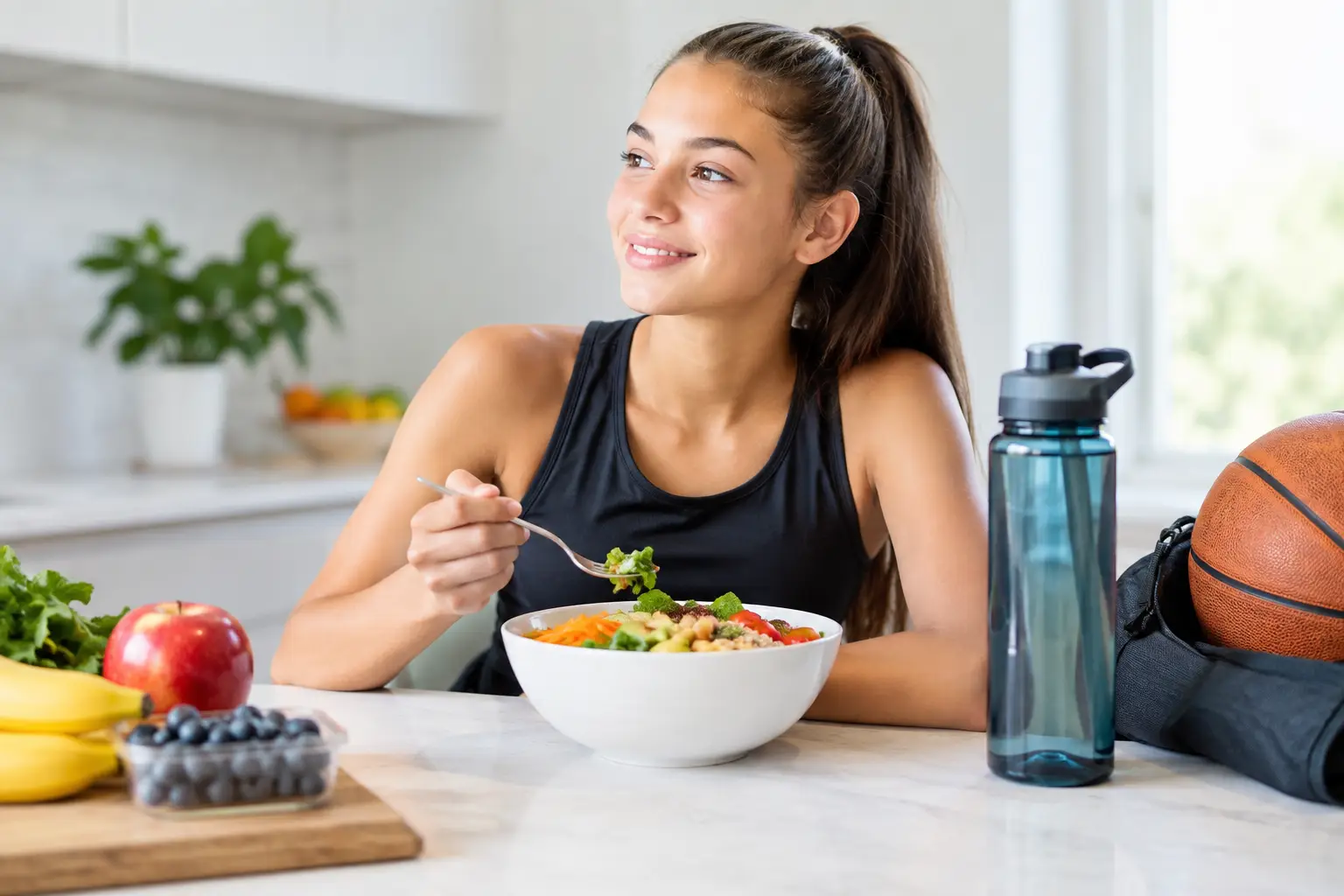
A 16-year-old soccer player finishes school, heads straight to practice, and realizes halfway through warm-ups that lunch was a few bites of a sandwich and an energy drink. By the final drills, she feels flat, irritable, and convinced she needs to train harder. Usually, the better answer is not more discipline. It is more consistent fuel. This teen athlete nutrition guide is built for the real rhythm of school, practices, homework, social plans, and growing bodies.
Teen athletes need food for more than performance. They are also building bone, muscle, hormones, and confidence around eating. The goal is not a perfect meal plan or a smaller body. It is helping young people feel energized, recover well, and develop habits that can last long after their final season.
Table of Contents
- Why teen athletes need more than a generic diet
- Five practical fueling habits
- What to eat around practices and games
- Recovery, hydration, and red flags
- How adults can offer support without pressure
- Frequently asked questions
Why teen athletes need more than a generic diet
A teenager is not a miniature adult athlete. Growth alone raises nutrition needs, and training adds another layer. A busy teen may burn through a school day with classes, walking between buildings, PE, practice, and homework before they ever sit down for a full dinner.
That is why restrictive food rules can backfire. Skipping meals to look leaner, cutting carbohydrates because social media labels them bad, or trying to earn food through exercise can leave an athlete underfueled. Underfueling may show up as low energy, poor concentration, stalled performance, frequent illness, mood changes, slow recovery, or repeated injuries.
Bodies and sports differ. A distance runner, volleyball player, wrestler, swimmer, and football player will not all eat the same portions or have the same schedule. Still, most teen athletes benefit from the same foundation: regular meals, enough carbohydrates for activity, protein spread throughout the day, colorful produce, calcium-rich foods, and reliable hydration.
Teen Athlete Nutrition Guide: Build the Plate First
Nutrition gets confusing when every snack is treated like a test. A simpler approach is to build satisfying meals most of the time, then adjust based on training demands and appetite. No food needs to be morally good or bad.
At a typical meal, encourage a carbohydrate source such as rice, pasta, potatoes, oats, bread, tortillas, fruit, or cereal; a protein source such as eggs, yogurt, beans, chicken, fish, tofu, cheese, or lean meat; and produce in a form the teen will actually eat. Add fats from foods such as avocado, nuts, seeds, olive oil, or dairy for fullness and overall nutrition.
This is not a rule that every plate must look identical. Pizza with a side salad and milk can be a useful dinner after practice. A turkey sandwich, fruit, and pretzels can be a strong between-school-and-practice meal. Flexibility matters because food access, culture, budget, and appetite all matter.
Five practical fueling habits
- Start the day with something substantial. A teen who has early practice or a long school day may not feel hungry at 6 a.m. A banana and yogurt, overnight oats, toast with eggs, or a smoothie can be easier than a large breakfast. The aim is to avoid beginning the day on empty.
- Plan the after-school gap. This is where many athletes get stuck. Pack a snack that combines carbohydrates and protein: crackers and cheese, a peanut butter sandwich, yogurt with granola, trail mix and fruit, or a bean-and-cheese burrito. It does not need to be trendy to work.
- Keep carbohydrates in the picture. Carbs are a major source of quick energy for hard practices, games, and conditioning. Athletes do not need to fear bread, cereal, pasta, or potatoes. Training volume, sport, and individual digestion affect how much is comfortable, but eliminating carbs often makes demanding sessions feel harder.
- Include protein repeatedly, not just at dinner. Protein supports muscle repair and growth. Rather than chasing huge portions or powders, include a protein food at breakfast, lunch, snacks, and dinner. Powders can be convenient, but they are not required when meals and snacks are meeting needs.
- Make recovery food easy to reach. The hour after training is a useful opportunity to eat, especially if dinner will be delayed. Chocolate milk, a smoothie with milk or soy milk, cereal and yogurt, leftovers, or a sandwich can help replenish energy and begin muscle repair.
What to eat before and after activity
The best before practice choice is usually familiar, easy to digest, and practical for the time available. If practice is two to three hours away, a meal with carbohydrates, protein, and some produce works well. Think rice and chicken, a pasta bowl with meat sauce, or a sandwich with fruit.
If there are only 30 to 60 minutes, keep it lighter and carbohydrate-focused. A banana, applesauce pouch, dry cereal, toast, a granola bar, or pretzels may be enough. Athletes who feel nauseated before competition may do better with smaller portions and liquids, such as a smoothie, rather than forcing a full meal.
After training, a meal is ideal if it fits the schedule. When it does not, use a snack as a bridge to dinner. Recovery is not about finding one magic food. It is about replacing energy, getting protein, drinking fluids, and eating enough over the full day.
Hydration, supplements, and warning signs
Water is the everyday default. A refillable bottle helps, but a teen may need reminders to drink regularly rather than trying to catch up after practice. For many workouts lasting around an hour, water and regular meals are enough. Sports drinks can be useful during long, intense sessions, hot-weather practices, tournaments, or double sessions, particularly when an athlete is sweating heavily. They are not automatically necessary for every light workout.
Supplements deserve extra caution. Products marketed for fat loss, detoxing, muscle building, or pre-workout energy can contain stimulants or ingredients that are not appropriate for teens. Even seemingly harmless supplements can be unnecessary or interfere with medical care. A pediatrician, sports dietitian, or qualified health professional can help when an athlete has a diagnosed deficiency, follows a vegetarian or vegan diet, has food allergies, or has questions about a specific product.
Adults should also take possible underfueling seriously. Frequent injuries, stress fractures, persistent fatigue, feeling cold, dizziness, missed or irregular periods, changes in mood, obsessive food rules, or anxiety around eating deserve compassionate attention. These signs do not mean a teen has failed. They mean it is time to involve a pediatrician or sports dietitian, and sometimes a mental health professional, before the issue grows.
How parents and coaches can help without adding pressure
Young athletes often hear comments about their bodies from every direction. A parent or coach can make food feel safer by talking about energy, strength, focus, recovery, and enjoyment instead of weight, calories, or earning meals. Avoid complimenting a teen for eating less, trying to lose weight for a sport, or pushing through fatigue.
Practical support is often quiet: keeping portable snacks available, making sure there is food after late practice, asking what sits well before games, and accepting that a teen may need a larger portion on hard-training days. Coaches can help by discouraging punishment workouts around food and by building water breaks into practice.
Frequently Asked Questions
Should teen athletes count calories?
Usually, no. Calorie tracking can pull attention away from hunger, fullness, performance, and enjoyment, and it can become stressful for adolescents. Unless a qualified clinician recommends monitoring for a specific medical reason, regular meals and snacks are a more useful focus.
Do teen athletes need protein shakes?
Not necessarily. A shake can be a convenient option when food is not available, but milk, yogurt, eggs, beans, meat, tofu, cheese, and other everyday foods can provide plenty of protein. A shake should add convenience, not replace most meals.
What if my teen says they are not hungry after practice?
Offer a low-pressure option soon after, such as a smoothie, yogurt, chocolate milk, toast, or fruit with peanut butter. Appetite may return later. If low appetite is frequent, paired with fatigue or weight changes, or causes regular skipped meals, check in with a health professional.
What is the best long-term nutrition goal for a teen athlete?
Help them learn that food is steady support, not a reward or a problem to solve. A well-fueled teen is better positioned to train, recover, enjoy their sport, and carry a calmer relationship with health into adulthood.
For more nutrition tips, read The Resilient Athlete: A Self-Coaching Guide to Next Level Performance in Sports & Life by Andrejs Birjukovs.