
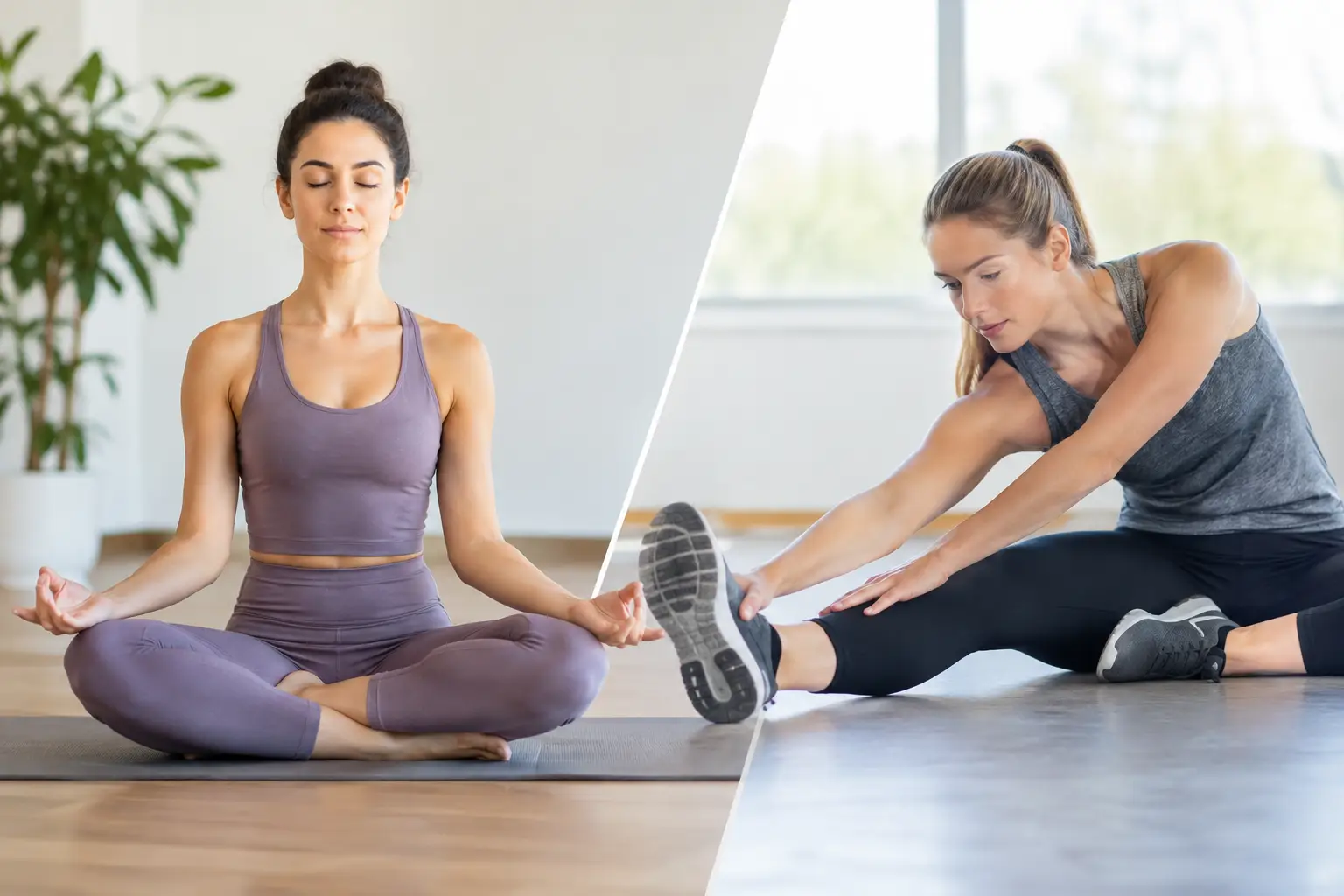
You finish a long workday with a stiff neck, tight hips, and a nervous system that still feels like it is answering emails. You know movement might help, but yoga versus stretching can feel like one more wellness decision you are supposed to get right. The good news: you do not have to choose a team. Understanding what each practice offers can help you spend your limited time in a way that actually supports your body and your life.
Table of Contents
- What separates yoga from stretching
- 1. Know what your body needs today
- 2. Understand the benefits of stretching
- 3. Understand the benefits of yoga
- 4. Use the right amount of effort
- 5. Build a realistic weekly routine
- When to get professional support
- Keep what helps
- Frequently asked questions
What separates yoga from stretching?
Stretching is the intentional lengthening of a muscle or movement through a joint’s available range of motion. It can be as simple as a 20-second calf stretch while the coffee brews or a few shoulder movements after carrying a toddler. Its main job is usually physical: easing temporary tightness, maintaining range of motion, or preparing for and recovering from activity.
Yoga can include stretching, but it is broader. Most yoga practices combine postures with breathing, attention, balance, strength, and sometimes meditation or philosophy. A slow yoga class may leave you feeling looser, but it can also challenge your legs, wrists, core, and ability to stay present when your mind wants to race ahead.
Neither is automatically better. A focused stretch may be exactly right before a run. A gentle yoga practice may be more useful when stress has made your whole body feel braced. The best choice depends on your goal, energy, symptoms, and available time.
1. Know what your body needs today
Before you unroll a mat, take a quick inventory. Are you physically stiff after sitting? Are you sore from strength training? Do you feel restless, overwhelmed, or disconnected from your body? These are different experiences, and they may call for different movement.
Choose a few targeted stretches when you want a quick physical reset. For example, a delivery driver between shifts might stretch hip flexors, calves, and chest after hours of sitting and lifting. A parent with five quiet minutes before school pickup may benefit more from neck and upper-back stretches than from trying to complete a full class.
Choose yoga when you want movement plus a downshift in pace. Breathing through a short sequence can be especially helpful after a tense meeting, a poor night of sleep, or a period of emotional strain. That does not mean yoga needs to be peaceful every time. Some styles are vigorous. It means the practice gives you an opportunity to notice how you feel rather than simply pushing through it.
2. Understand what stretching does well
Stretching is efficient. You can direct it toward the area that needs attention without changing clothes, finding a video, or committing 45 minutes you do not have. Dynamic stretching, which uses controlled movement, often fits well before exercise. Think leg swings, arm circles, or a gentle walking lunge before a workout.
Static stretching, where you hold a position comfortably, can fit after activity or during breaks in the day. The word comfortably matters. Stretching should create mild tension, not sharp pain, numbness, tingling, or the feeling that you must force your body to cooperate.
For many people, the biggest benefit is consistency. Three minutes of movement for your shoulders each workday can be more meaningful than an ambitious flexibility plan you abandon after four days. Stretching can also help you notice patterns: perhaps your hips feel restricted after long meetings, or your ankles feel stiff before your evening walk.
Stretching has limits, though. Feeling tight does not always mean a muscle needs to be pulled longer. Sometimes your body needs strength, rest, a change in workstation setup, more varied movement, or an assessment from a qualified clinician. Aggressively stretching an irritated area can make it worse.
3. Understand what yoga adds
The central difference in yoga versus stretching is that yoga often asks more of the whole person. A basic flow may move your spine in several directions, build leg and shoulder strength, practice balance, and connect movement to steady breathing. That combination can support mobility, body awareness, and stress regulation at the same time.
A yoga pose is not a test of how far you can bend. In a well-taught practice, you adjust the pose to fit your body. Blocks, a chair, a wall, a folded blanket, or simply a smaller range of motion are legitimate tools, not shortcuts. This matters if you are new to exercise, returning after injury, in a larger body, pregnant or postpartum, or recovering from experiences that have made body-based activities feel complicated.
The style matters. Restorative and gentle yoga tend to emphasize supported positions and slower breathing. Hatha classes may offer a balanced, beginner-friendly pace. Vinyasa and power yoga can be more athletic, with repeated transitions that may build heat and strength. None earns extra moral credit. Pick the version that serves your needs rather than the one that looks most impressive online.
4. Use the right amount of effort
More intensity is not more healing. If you are carrying burnout, working night shifts, or feeling run-down, a demanding class may leave you depleted rather than restored. On the other hand, if your goal is to improve balance and strength, only passive stretching may not give your body enough challenge.
Use a simple effort check. You should be able to breathe steadily and leave with roughly the same or better energy than you started, especially in a recovery-focused session. Mild muscular work is fine. Sharp pain, joint pinching, dizziness, or a spike in anxiety are signals to ease out, rest, or choose another option.
This is particularly relevant for people with a history of trauma or emotional abuse. Certain positions, hands-on adjustments, closed eyes, or breath cues can feel vulnerable or activating. You are always allowed to keep your eyes open, skip a pose, move near an exit, decline touch, or stop altogether. Your practice belongs to you.
5. Build a realistic weekly routine
You do not need a perfect schedule to benefit from either practice. Match the dose to your actual calendar. A sustainable starting point might include five minutes of targeted stretching on most workdays and one or two 15- to 30-minute yoga sessions each week.
Try this flexible approach:
- Before exercise: Use 3 to 5 minutes of dynamic movements that resemble the activity ahead. Warm up shoulders before lifting, ankles and hips before walking or running, and your upper back before swimming.
- After long sitting or driving: Do a brief stretch break for the chest, hips, calves, and upper back. Add a short walk if possible.
- On high-stress days: Choose gentle yoga, slower breathing, or a few supported floor positions. The goal is not to perform calm. It is to give your system a little room.
- On strength-training days: Keep stretching light and purposeful, then use yoga on a separate day or as a gentler recovery session if that feels good.
If a routine gets interrupted by travel, caregiving, deadlines, or illness, you have not failed. Return with one movement that feels accessible. Health is built through course corrections, not flawless streaks.
When to get professional support
See a health care professional or physical therapist for pain that is severe, persistent, worsening, or connected to swelling, weakness, numbness, unexplained weight loss, fever, or a recent injury. Get individualized guidance before starting if you have a condition that affects balance, joints, blood pressure, or pregnancy-related concerns.
A skilled professional can help identify whether your limitation is mobility, stability, strength, tissue irritation, or something else entirely. That is more useful than blaming yourself for not being flexible enough.
Keep what helps
Stretching gives you a direct, practical tool for specific areas that feel restricted. Yoga gives you a broader practice that can include mobility, strength, balance, breath, and a moment of mental space. Both can belong in a healthy routine, and neither needs to become another standard you use to judge yourself.
Choose the smallest useful action today: one calf stretch, three slow breaths in child’s pose, or a short class that leaves you steadier than it found you. Get Fit Now is built on that kind of repeatable care.
Frequently Asked Questions
Is yoga better than stretching for flexibility?
It depends on the yoga style and how consistently you practice. Yoga can improve flexibility because it includes repeated ranges of motion, but targeted stretching may be faster for one specific tight area. Strength and control within your range of motion matter too.
Should I stretch before yoga?
Usually, no separate stretching session is necessary before a gentle or beginner yoga practice. Start slowly and let the first few poses act as your warm-up. Before a fast-paced class, use easy dynamic movement if your body feels stiff.
Can yoga replace strength training?
Some vigorous yoga builds strength, especially for beginners, but it may not progressively challenge all major muscle groups enough for long-term strength goals. Consider pairing yoga with resistance training, walking, or other movement you enjoy.
Why do I feel sore after yoga?
Yoga can load muscles in unfamiliar ways, particularly the legs, shoulders, wrists, and core. Mild soreness can be normal after a new class. Sharp pain, joint pain, or soreness that does not improve should prompt you to rest and seek guidance if needed.
What if I do not enjoy yoga?
You do not need to enjoy yoga to care for your body. Stretching, mobility drills, walking, strength training, dancing, and physical therapy exercises can all support movement and well-being. The most helpful practice is the one you can approach with curiosity and return to without dread.