
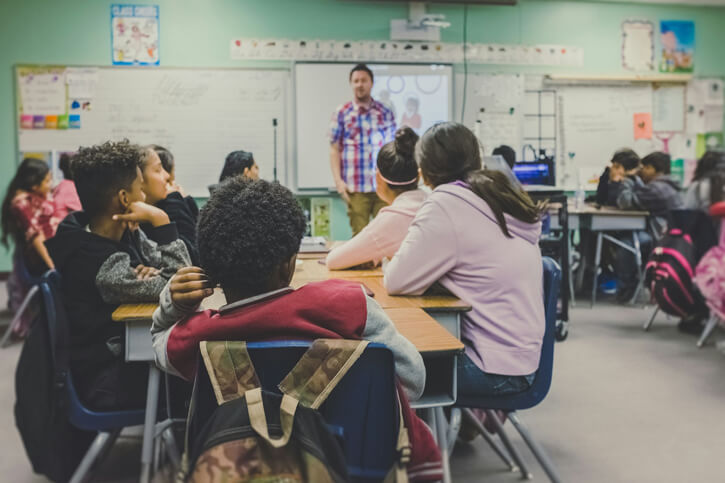
The start of a new school year can feel like a whirlwind. New teachers, new schedules, homework, sports, friendships, transportation, and a whole new routine for the entire family. After 20 years as a therapist, I’ve seen how much transition can affect children and parents. While we can’t eliminate the stress that comes with change, we can create an environment where children feel secure enough to navigate it. Two philosophies that have influenced my work and writing, Stoicism and Swedish lagom, offer valuable lessons for approaching the school year with greater connection, resilience and balance.
Focus on What You Can Control
One of the central ideas in Stoicism is recognizing what is within our control. Parents can’t control whether their child has a difficult day, struggles socially, gets a particular teacher or feels nervous about school. What they can control is how they respond. This is where connection matters. Instead of immediately trying to fix a child’s problem, we can first offer our presence: “That sounds really hard. I’m here. Tell me about it.”
Children don’t always need an immediate solution. Sometimes they need to know that their parent is a safe place to return to when the world feels overwhelming. A secure relationship doesn’t prevent children from experiencing difficult emotions. It gives them a foundation from which they can learn to manage them.
Find Balance the Swedish Way
Swedish lagom is about finding balance, not too much, not too little, but just enough to support a healthy, sustainable life. The beginning of school is an ideal time to consider what balance looks like for your family. Balance might mean academics and downtime. Activities and unstructured play. Independence and connection. Technology and time outdoors. Social time and quiet time.
Children need opportunities to develop independence, but independence doesn’t mean doing everything alone. A child may need a parent to sit beside them while they do work, help them prepare for the next day, or simply provide reassurance before walking into school. That support doesn’t prevent independence, it can actually help build the security necessary for it.
For Parents: Connection Before Correction
When a child comes home upset, our instinct may be to ask questions, offer advice or immediately solve the problem. Try connecting first by saying things like, “I’m glad you’re home. It looks like today was a little tough. Do you want to talk about it, or do you just need some time?”
Being emotionally available doesn’t mean agreeing with everything a child says or removing every obstacle from their path. It means helping them feel seen and supported while they work through challenges. And parents need support, too. You don’t have to be perfectly calm every moment. Repairing after a difficult interaction, “I was frustrated earlier, and I’m sorry I reacted that way” also teaches children about healthy relationships.
For Kids: One Step at a Time
The beginning of school can feel overwhelming when children think about the entire year. Help them narrow their focus by asking what is one thing you can do today? Maybe it’s finding their classroom, introducing themselves to someone, asking the teacher a question or simply making it through a challenging day. When children struggle, remind them that asking for help isn’t weakness. Knowing when you need support is an important part of resilience.
For Teachers: Connection Creates Security
Teachers play an important role in helping children feel safe and connected at school. Predictable routines, warm interactions and taking time to know students as individuals can make a significant difference, particularly for children who are anxious about transitions. Teachers can also recognize that behavior is communication. A child who is withdrawn, irritable or struggling to participate may need connection and curiosity before consequences. “What’s going on?” can sometimes be more productive than “What’s wrong with you?”
Remember: Secure Doesn’t Mean Stress-Free
Attachment, Stoicism and lagom all remind us in different ways that we don’t have to eliminate every difficulty. Children will experience disappointment, conflict, frustration and uncertainty. Your job isn’t to create a life without those experiences. Your job is to help children develop the confidence that they can handle difficult experiences and they don’t have to handle them alone.
As I explore through my work and books on Stoicism and Swedish lagom, resilience isn’t about becoming unaffected by life’s challenges. It’s about developing the ability to meet those challenges with perspective, connection and balance. So as the backpacks come out, alarms are set and school buses begin their routes, remember, connection creates security. Security supports independence. Balance creates space to breathe and resilience grows through practice.Be present. Focus on what you can control. Stay connected. Find your balance. And take it one day at a time.
For more about lagom, check out my book Swedish Lagom. For more about Stoicism, I’ve written several books on the topic including The Stoicism Book of Quotes.

Kortney Yasenka, LCMHC, is a licensed clinical mental health counselor with over 20 years of experience providing individual, family, and group therapy, along with life coaching services, including specialized support for student athletes. She holds a Master’s degree in Counseling Psychology with a concentration in Health Psychology from Northeastern University and is certified in trauma-focused cognitive behavioral therapy, integrating both traditional and ecotherapy approaches into her work. Throughout her career, Kortney has worked across community mental health settings, school systems, and private practice. She also has experience supporting veterans and active military personnel. In addition to her clinical work, Kortney is a published author whose titles include The Stoicism Book of Quotes The Marcus Aurelius Book of Quotes, Stoicism Quotes for Mind and Body, and Swedish Lagom. She is also a contributing author in The Resilient Warrior.