
A 20-minute workout before the school pickup, a strength session between meetings, or a few sets after a long shift can all count. The question in kettlebells versus dumbbells is not which tool is tougher or more impressive. It is which one helps you move well, feel capable, and return to training often enough for it to matter.
Both can build strength, muscle, balance, and confidence. Their differences come down to where the weight sits, how it moves with your body, and what kind of exercises you enjoy and can perform safely. You do not need to choose a permanent side. Many sustainable routines use both.
Table of Contents
- The main difference in how they feel
- When dumbbells make more sense
- When kettlebells make more sense
- How to choose for your goals and routine
- A simple way to start
- Frequently asked questions
Kettlebells Versus Dumbbells: The Main Difference
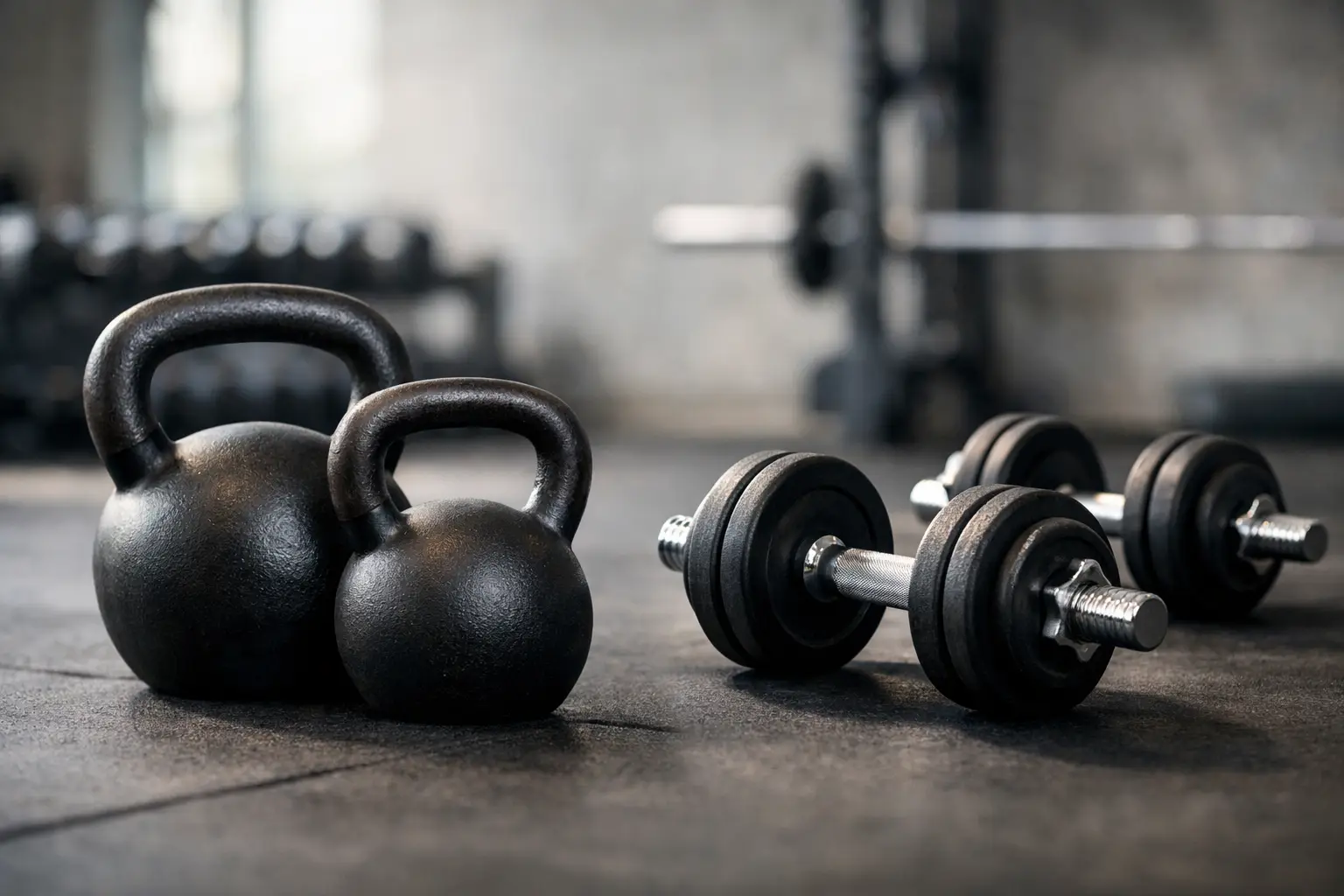
A dumbbell has weight on both ends of a short handle. When you press, row, curl, or squat with it, the load generally stays balanced on either side of your hand. That predictable feel makes dumbbells approachable for learning classic strength exercises and adjusting weight in small increments.
A kettlebell has a round body with a handle on top. Its center of mass sits below your hand, rather than beside it. That design changes the challenge. During a swing, clean, carry, or Turkish get-up, the bell can pull slightly away from your wrist and ask your grip, core, shoulders, and hips to organize the movement.
Neither design is automatically better. A dumbbell often gives you more direct control. A kettlebell often gives you more momentum and a stronger connection to full-body movement. The right choice depends on the job you are asking it to do.
When Dumbbells Make More Sense
Dumbbells are exceptionally useful for building strength in a controlled, progressive way. If your goal is to make a press, row, chest exercise, lunge, or squat gradually heavier over time, dumbbells make that process easy to understand. You can use one arm or both, work each side independently, and find a comfortable hand position.
They are also often friendlier for beginners who are learning how to brace their core, keep their joints aligned, and recognize the difference between healthy effort and poor form. A dumbbell floor press, for example, lets you train your chest and triceps without needing a bench. A supported dumbbell row can strengthen your upper back while reducing the demand on a tired lower back.
Dumbbells shine for muscle-focused training, too. Exercises such as lateral raises, biceps curls, triceps extensions, and rear-delt flyes are possible with kettlebells, but the shape of a dumbbell is usually more comfortable and precise. If you want to strengthen specific muscles after an injury, improve posture, or add support around a joint, that precision matters.
For many people training at home, adjustable dumbbells are also practical. One compact set can cover a broad range of exercises without filling a room with equipment.
When Kettlebells Make More Sense
Kettlebells are especially effective when you want strength training to include coordination, power, and conditioning. The classic kettlebell swing teaches a hip hinge: your hips move back, then drive forward to propel the bell. Done correctly, it is not a squat or an arm lift. Your glutes, hamstrings, core, and lats work together to create a crisp, athletic movement.
That makes kettlebells a useful option for people who are short on time and want their strength work to elevate their heart rate. Carries, goblet squats, deadlifts, swings, cleans, and presses can create a challenging full-body session with one or two bells.
The offset load can also improve body awareness. Holding a kettlebell in a front-rack position, for instance, requires your trunk to resist leaning or twisting. That is valuable for daily life, whether you are carrying groceries, lifting a toddler, or moving luggage through an airport.
Still, kettlebells have a learning curve. A swing performed with a rounded back or an overly arm-driven motion can irritate the lower back or shoulders. Cleans can bang against the forearm when the bell loops around the wrist instead of staying close to the body. These are technique issues, not reasons to fear kettlebells, but they are reasons to start lighter and learn deliberately.
How to Choose Between Kettlebells and Dumbbells
Start with your current reality, not an idealized routine you may not have time or energy to maintain. Use these four questions to guide your choice:
- What is your primary goal? Choose dumbbells if you want straightforward strength and muscle-building progress. Choose kettlebells if you want to emphasize hip power, carries, movement skills, and conditioning alongside strength.
- How much instruction do you have? Dumbbell exercises are generally easier to self-teach. Kettlebell deadlifts, goblet squats, and carries are beginner-friendly, but swings, cleans, snatches, and get-ups deserve extra attention to form.
- What equipment and space do you have? Adjustable dumbbells offer flexibility across many weights. One moderately heavy kettlebell takes up little space and can still support an effective whole-body workout. For swings, make sure you have clear space around you and a stable floor.
- What will you actually enjoy repeating? Some people love the focused rhythm of dumbbell sets. Others find kettlebell training more energizing because it feels dynamic. The tool that makes you more likely to show up is a strong choice.
You can also choose by exercise rather than by identity. Use dumbbells for presses, rows, split squats, and accessory work. Use kettlebells for deadlifts, carries, goblet squats, and carefully learned swings. That approach removes the pressure to declare one piece of equipment superior.
A Simple, Sustainable Way to Start
If you are new to resistance training, begin with two sessions per week on nonconsecutive days. Give yourself room to learn, recover, and notice how your body responds. You do not need a punishing workout to make progress.
With dumbbells, try a squat or sit-to-stand, a floor press, a supported row, and a Romanian deadlift. With a kettlebell, start with a deadlift, goblet squat, suitcase carry, and floor press. Perform two or three sets of 8 to 12 controlled repetitions for most movements. Carries can be 20 to 40 seconds per side.
Before adding speed or weight, aim for consistency and clean form. You should feel challenged, but able to breathe, maintain control, and stop with a few repetitions still possible. If pain is sharp, persistent, or changes how you move, stop and seek guidance from a qualified health professional.
Once those foundations feel steady, progress one variable at a time. Add a few repetitions, a little weight, an extra set, or slightly more carry time. With kettlebells, do not rush into high-repetition swings or overhead work just because they look efficient online. Skill comes first, especially when stress, poor sleep, or a packed schedule have already lowered your recovery capacity.
Frequently Asked Questions
Are kettlebells better than dumbbells for weight loss?
Neither tool causes weight loss on its own. Kettlebell circuits may raise your heart rate more quickly, while dumbbell strength training can help you build and preserve muscle. The bigger factor is a routine you can sustain alongside supportive eating, sleep, recovery, and everyday movement.
Can beginners use kettlebells?
Yes. Begin with foundational movements such as deadlifts, goblet squats, and carries. Learn the hip hinge before attempting swings, and consider working with a qualified coach if you are unsure about technique.
Should I buy one kettlebell or a pair of dumbbells first?
A pair of adjustable dumbbells is usually the more versatile first purchase for general strength training. One kettlebell is an excellent choice if you have limited space and are drawn to carries, squats, deadlifts, and full-body conditioning. Your budget, space, and preferred training style all count.
Are kettlebells harder on the wrists?
They can be if the bell rests incorrectly during cleans and presses. Proper rack position places the bell close to the forearm without forcing the wrist to bend back. Start with light weight and practice slowly.
The best equipment is not the one that makes you feel behind or pressured to train like someone else. Choose the weight that fits your body, your schedule, and your next realistic workout. A few well-practiced movements, repeated with patience, can build the kind of strength that supports the rest of your life.