
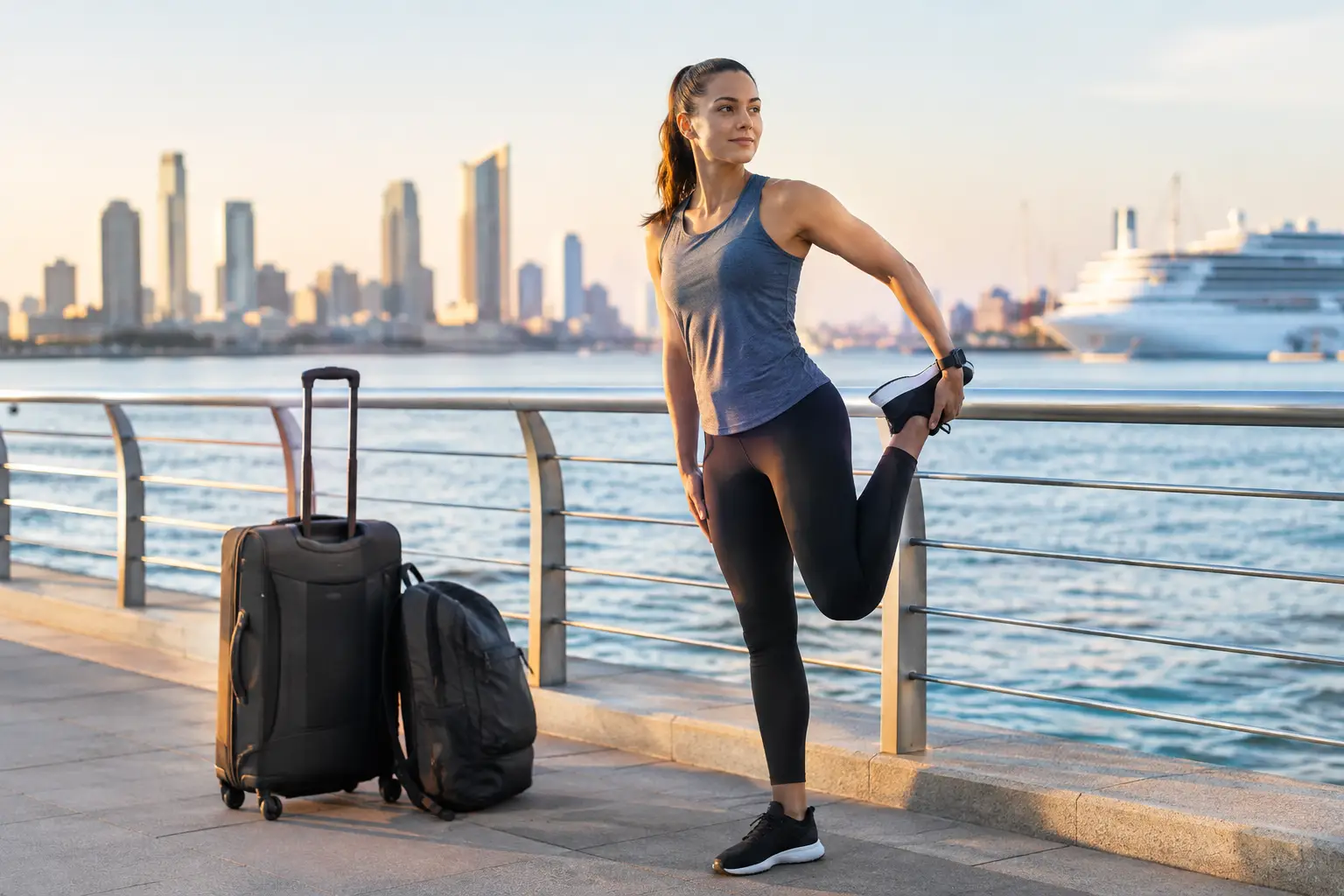
A trip can scramble the habits that normally keep you steady. Your hotel room is smaller than expected, meetings run late, kids need your attention, or a long flight leaves you tired and stiff. If you are wondering how to exercise during travel, start with this truth: you do not need to recreate your home routine to support your body. You need a realistic movement plan that fits the trip you actually have.
Travel workouts can protect your energy, reduce stiffness, support sleep, and give you a familiar moment of care in an unfamiliar place. They should not become another demand competing for your limited bandwidth. Here is how to keep moving without turning vacation, work travel, or family obligations into a fitness test.
Table of Contents
- Set a realistic travel movement goal
- Build workouts around your day, not against it
- Use a simple no-equipment routine
- Make walking and mobility count
- Adjust training for sleep, stress, and recovery
- Know when rest is the better choice
- Frequently asked questions
1. Set a realistic travel movement goal
Before packing shoes or searching for a hotel gym, decide what success means for this specific trip. A five-day business conference, a road trip with children, and a beach vacation do not require the same plan.
For most people, a good travel goal is maintenance, not maximum progress. You are preserving the habit, keeping your joints moving, and maintaining a bit of strength and cardiovascular fitness. That might mean three 20-minute sessions across a week. It might mean a daily walk and two short strength workouts. Both count.
This shift matters because all-or-nothing thinking is one of the fastest ways to abandon movement entirely. Missing your usual 60-minute gym session does not mean the day is lost. Ten focused minutes can still improve circulation, mood, and confidence that you can care for yourself wherever life takes you.
If you are managing burnout, recovering from a difficult period, or feeling pressure around food and body image while traveling, make the goal even gentler. Movement is not a way to earn meals or compensate for sitting on a plane. It is support for your body, not punishment for having a life.
2. Build workouts around your day, not against it
The best time to exercise while traveling is the time you can repeat without resentment. For some people, that is 15 minutes shortly after waking, before emails and logistics take over. For others, it is a walk between meetings, a hotel-gym visit before dinner, or a few mobility drills while children settle down at night.
Look at your itinerary and identify the most reliable opening rather than the ideal one. A 30-minute gap may disappear. A 12-minute window is often easier to protect. Put movement into your schedule as a flexible appointment, then give yourself permission to change the format if the day shifts.
For example, a traveler with a packed conference schedule might take a 15-minute walk after lunch and do two rounds of bodyweight exercises before showering. A parent on a family trip may choose active sightseeing, then fit in five minutes of stretching before bed. The structure is different, but the habit stays alive.
Use the minimum-effective approach
Choose one priority per session: strength, cardio, or mobility. Trying to do everything in a rushed workout can feel draining and increase injury risk, especially after poor sleep or hours of sitting.
On a high-energy day, you may combine a brisk walk with a short strength circuit. On a demanding day, mobility alone may be the smarter choice. Consistency is built by responding to reality, not by forcing your body through a plan it cannot reasonably recover from.
3. Try this no-equipment travel workout
A bodyweight routine removes the uncertainty of unfamiliar gyms and crowded workout spaces. You only need enough floor space to lie down. Complete two to four rounds at a controlled pace, resting as needed.
- Squats – 8 to 15 repetitions. Sit your hips back as if reaching for a chair, then stand tall. Use a hotel chair for support if balance is a concern.
- Incline push-ups – 6 to 12 repetitions. Place your hands on a stable desk or counter. A higher surface makes the movement more accessible than floor push-ups.
- Glute bridges – 10 to 15 repetitions. Lie on your back with knees bent, press through your feet, and gently lift your hips. This is especially helpful after long periods of sitting.
- Reverse lunges or split squats – 6 to 10 repetitions per side. Hold a wall or chair if needed. Keep the range of motion comfortable for your knees and hips.
- Dead bugs – 6 to 10 repetitions per side. On your back, slowly lower the opposite arm and leg while keeping your low back comfortably supported.
- Plank or elevated plank – 15 to 30 seconds. Choose a version that lets you breathe steadily rather than strain.
Move with control, not speed. You should finish feeling worked but capable of continuing your day. If you are new to exercise, begin with one round. If you are experienced, slow the lowering phase, add another round, or use a backpack with a few safe, evenly distributed items for light resistance.
4. Make walking and mobility count
Travel naturally creates opportunities for movement that are easy to dismiss because they do not look like a traditional workout. They still matter. Walking through a terminal, exploring a neighborhood, taking stairs when they feel safe, or choosing a slightly farther coffee shop can add up without demanding a separate block of time.
Walking is also one of the most useful ways to reset after a flight or long drive. It encourages circulation, exposes you to daylight when available, and can help you mentally transition from work mode to rest mode. You do not need to chase a step target if that becomes stressful. A purposeful 10- to 20-minute walk is enough to change how your body feels.
Mobility is equally valuable when your back, neck, hips, or ankles feel tight from sitting. Try a few minutes of shoulder circles, gentle neck movements, hip circles, calf raises, and a slow forward fold with bent knees. Avoid aggressive stretching when you are cold, exhausted, or in pain. The goal is to restore comfortable motion, not force flexibility.
5. Adjust for sleep, stress, and recovery
Travel can disrupt sleep, hydration, meals, and routines. Those factors affect exercise more than motivation alone. A workout that feels easy at home may feel unusually difficult after a red-eye flight, time-zone changes, alcohol, or a day spent carrying bags and managing plans.
Use a simple check-in before you train: How did I sleep? Am I sore, dizzy, ill, or unusually anxious? What does my schedule require after this? If your answers point to low capacity, lower the intensity. Walk, stretch, do one round of strength work, or rest.
Hydration deserves practical attention, particularly on flights and in hot climates. Carry water when possible, drink regularly, and eat enough to support the activity you choose. Skipping meals and then demanding a hard workout from your body is not discipline. It is a setup for fatigue, irritability, and poor recovery.
For experienced exercisers, travel is often a useful deload period. Reducing training volume for several days will not erase your progress. Recovery can strengthen the foundation that lets you train consistently over months and years.
6. Know when rest is the better choice
There are times when exercise should move down the priority list. Fever, chest pain, significant dizziness, acute injury, severe exhaustion, or symptoms that worsen with activity are reasons to stop and seek appropriate medical guidance. If you are pregnant, living with a chronic condition, or returning from injury, personalized advice from a qualified clinician can help you decide what is safe.
There is also ordinary emotional fatigue. Maybe your trip involves family tension, grief, a demanding work event, or the pressure of caregiving. On those days, rest may look like lying down early, taking a quiet walk, or choosing food and hydration that help you feel stable. You do not fail your routine by listening to your limits.
Closing Summary
A travel routine works when it is small enough to survive real life. Keep a few movement options available, choose the one that matches your energy, and let the purpose be care rather than control. Your body benefits from the message that you can return to it, even on the most unpredictable days.
Frequently Asked Questions
Is 10 minutes of exercise enough while traveling?
Yes. Ten minutes of walking, mobility, or bodyweight strength work can reduce stiffness and reinforce your routine. Longer sessions are optional, not required for the effort to matter.
Should I work out every day on vacation?
Not necessarily. Vacation can be a time for recovery, play, and rest. If daily movement feels good, keep it light and flexible. If it feels like pressure, choose a few sessions or simply enjoy active parts of your trip.
What should I pack for travel workouts?
Comfortable shoes and clothes are often enough. If you have room, a light resistance band can add variety, but it is not essential. Avoid overpacking gear you are unlikely to use.
How do I exercise after a long flight?
Start gently with water, a short walk, and easy mobility for your hips, calves, shoulders, and upper back. Save hard intervals or heavy strength work for when you have slept and feel more settled.
What if I miss every planned workout?
Nothing is ruined. Resume your usual routine when you return, beginning at a pace that reflects how you feel. The most helpful closing thought is this: fitness is built through many imperfect weeks, not one perfectly controlled trip.