
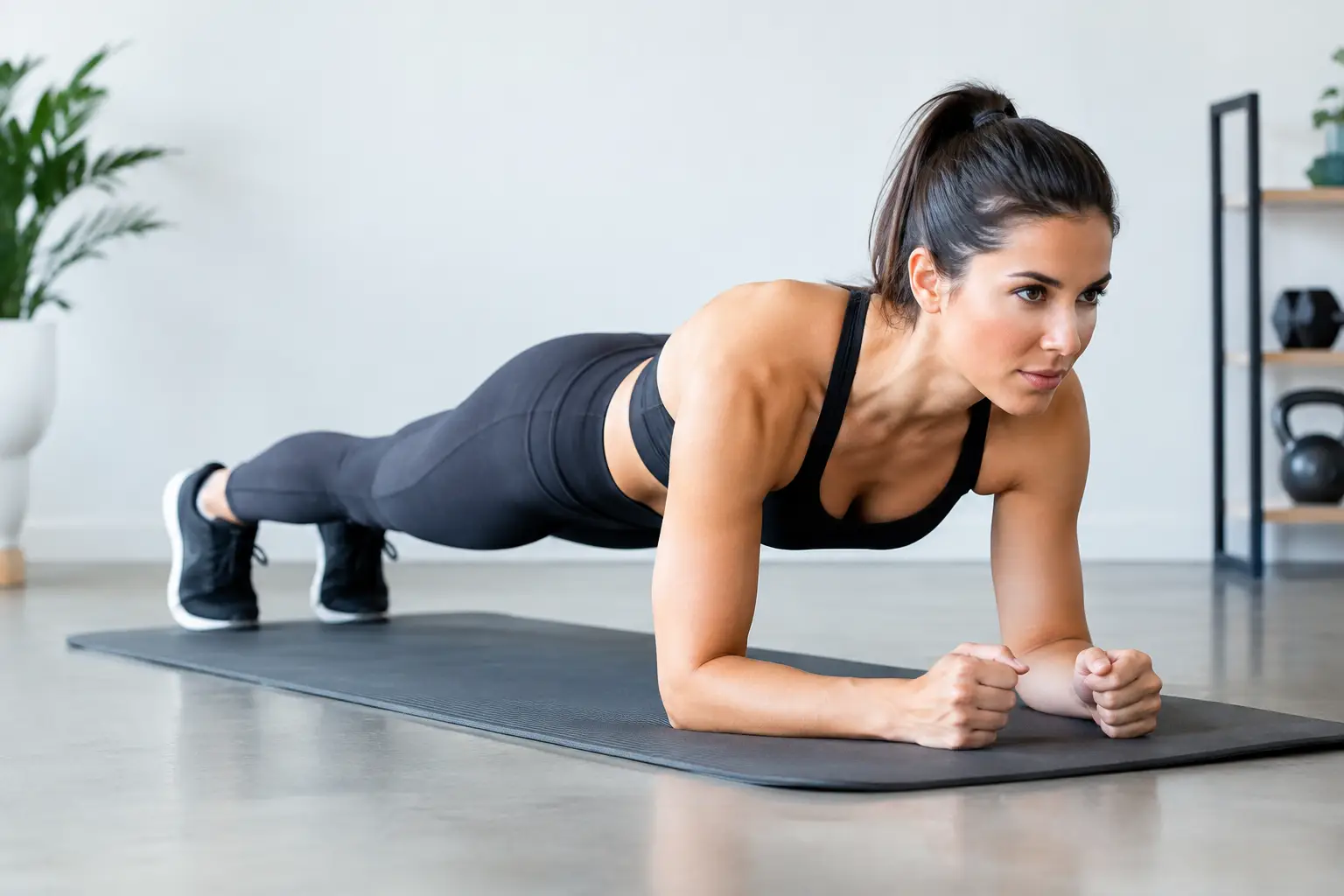
Your core is working when you lift a sleeping child, carry groceries up the stairs, reach for a box, or sit through another long meeting. If your back feels tight, your balance feels shaky, or workouts leave you feeling more strained than strong, you do not need punishing ab circuits. Learning how to build core stability means training your body to create support, transfer force, and move with more confidence in real life.
This is not about earning a flatter stomach or holding a plank until you shake. It is about building a capable center that supports the life you already have, including stressful workdays, inconsistent sleep, and a schedule that may only allow 10 focused minutes.
Table of Contents
- Understand what core stability really means
- Start with breathing and bracing
- Train your core to resist movement
- Add carries and full-body strength work
- Build a realistic weekly routine
- Know when to adjust or seek support
- Frequently asked questions
1. Understand What It Means to Build Core Stability
Your core is more than your abdominal muscles. It includes the deep muscles around your trunk, your diaphragm, pelvic floor, back, hips, and glutes. These areas work together to help you stay organized while your arms and legs move.
Core stability is not about making your torso perfectly still. Your body needs to bend, rotate, and reach. Stability means having enough control and strength to manage those movements without dumping stress into your lower back, neck, or hips.
That distinction matters. Hundreds of crunches may build some abdominal endurance, but they are not automatically the best choice for someone whose goal is easier lifting, stronger squats, better posture, or less discomfort after a day at a desk. The most useful core training often teaches you to resist excessive arching, twisting, or side-bending while you breathe normally.
2. Begin With Breathing and a Gentle Brace
A hard, breath-holding brace has a place during a heavy lift, but it is not the foundation for every exercise. Start by learning to create tension without clenching every muscle in your body.
Lie on your back with your knees bent and feet on the floor. Place your hands around the lower sides of your ribs. Breathe in slowly, letting your rib cage expand in all directions. As you exhale, gently tighten your midsection as if you were preparing for a friendly poke in the stomach. Your ribs should settle without forcefully flattening your back into the floor.
Try five slow breaths this way before your workout or after a tense day. It may sound almost too simple, especially if you are used to fitness culture telling you that effort must hurt to count. But breathing with control can help you notice unnecessary tension and establish the connection between your trunk, ribs, and pelvis.
If breathing drills make you lightheaded, return to your normal breathing pattern and keep the effort lower. If you are pregnant, postpartum, recovering from surgery, or managing pelvic floor symptoms, individualized guidance from a qualified clinician can be especially valuable.
3. Train the Patterns That Protect Your Trunk
Once you can breathe and lightly brace, choose exercises that challenge control rather than chase exhaustion. Start with two or three movements, performed slowly enough that you can feel what is happening.
Dead Bug for Anti-Extension Control
The dead bug teaches you to keep your rib cage and pelvis connected as your limbs move. Lie on your back with your arms reaching toward the ceiling and knees bent over your hips. Exhale gently, brace, then slowly lower one heel toward the floor while reaching the opposite arm overhead. Return and switch sides.
Keep the range small if your lower back arches or your ribs flare up. Six controlled reps per side are more useful than 20 rushed reps. This is a good option for beginners and for experienced exercisers who need a reset after relying on momentum.
Bird Dog for Coordination
From hands and knees, extend one leg behind you and the opposite arm forward. Think about reaching long rather than lifting high. Your goal is to avoid rotating your hips or shrugging your shoulders toward your ears.
Pause for one or two calm breaths, then change sides. If the full version feels unstable, slide one foot back along the floor or move only your leg at first. Scaling an exercise is not falling behind. It is how you give your nervous system a clear, manageable challenge.
Side Plank for Lateral Stability
Side planks strengthen the muscles that help prevent your torso from collapsing to one side when you walk, carry, run, or climb stairs. Begin with your bottom knee on the floor and your elbow under your shoulder. Lift your hips until your body forms a straight line from shoulder to knee.
Hold for 10 to 20 seconds while breathing. If your shoulder complains, reduce the hold, adjust your elbow position, or choose a different exercise. Discomfort is information, not a command to push harder.
4. Use Carries and Strength Training to Make It Real
Some of the best core exercises barely look like ab exercises. A suitcase carry, for example, is simply walking while holding a weight at one side. Your trunk has to resist leaning toward the weight, which is a highly practical form of core work.
Choose a dumbbell, kettlebell, or loaded bag that feels challenging but allows you to walk tall. Carry it for 20 to 40 seconds on one side, then switch. Move slowly, keep your shoulders level, and breathe. Start with two rounds per side.
Full-body movements also belong in a core stability plan. Squats, hinges, rows, step-ups, and presses require your trunk to coordinate force between your lower and upper body. You do not need to load them heavily. A controlled bodyweight squat or a light hip hinge can be enough to practice staying centered.
The trade-off is fatigue. If your workday has already drained you, a simpler session of dead bugs, bird dogs, and easy carries may serve you better than a complex strength workout. Consistency grows from matching the plan to your actual capacity, not your idealized one.
5. Build a Weekly Routine You Can Repeat
For most people, two or three short core sessions each week are plenty to begin. Attach them to a habit that already exists, such as the end of a walk, the start of a strength workout, or a few minutes before your shower.
A practical 12-minute session might include five breaths of bracing practice, two sets of dead bugs, two sets of bird dogs, two short side planks per side, and two suitcase carries per side. Rest as needed. Good form matters more than turning this into a breathless circuit.
Progress one variable at a time. Add a few seconds to a hold, one or two reps, a slightly longer carry, or a little more resistance. Do not increase everything at once. If your technique changes, your lower back starts taking over, or you cannot breathe comfortably, that is a sign to stay at the current level or scale back.
6. Know When Your Body Needs More Support
Core training can be useful, but it is not a cure-all for pain. Seek medical or physical therapy support for severe pain, pain after an injury, numbness, weakness, unexplained symptoms, or changes in bowel or bladder control. Those experiences deserve real assessment, not an internet exercise prescription.
For everyday soreness or stiffness, look at the larger picture too. Long periods of sitting, poor sleep, stress, sudden training changes, and carrying too much emotional load can all change how your body feels. Movement can help, but it works best alongside rest, nourishment, and realistic expectations.
Frequently Asked Questions
How long does it take to build core stability?
Many people notice better body awareness within a few weeks of consistent practice. Strength and endurance changes usually take longer. Focus on whether daily tasks and workouts feel more controlled, not just on a calendar deadline.
Should I train my core every day?
Light breathing and mobility work can be done daily if it feels good. More demanding exercises, such as loaded carries and longer planks, generally benefit from recovery. Two to three focused sessions per week is a strong starting point.
Are crunches bad for core stability?
No. Crunches are not inherently bad, and some people enjoy them without issue. They are simply one movement pattern. A balanced program also includes exercises that train resisting extension, rotation, and side-bending.
Why do I feel core exercises in my hip flexors or neck?
This often happens when an exercise is too advanced, you are holding tension in your shoulders, or your hips are doing more work than your abs. Make the range smaller, slow down, support your head when appropriate, and return to steady breathing.
You do not need to prove your strength through soreness, shaking, or a perfect routine. Start with one controlled set today, make it repeatable, and let your core become a quieter source of support for everything else you carry.