
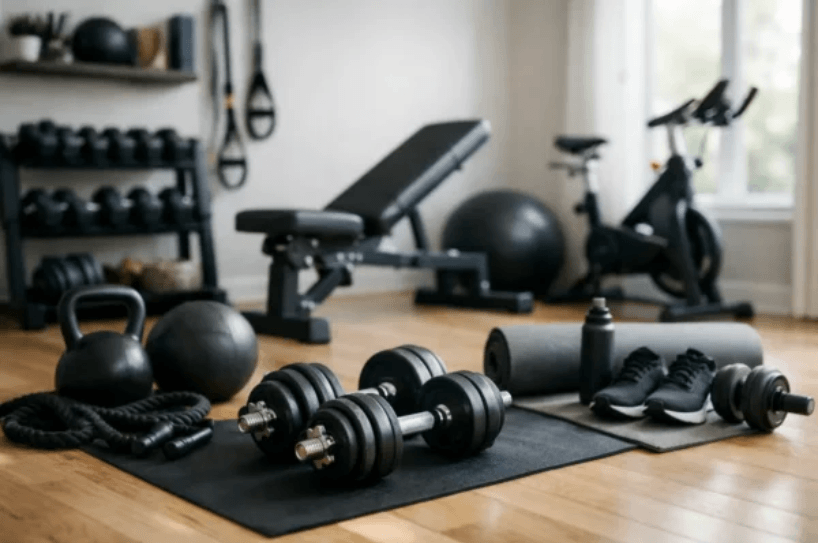
The treadmill that becomes a clothes rack is not a motivation problem. It is usually a planning problem. A useful garage gym equipment guide starts with the life you actually live: the spare 20 minutes before work, the evening when the kids are finally asleep, the apartment corner you can claim, and the energy you have on a stressful day.
A garage gym does not need to look like a fitness studio to support real progress. The best setup makes movement easier to begin, flexible enough to grow with you, and simple enough that it does not add financial or mental pressure.
Table of Contents
- Start with your routine, not a shopping cart
- Choose equipment by movement pattern
- Build your setup in phases
- Plan for space, safety, and recovery
- Avoid common buying mistakes
- Frequently asked questions
Start With Your Routine, Not a Shopping Cart
Before comparing brands or chasing a sale, answer a few practical questions. What kind of movement do you enjoy enough to repeat? How much floor space can stay available most days? Are you training for strength, better energy, joint-friendly mobility, stress relief, or a specific event?
Your answer may change what is worth buying. A runner who wants weather-proof cardio may get genuine value from a treadmill or indoor bike. Someone working long hours who wants stronger muscles and fewer aches may get more from adjustable dumbbells, a bench, and a mat. A parent fitting workouts into unpredictable pockets of time may need equipment that comes out and puts away in two minutes.
The garage gym goal is not to recreate every option at a commercial gym. It is to remove the barriers between you and a repeatable workout. For many people, fewer choices create more consistency.
Garage Gym Equipment Guide: Choose by Movement Pattern
A balanced setup lets you squat, hinge, push, pull, carry, and move through a comfortable range of motion. You do not need a separate machine for every pattern. A small group of versatile tools can cover a lot of ground.
1. Start with an exercise mat and resistance bands
A supportive exercise mat creates a defined place to move, whether you are doing mobility work, core training, yoga, or bodyweight strength exercises. It is a modest purchase with a high practical payoff, especially if hard floors make kneeling, stretching, or planks uncomfortable.
Resistance bands are another strong first choice. Loop bands, long bands, and tube bands can help you train rows, presses, glute work, lateral movement, and assisted mobility. They are affordable, travel easily, and make it possible to adjust difficulty without filling a room with equipment. Just inspect them regularly for cracks or thinning, and anchor them only to stable surfaces designed to hold the load.
2. Add dumbbells or kettlebells for progressive strength
Strength training becomes more effective when you can gradually increase resistance. Dumbbells are often the most adaptable option because they work for presses, rows, squats, lunges, deadlifts, carries, and many other exercises. If space is limited, adjustable dumbbells can replace several pairs, though switching weights may interrupt a faster-paced workout.
Kettlebells are excellent for carries, goblet squats, deadlifts, and controlled swings once you have learned the hinge pattern. They take up little space but ask for good technique. If you are new to kettlebell training, start with foundational movements rather than treating swings as a shortcut to an intense workout.
Choose a starting weight that feels challenging while allowing you to move with control. The right weight is not a statement about your fitness level. It is a tool that helps you practice safely and progress over time.
3. Consider a bench if strength is a priority
A sturdy adjustable bench expands what dumbbells can do. It supports chest presses, supported rows, step-ups, split squats, and seated exercises. It can be one of the most useful additions for someone who expects to strength train regularly.
Still, a bench is not essential on day one. Floor presses, glute bridges, bodyweight split squats, and standing presses are effective alternatives. If your budget or storage space is tight, build a habit with the basics first. Buy the bench when it solves a real limitation in your routine.
4. Choose cardio equipment for the activity you will actually use
Cardio machines can be helpful, but they are also the category most likely to take up space and strain a budget. Walking pads, treadmills, stationary bikes, rowers, and ellipticals each have benefits, yet the best choice depends on comfort, noise, storage, and your body.
Walking is low-impact and familiar for many people, making a walking pad or treadmill useful for short movement breaks. Indoor bikes can feel easier on the joints and work well for people who prefer guided classes. Rowers engage much of the body, but technique and storage deserve attention. If possible, try a similar machine before committing.
You can also meet many cardio needs without a machine. Brisk outdoor walks, stair intervals, dance workouts, low-impact circuits, and jump rope for those whose joints tolerate it can all raise your heart rate. Equipment should support your preferences, not convince you to force an activity you dislike.
5. Make room for mobility and recovery tools
Recovery gear is not a substitute for sleep, rest days, nutrition, or medical care. But a foam roller, massage ball, or yoga blocks can make gentle mobility work more accessible. These tools may help you spend a few minutes caring for stiff hips, tight calves, or an upper back that has been hunched over a laptop all day.
Think of recovery as part of the setup, not an afterthought reserved for athletes. A calm five-minute cooldown can make a home workout feel more sustainable, particularly during high-stress seasons.
Build Your Garage Gym Setup in Phases
Buying everything at once can create pressure to use everything at once. A phased approach protects your budget and gives you time to learn what fits your routine.
- Begin with a foundation: Choose a mat, a set of bands, and either a pair of dumbbells or one kettlebell. This is enough for full-body workouts, mobility sessions, and short strength circuits.
- Train consistently for four to six weeks: Notice what you reach for and where you feel limited. You may learn that you need heavier resistance, a more comfortable mat, or a way to fit in indoor walking.
- Add one meaningful upgrade: An adjustable bench, adjustable dumbbells, or a cardio machine can make sense once it addresses a specific need rather than a vague hope that more gear will create more motivation.
- Review every season: Your needs can shift with work travel, injury recovery, changing goals, or family schedules. A good garage gym evolves instead of becoming a museum of past intentions.
Plan Your Garage Gym Space, Safety, and Recovery
Measure your garage gym space before ordering anything, including the clearance needed to use equipment safely. A folding treadmill still needs room to unfold. A bench needs enough surrounding space for you to step, lie down, and handle weights without hitting furniture. If you live above someone, consider noise and vibration before purchasing equipment for jumping or running.
Store garage gym gear where it is visible but orderly. A small basket for bands, a rack for weights, and a dedicated mat corner can provide a helpful cue to move without making your home feel overtaken by fitness. If seeing equipment creates guilt, tuck it into a cabinet or closet and schedule a realistic time to bring it out.
Safety is a form of self-respect. Use stable footwear when needed, keep floors clear, follow manufacturer weight limits, and prioritize form over speed. Sharp pain, dizziness, chest pain, or symptoms that feel unusual are reasons to stop and seek appropriate medical guidance. If you are returning after injury, pregnancy, illness, or a long break, a qualified professional can help you choose a safe starting point.
Avoid Common Buying Mistakes
The most expensive mistake is purchasing equipment for the version of you who trains perfectly every day. Your real routine may involve ten-minute sessions, interrupted workouts, and weeks when sleep matters more than intensity. That is normal.
Avoid buying very light weights that you will outgrow immediately, but do not leap to advanced equipment because it looks impressive online. Be cautious with oversized all-in-one machines unless you have stable space, a clear training plan, and confidence you will use their specific features. Reviews can help, but your floor plan, schedule, joints, and preferences matter more than a viral recommendation.
Finally, do not treat your garage gym as a test of willpower. Some days, the most supportive session is a few stretches, a walk, or an early bedtime. A flexible garage gym setup should make health easier, not turn every missed workout into evidence that you have failed.
Frequently Asked Questions
What is the best garage gym equipment for beginners?
For most beginners, start with a mat, resistance bands, and dumbbells or a kettlebell. This combination supports strength, mobility, and low-impact conditioning without requiring much space. Add equipment after you have practiced consistently enough to know what you enjoy.
How much should I spend on a garage gym?
A capable starter setup can cost far less than a large machine. Set a budget based on your available space and expected use, then prioritize versatile gear. Spending more can be worthwhile for durable adjustable weights or a cardio machine you genuinely use, but price alone does not predict consistency.
Can I build strength without a barbell or weight machine?
Yes. Progressive bodyweight exercises, bands, dumbbells, kettlebells, and unilateral movements such as split squats can build meaningful strength. Eventually, some people want heavier loading, but a barbell is an option, not a requirement for getting stronger.
How often should I use a garage gym?
Start with a schedule you can repeat, such as two or three strength sessions each week plus walks or mobility work on other days. The helpful closing thought is simple: build a space that welcomes you back after a busy week. Consistency grows from compassion and practical choices, not from perfect conditions.
For more read the Body Sculpting Bible for Men and The Body Sculpting Bible for Women.