
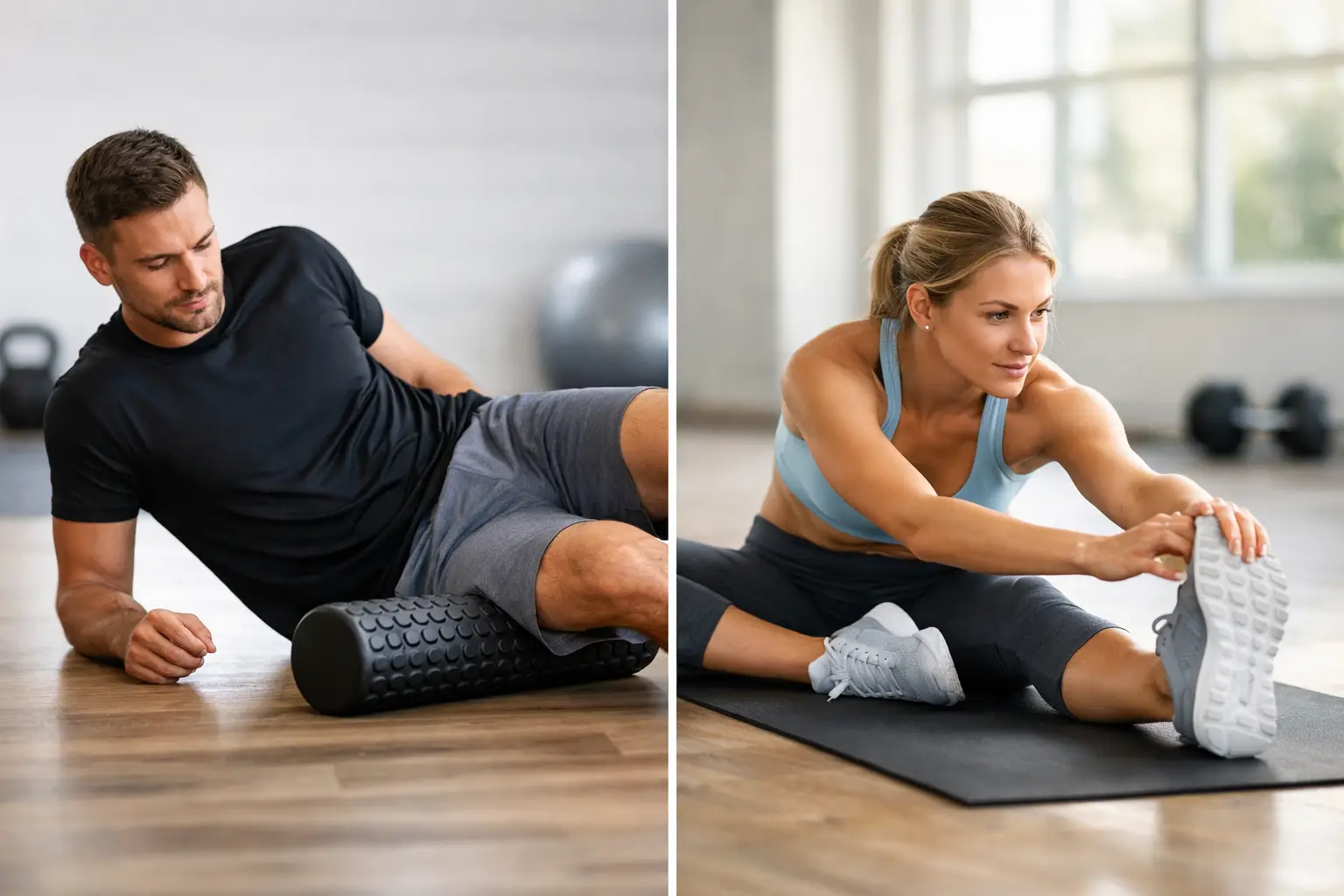
You finish a long day at your desk, head to a workout, and your hips and calves feel like they have been shortened by inches. The usual question follows: foam rolling versus stretching – which one will actually help? The useful answer is not that one wins. They do different jobs, and using the right one at the right time can make movement feel more comfortable without turning recovery into another demanding task.
Table of Contents
- What foam rolling and stretching actually do
- Foam rolling versus stretching before exercise
- What to do after exercise or a long day
- A simple routine for tight, tired muscles
- Safety and common mistakes
- Frequently asked questions
What Foam Rolling and Stretching Actually Do
Foam rolling is a form of self-massage. By slowly applying pressure with a roller, you can create a short-term change in how sensitive a muscle or surrounding tissue feels. Many people notice less soreness, more ease, or a slightly greater range of motion afterward. That is valuable, especially when you are stiff from commuting, parenting, training, or spending hours at a computer.
But foam rolling does not literally break up knots or permanently smooth out fascia. Your body is not a piece of dough that needs to be flattened. The benefit is more likely related to your nervous system, blood flow, and your brain receiving a strong sensory signal that says the area can relax a bit. You do not need to make it hurt to make it work.
Stretching asks a muscle to lengthen while you move a joint through a range of motion. Static stretching means holding a position, such as a calf stretch against a wall. Dynamic stretching uses controlled motion, such as leg swings or bodyweight lunges. Stretching can improve flexibility over time when you practice it consistently, but a single session mostly creates a temporary change in range and sensation.
Neither tool replaces strength. If your shoulders, hips, or ankles repeatedly feel restricted, building control and strength through that range often matters as much as, or more than, trying to loosen the area. Recovery works best when it supports the activities and movement patterns you want to keep doing.
Foam Rolling Versus Stretching Before Exercise
Before a workout, your goal is usually preparation, not deep relaxation. You want to raise your temperature, rehearse the movements ahead, and feel ready to produce force. Dynamic stretching is generally the better foundation for that job.
For example, before a run, brisk walking, ankle circles, leg swings, and a few easy lunges prepare your lower body more specifically than a long hamstring hold. Before strength training, light sets of the exercise you plan to do, plus controlled hip, shoulder, or upper-back mobility work, can help you feel more coordinated.
Foam rolling can still fit before exercise if a particular area feels stiff or sore. Keep it brief – about 30 to 60 seconds on a muscle group – then follow it with active movement. Roll your quads before squats, for instance, then do bodyweight squats or a light warm-up set. The roller may help you access a more comfortable range, while the movement teaches your body how to use it.
Long, intense static stretches immediately before an activity that requires maximum power, such as sprinting or heavy lifting, are usually not the best choice. That does not mean static stretching is bad. It simply has a better place after training or in a separate mobility session for most people.
Recovery After Exercise or a Long Day
After training, either option can feel good. This is where preference matters. If a gentle hamstring stretch helps you settle down after a run, use it. If rolling your upper back for a minute makes your desk-bound shoulders feel less guarded, that is useful, too.
Recovery research suggests foam rolling may modestly reduce the feeling of delayed-onset muscle soreness. It is not a cure for doing far more than your body was prepared for, and it will not replace sleep, enough food, hydration, or sensible training progression. Still, a few minutes of rolling can be a realistic recovery habit when you need something simple.
Static stretching after activity can be calming and may support flexibility when practiced regularly. Think moderate tension, not a test of toughness. You should be able to breathe normally and leave the position feeling the same or better, rather than limping away with more irritation.
For busy adults, the best post-workout recovery practice is the one you will repeat. A five-minute recovery routine after dinner may serve you better than a 30-minute recovery plan that only happens once a month.
A Simple 5 Step Recovery Routine
Use this recovery routine after a workout, after a shift, or on an evening when your body feels generally tight. Adjust positions as needed, and skip anything that increases pain.
- Roll your calves and upper back for one minute each. Move slowly and pause on tender areas for a breath or two. Avoid rolling directly over the low back, neck, joints, or bony areas.
- Roll your quads or glutes for one minute. Choose the area that feels most worked or most restricted. Keep pressure tolerable – a six out of 10 intensity is plenty.
- Stretch your hip flexors for 30 seconds per side. Use a half-kneeling position, gently tuck your pelvis, and squeeze the glute on the kneeling side. Avoid arching your low back to force a bigger stretch.
- Stretch your calves or hamstrings for 30 seconds per side. Choose the one that fits your day. If your hamstrings tend to feel cranky, keep a soft bend in your knee and do not pull aggressively.
- Finish with one minute of easy movement. Walk around, do slow bodyweight squats, or take a few relaxed breaths with your arms reaching overhead. This final step helps turn temporary looseness into movement you can use.
You do not need every tool every time. A runner with tight calves may prefer brief rolling and ankle mobility. Someone who lifts and sits all day may get more from upper-back rolling, hip flexor stretching, and a few controlled squats. Pay attention to what improves your next few hours, not just what feels dramatic in the moment.
Safety and Common Mistakes During Recovery Routines
More pressure is not better. Bruising, sharp pain, numbness, tingling, or pain that travels down an arm or leg are signs to stop. Avoid foam rolling directly over varicose veins, an acute injury, open skin, or a suspected fracture. If you take blood thinners, have osteoporosis, a bleeding disorder, reduced sensation from diabetes or another condition, or are pregnant and unsure about a technique, ask a qualified clinician for guidance first.
Be cautious about chasing one painful spot for several minutes. Muscles can feel tender because they are fatigued, stressed, or doing more work than nearby areas. Sometimes the answer is not harder pressure. It may be a rest day, a lighter workout, better sleep, or strengthening the muscles that support the movement.
Also remember that persistent stiffness is not always a mobility problem. Pain that lasts, worsens, follows a fall or accident, causes weakness, or disrupts sleep deserves evaluation from a health professional. Self-care should support your life, not ask you to ignore warning signs.
Frequently Asked Questions
Is foam rolling better than stretching for flexibility for recovery?
Not necessarily. Foam rolling may give you a short-term increase in comfortable range of motion, while regular stretching can help improve flexibility over time. Combining either one with strength training in a full range of motion is often the most practical long-term approach.
Should I foam roll every day for recovery?
You can if it feels good and you keep it gentle, but daily rolling is not required. Two to five minutes after a workout or during a stiff day is enough for many people. Your body does not need punishment to recover.
How long should I hold a stretch?
For general flexibility and recovery, 20 to 30 seconds per stretch is a reasonable starting point. Repeat once or twice if it still feels comfortable. Consistency across weeks matters more than holding one stretch for an extreme amount of time.
Can foam rolling replace a warm-up?
No. It can be one small part of preparation, but it does not replace gradually raising your heart rate and practicing the movements you are about to perform. Follow rolling with dynamic, activity-specific movement.
What if neither one helps my tightness?
Try stepping back from the idea that tightness always needs to be released. Your body may need rest, a change in training load, more general movement during the day, or help from a physical therapist or other qualified professional. Choose the smallest helpful action you can repeat, and let comfort and confidence build from there.
For more training and recovery tips, read The Resilient Athlete: A Self-Coaching Guide to Next Level Performance in Sports & Life by Andrejs Birjukovs.