
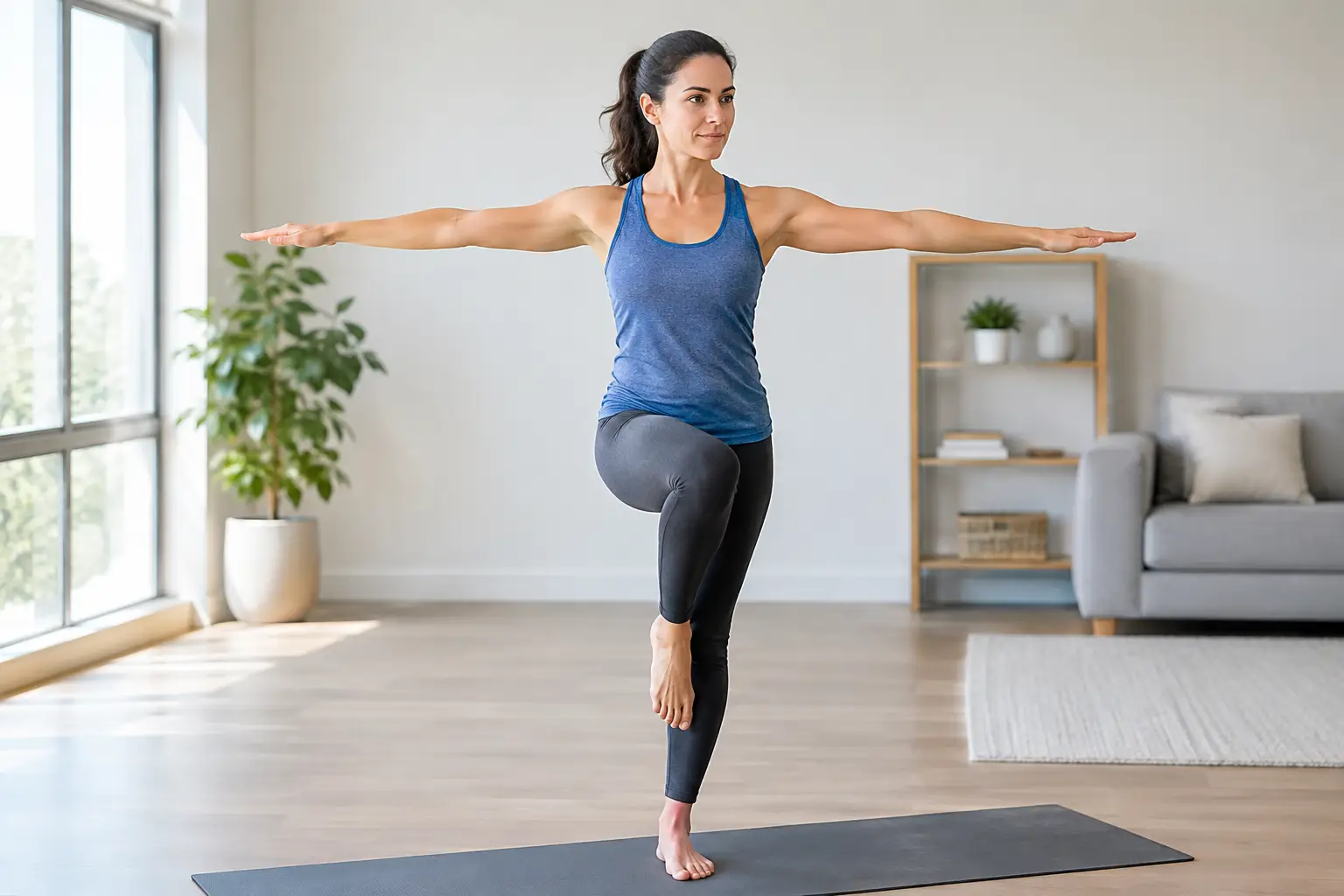
A missed step on the stairs, a wobble while pulling on pants, or feeling unsteady after a long day can shake your confidence more than it seems like it should. Balance is not a talent reserved for athletes or yoga instructors. It is a trainable part of everyday strength. The best balance exercises build steadier feet, stronger legs, and calmer confidence without requiring an hour of spare time or a punishing workout.
Table of Contents
- Why balance deserves a place in your routine
- 10 balance exercises to build from the ground up
- How to make balance training fit real life
- A steadier way forward
- Frequently asked questions
Why balance deserves a place in your routine
Balance is your ability to control your body over its base of support. Your brain, inner ear, vision, feet, ankles, hips, and core all contribute. That is why balance can feel different on a good night of sleep than it does after a double shift, a stressful week, or an illness.
Training it is not about standing perfectly still. It is about helping your body make small, useful adjustments when life gets uneven: carrying groceries, stepping off a curb, turning quickly when a child calls, or moving across a crowded train platform.
For many people, the most effective starting point is less dramatic than social media makes it look. You do not need to stand on an unstable surface or force yourself into positions that feel scary. A countertop, sturdy chair, or wall is smart equipment, not a shortcut.
10 Best Balance Exercises for Stronger Daily Movement
Start with two or three exercises, not all 10 at once. Practice two to four days per week, ideally when you are reasonably alert. If you are new to exercise, have neuropathy, frequent dizziness, a recent injury, or a history of falls, speak with a qualified health professional before progressing.
1. Supported single-leg stand
Stand beside a kitchen counter with one or two fingertips resting on it. Shift your weight into one foot, gently lift the other foot a few inches, and hold for 10 to 20 seconds. Keep your standing knee soft and your gaze forward.
Repeat on both sides for two or three rounds. When that feels steady, use less hand support before making the hold longer. This simple drill reveals side-to-side differences without turning them into a judgment.
2. Heel-to-toe walk
Walk forward slowly, placing the heel of one foot directly in front of the toes of the other. Keep a wall within reach and take 8 to 12 controlled steps.
This challenges balance in a narrow walking position, which is useful for real-life movement. Do not stare at your feet the entire time. Looking forward trains your body to use the sensory information it relies on when walking through the world.
3. Weight shifts
Stand with feet hip-width apart, hands near a counter if needed. Slowly shift your weight to the right foot without lifting the left, then shift to the left. Next, shift gently forward toward your toes and back toward your heels.
Spend 30 to 45 seconds moving with control. Weight shifts are especially useful if single-leg work feels intimidating, if you are returning after injury, or if stress has left you feeling disconnected from your body.
4. Marching with a pause
Stand tall and slowly lift one knee to a comfortable height. Pause for two seconds, lower with control, then switch sides. Aim for 8 to 12 repetitions per side.
Keep the movement small enough that you do not lean backward or grip through your shoulders. This exercise strengthens the hips while teaching your body to stabilize during walking and stair climbing.
5. Heel raises
Hold a counter lightly and rise onto the balls of both feet. Pause at the top, then lower slowly for 10 to 15 repetitions. Your calves and feet help make quick corrections when you lose balance, so they deserve more attention than they usually get.
To progress, shift more weight into one leg while rising, or eventually perform single-leg heel raises with support. If you feel cramping, reduce the range of motion and build gradually.
6. Clock taps
Stand on one leg beside a counter. With the free foot, lightly tap the floor in front of you, to the side, and behind you, as if reaching toward points on a clock. Complete three to five rounds, then switch legs.
The standing leg does the real work here. Clock taps improve ankle and hip control in multiple directions, which matters because life rarely asks us to move only straight ahead.
7. Sit-to-stand with control
Sit near the front of a sturdy chair with feet under your knees. Stand up without rushing, pause, then sit down slowly. Complete 8 to 12 repetitions.
This is balance training disguised as a daily task. The slower lowering phase builds leg strength and body awareness, both of which support safer movement. Use your hands on the chair or thighs if needed. Independence is built through appropriate support, not by struggling alone.
8. Lateral step and hold
Step to the right, bring your left foot in lightly, and pause on the right leg for one or two seconds. Repeat to the other side for 8 to 10 steps each way.
Lateral movement is often missing from walking-only routines. Training it can help your hips respond better when you need to sidestep a pet, a spilled drink, or someone stopping suddenly in front of you.
9. Single-leg reach
Stand on one leg with a counter nearby. Reach the opposite hand forward a few inches, then return to upright. You can also reach slightly across your body once the basic version feels secure.
Keep your hips mostly level and make the reach modest. The goal is not to touch the floor. It is to stay controlled while your center of mass changes.
10. Step-up and knee drive
Use the bottom step of a staircase or a low, stable platform. Step up with one foot, press through it to stand tall, and briefly lift the opposite knee. Step down slowly and repeat for 6 to 10 repetitions per side.
This is a more demanding option because it combines strength, coordination, and single-leg stability. Skip the knee drive at first if it makes you feel unsteady. The right version is the one you can repeat with confidence.
How to make balance training fit real life
A short routine done consistently beats an ambitious plan that becomes another item on an already overloaded to-do list. Try pairing balance work with a daily cue: while coffee brews, after brushing your teeth, or before your shower. Two minutes of supported single-leg stands and heel raises counts.
Use a simple progression rule. First, make the exercise feel smoother. Then reduce hand support. Then add time, repetitions, or a slightly more challenging variation. Closing your eyes or using a wobble board is not a required next step, and for many people it is not the safest one.
Your environment matters. Train in supportive shoes or barefoot only if the floor is clear and your feet tolerate it well. Avoid slippery socks. Keep pets, bags, and cords out of the area. If you feel sharp pain, spinning, chest pain, or unusual weakness, stop and seek medical guidance.
Balance also changes with recovery. A parent running on fragmented sleep, a night-shift nurse, a 55-year-old rebuilding strength after a difficult year, and a lifelong exerciser can all benefit from the same fundamentals while needing different intensity that day. That is not inconsistency. It is intelligent adjustment.
A steadier way forward
Better balance is rarely built through heroic effort. It comes from giving your body a few focused minutes, often enough that steadiness starts to feel familiar. Choose one exercise you can do today, use the support you need, and let that small practice become evidence that your strength is still available to you.
Frequently Asked Questions
How often should I do balance exercises?
Two to four sessions per week works well for most adults. Sessions can be as short as five to 10 minutes. Brief daily practice is also fine when the exercises feel easy and you are not overly fatigued.
Are balance exercises good for beginners?
Yes. Begin with weight shifts, supported single-leg stands, and sit-to-stands near a stable surface. The best starting exercise is one that challenges you slightly without making you feel unsafe.
Why is one side much worse than the other?
Most people have a stronger or more coordinated side. Practice both sides, and give the less steady side a little extra attention. A large or sudden difference, particularly with numbness, pain, or weakness, is worth discussing with a clinician.
Can balance exercises help prevent falls?
They can be one useful part of fall prevention because they build leg strength, coordination, and confidence. Home safety, vision care, medication review, footwear, and medical support may matter too, depending on your circumstances.
Should I train balance when I am exhausted?
Choose the easiest version or take the day off if you feel unusually tired, dizzy, or mentally foggy. Training when alert improves safety and quality. Rest is part of a sustainable fitness practice, not a failure to push hard enough.