
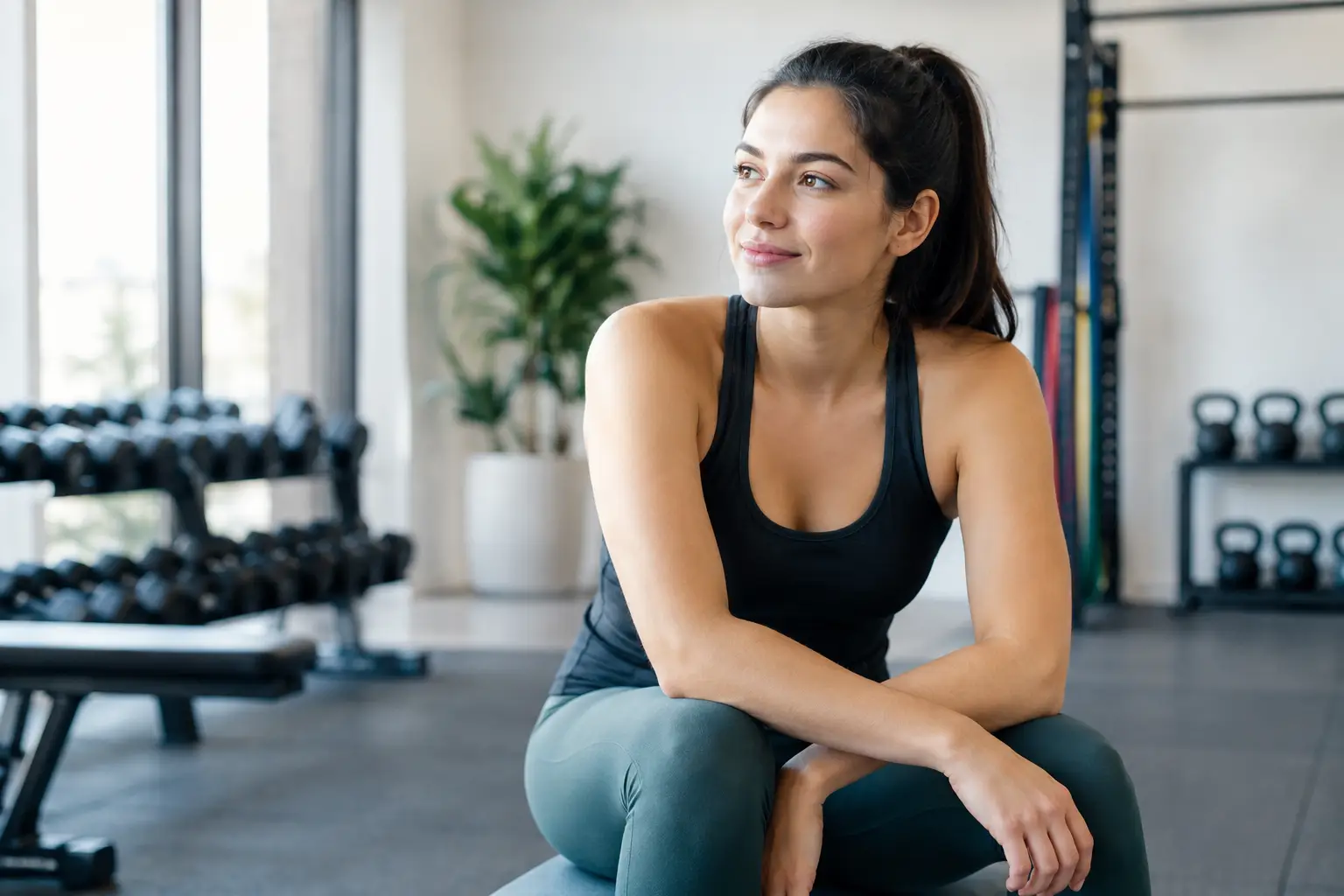
The hardest part of a gym visit can happen before you touch a weight: sitting in the parking lot, replaying what you do not know, and wondering whether everyone inside will notice. Gym anxiety is common, especially when you are new, returning after time away, changing your body, or simply carrying a lot of stress from work and family.
That feeling does not mean you are unmotivated or that the gym is not for you. It usually means your brain sees an unfamiliar, visible setting as a potential threat. The goal is not to force yourself to feel fearless. It is to make the experience predictable enough that confidence has room to grow.
Table of Contents
- What gym anxiety can look like
- Why it happens
- Seven practical ways to feel more comfortable
- When extra support can help
- Frequently asked questions
What gym anxiety can look like
Gym anxiety does not always look like panic. Sometimes it is avoiding a new class, staying only on the treadmill because the weight room feels intimidating, or skipping a workout after a stressful day because choosing what to do feels like too much. You might compare your body to other people, worry about using equipment incorrectly, or feel self-conscious taking up space.
For some people, this anxiety is mostly about unfamiliarity. For others, it is connected to past experiences with body criticism, injury, social anxiety, or pressure to change their appearance. Those differences matter. A simple plan may be enough for one person, while another may need to start more slowly or get support from a mental health professional.
Why the gym can feel so exposed
Gyms are public, often busy, and full of unwritten rules. Music is loud, mirrors are everywhere, and equipment can seem designed for people who already know what they are doing. Add social media’s polished fitness imagery, and a regular workout can start to feel like a performance.
The truth is less dramatic. Most people at the gym are focused on their own workout, their next meeting, or getting home to dinner. Even experienced exercisers have had awkward first days and moments of uncertainty. Feeling nervous is not proof that you do not belong. It is a normal response to doing something new in a place where you feel seen.
7 practical ways to work through gym anxiety
1. Make the first goal smaller than a workout
Your first goal can be walking through the door, checking in, and leaving after 10 minutes. That still counts. Reducing the assignment tells your nervous system that you are practicing, not being tested.
Try visiting at a quiet time and giving yourself permission to leave whenever you want. Often, the pressure drops once you know you are not trapped into completing a full routine.
2. Arrive with a short, written plan
Decision fatigue can make gym anxiety worse. Instead of walking in and trying to invent a workout, write down three to five actions beforehand. For example: five minutes of easy walking, two sets of bodyweight squats, two sets of cable rows, and a few minutes of stretching.
Keep the plan simple enough to remember. A short routine done consistently builds more confidence than an ambitious program that feels overwhelming. If you are unsure about form, choose beginner-friendly movements you have practiced at home or watched in a reliable instructional video.
3. Start with familiar territory
You do not have to begin in the busiest part of the gym. Walking tracks, cardio machines, open stretching areas, or a quiet corner can offer a lower-pressure entry point. Once you have settled in, you can gradually add one new area or piece of equipment.
This is not avoiding progress. It is using a gradual approach that makes progress more likely. Familiarity lowers the mental load, leaving you more energy to learn.
4. Ask for one specific kind of help
Many people avoid asking staff questions because they fear looking inexperienced. But a clear, small request is often easier than trying to figure everything out alone. Ask, “Could you show me how to adjust this seat?” or “When is this area usually less busy?”
A trainer can also provide a brief equipment orientation or create a basic program. You do not need to commit to intensive coaching to get a helpful introduction. The right amount of guidance depends on your budget, comfort level, and training history.
5. Use supportive distractions, not avoidance
A favorite playlist, podcast, or audiobook can give your attention somewhere steady to land. Headphones may also reduce the sense that every sound or conversation is directed at you. Choose something calming or energizing rather than content that makes you compare yourself to others.
Still, stay aware of your surroundings. Keep volume low enough to hear announcements, people nearby, and equipment sounds. Feeling grounded is more useful than completely checking out.
6. Replace comparison with a personal measure of progress
Someone lifting heavier, running faster, or wearing more coordinated workout clothes is not a scorecard for your worth. You do not know their experience, goals, injuries, responsibilities, or what their day has been like.
Use a measure that belongs to you: Did you show up? Did you complete your planned warm-up? Did you learn one machine setting? Did you stop before pain instead of pushing through it? Those are meaningful signs of progress, particularly when your schedule and energy are limited.
7. Leave while the experience is still manageable
You do not have to stay until you are exhausted to prove the visit was worthwhile. Ending after a positive 20-minute session can make it easier to return than forcing a long workout when anxiety is high.
Afterward, take a moment to notice what went better than expected. Maybe you found parking easily, tried a machine, or stayed five minutes longer than last time. This reflection teaches your brain that the gym can be uncomfortable and still safe.
Build confidence outside the gym, too
Your relationship with movement does not begin and end at a fitness facility. A walk at lunch, a short mobility routine in your living room, or strength exercises using your body weight can help you build physical confidence before you enter a more stimulating environment.
It may also help to choose a gym that fits your needs rather than forcing yourself into a setting that clashes with them. A large facility with plenty of equipment works well for some people. Others feel better in a smaller studio, a community center, a women-focused space, or a gym with less peak-hour traffic. Convenience, cost, childcare, accessibility, cleanliness, and culture all affect whether a routine is sustainable.
When to get extra support
If fear is causing panic symptoms, keeping you from everyday activities, or bringing up painful body-image concerns, you deserve more than advice to push through. A licensed mental health professional can help you understand the anxiety and develop strategies that fit your situation. If you have a history of injury, chronic pain, or a health condition, guidance from a qualified clinician or fitness professional can also make returning to exercise feel safer.
There is no prize for doing this alone. Support can make the path less stressful and more effective.
Frequently Asked Questions
Is gym anxiety normal for experienced exercisers?
Yes. Experienced exercisers can feel anxious when joining a new facility, returning after illness or pregnancy, recovering from an injury, or trying unfamiliar equipment. Confidence is often specific to the situation, not a permanent trait.
What should I do if the gym is crowded?
Use the simplest version of your plan. Walk, use one available machine, stretch, or leave and return at a quieter time if that is practical. A crowded day is not a personal failure, and you do not need to compete for equipment to have a useful workout.
Should I bring a friend to the gym?
A supportive friend can make the first few visits easier, particularly if they respect your pace and goals. But it also helps to practice going alone eventually, so your routine does not depend on another person’s schedule.
The gym is not a stage, and you are not there to earn permission to take care of yourself. Start with one manageable visit, let repetition do its work, and allow your definition of progress to be bigger than what anyone else can see.