
By Ellen Hunter Gans
One of the questions I get most often about the Great World Race is surprisingly simple:
What did you eat?
The short answer is that the food situation was far better than I ever imagined.
Before my Great World Race started, organizers encouraged each runner to bring their own nutrition for the marathons themselves. That made perfect sense. I arrived with individual packets of electrolytes and gels, plus carefully packed pre-race and post-race snacks for every event. As it turned out, I ended up giving much of that food away because I simply didn’t need it.
We were fed exceptionally well.
The race plane operated on an all-inclusive model, which meant three full meals a day along with a wide variety of beverages. For those who wanted them, beer and even champagne were available. There was also a 24-hour snack station, or “larder” in Irish English, stocked with the kinds of simple calories endurance athletes crave: energy bars, pretzels, chips (or “crisps,” as our Irish hosts would say), candy bars, and other grab-and-go snacks.
Honestly, it would have been my preteen sons’ dream come true.
As a vegetarian, I had been a little concerned about food options. The race organizers had asked everyone in advance about dietary restrictions, allergies, and preferences, and they clearly took those requests seriously. There was always something substantial for me to eat. It was never a case of everyone else getting a gourmet entrée while I was handed a lonely salad. The vegetarian meals were thoughtful, varied, and plentiful.
Most meals were served directly at our seats, much like first-class airline service. Picture tablecloths, multiple courses, and attentive flight attendants making sure everyone was well fed. On at least one occasion, after a race, a full buffet awaited us at the front of the plane so runners could eat immediately rather than waiting for meal service.
The menu changed constantly. Meals often felt more like what you might find at a wedding reception than on an airplane. A typical service might include salad and bread, followed by a choice of chicken, beef, or pasta, along with fruit, dessert, and beverages ranging from water and juice to tea and coffee. And yes, occasionally even a celebratory beer.
Most of the food was served aboard the aircraft, but there were a few memorable exceptions.
Like any marathon, each race offered traditional race fuel on the course through the local organizing teams. Then there was the Asia race, when we briefly stayed in a hotel for a few precious hours before heading out again. Food was available in the lobby that morning, and because I was running behind, my friend Sarah kindly grabbed a sandwich for me so I wouldn’t start the race hungry.
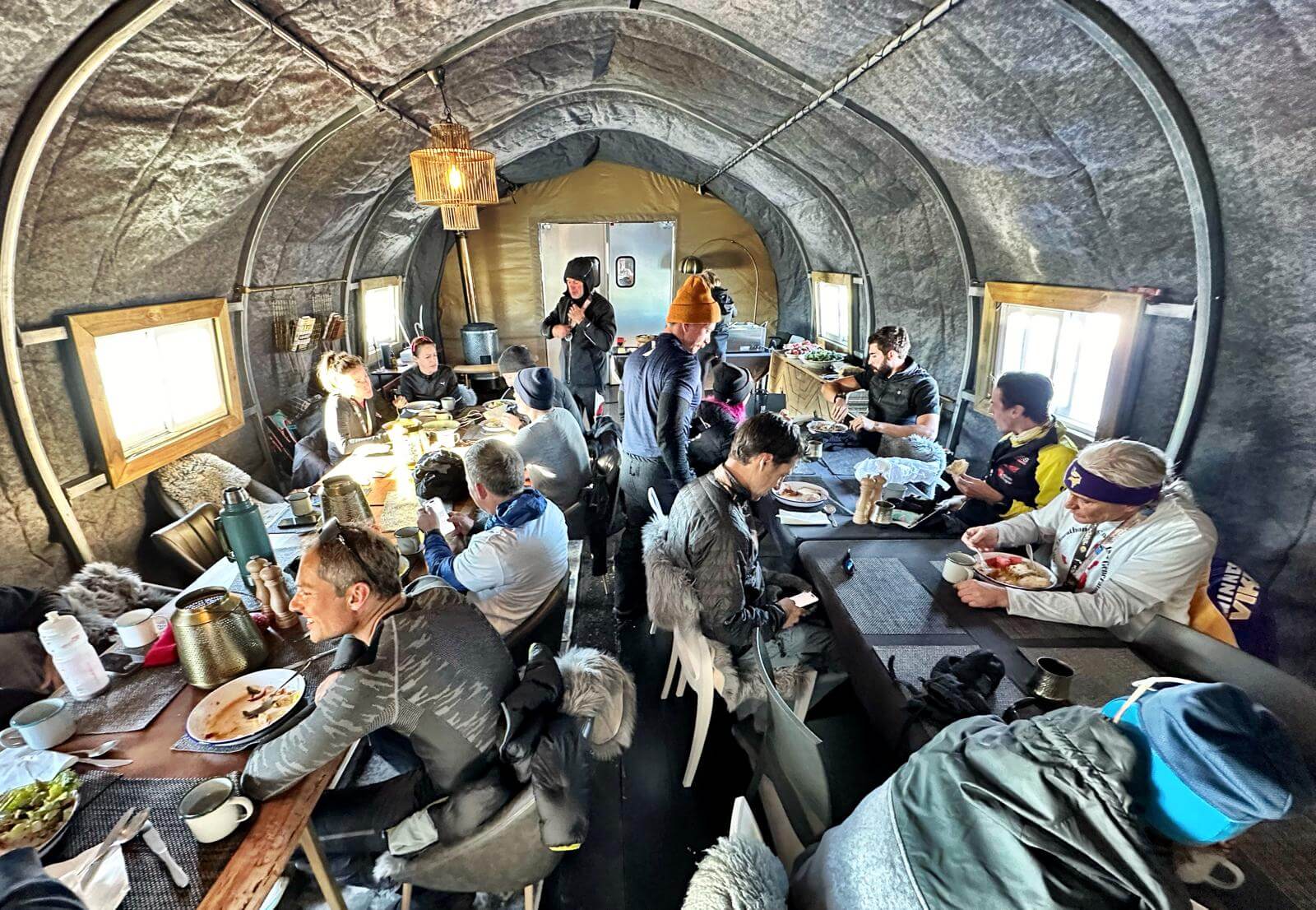
But the most unforgettable meal of the entire journey came in Antarctica.
After finishing the marathon at the bottom of the world, we were welcomed into what looked from the outside like a large canvas tent. Inside, however, it felt more like a luxury lodge. Double-door entrances kept the cold at bay, and an enormous buffet of hot comfort food awaited us. Even though I finished well after many of the other runners and took my time cleaning up, the food was still warm, abundant, and inviting.
I could hardly comprehend how The Great World Race organizers managed to provide such an incredible feast in Antarctica.
Our hosts at White Desert, known for their luxury Antarctic expeditions, clearly knew what they were doing. Still, none of it would have been possible without the logistical efforts of race founder David and the entire Great World Race team. It was one of those moments that made me realize just how extraordinary the overall operation really was.
Looking back, it’s fair to say we were completely spoiled.
My only complaint about the food and drink situation came from a misunderstanding of language. In the extensive pre-race communications, participants were informed that the plane would be stocked with plenty of “high-energy drinks.”
As an American, I interpreted that to mean caffeine.
This was exciting news because I normally require several cups of coffee just to function on an ordinary day. Surely, I reasoned, seven marathons on seven continents would justify even more.
Unfortunately, I discovered after arriving that “high-energy drinks” meant carbohydrate-rich sports drinks designed to fuel endurance athletes. They did not mean energy drinks.
There were no energy drinks offered at The Great World Race.
As a result, the endlessly patient flight attendants spent the week bringing me cup after cup of coffee. By the end, I suspect they were worried I had a serious caffeine dependency. Given that they were transporting a group of people voluntarily running seven marathons in seven days, that’s saying something.
The food and drink turned out to be one less thing to worry about during an already daunting adventure. Between the race fuel, the endless snacks, the restaurant-quality meals aboard the plane, and an unforgettable feast in Antarctica, I never lacked for calories.
And when you’re running seven marathons in seven days, that’s exactly what you need.
Ellen Hunter Gans is the author of Seven Marathons. Seven Continents. One Week. Learn more at www.sevenmarathonsbook.com.