
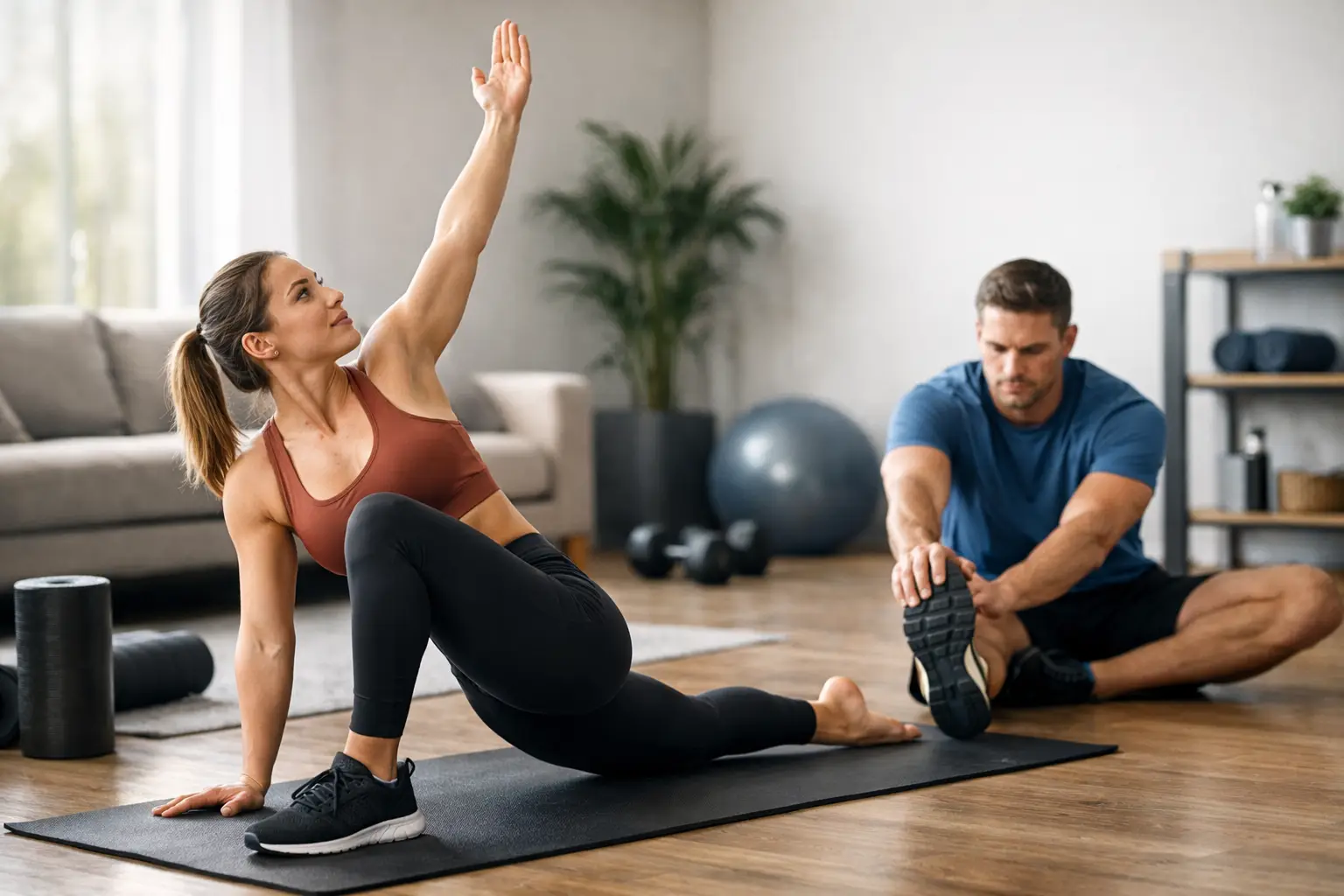
That stiff first step out of bed, the tight hips after a long commute, and the shoulders that creep toward your ears during a stressful workday are not personal failures. They are common signals that your body has been in one position for too long. The best mobility moves daily can help you feel more comfortable in the movements life already asks of you, without requiring an intense workout or an hour on the floor.
Table of Contents
- Why daily mobility exercise matters more than a long stretch session
- 8 mobility exercises to practice daily
- How to build a 10-minute mobility routine
- When to modify, pause, or get support
- Frequently asked questions
Why daily mobility matters more than a long stretch session
Mobility is your ability to control movement through a joint’s available range of motion. Flexibility is part of that picture, but it is not the whole story. Being able to pull your foot close to your body, for example, does not automatically mean your hips can support a comfortable squat, a walk up stairs, or a quick turn while carrying groceries.
Daily mobility work combines gentle range of motion, breathing, and muscular control. It gives your body regular practice moving well rather than asking it to go from hours of stillness to a demanding workout with no transition. For busy adults, that consistency usually matters more than finding the most advanced drill online.
There is no single best routine for every body. A runner may need extra ankle and hip work, while someone who spends most of the day at a laptop may benefit from more upper-back and shoulder movement. The eight moves below cover the areas that commonly feel restricted by work, parenting, driving, training, and everyday stress.
8 best mobility exercises for everybody:
1. Cat-cow
Start on your hands and knees, with hands under shoulders and knees under hips. Inhale as you gently lift your chest and tailbone, then exhale as you round your spine and let your head follow naturally. Move slowly for 6 to 10 breaths.
Cat-cow is not about forcing the biggest possible arch or rounding. Think of it as a low-pressure check-in for your spine, ribs, and breathing. If being on your hands and knees bothers your wrists, try the same motion seated with your hands resting on your thighs.
2. Open-book thoracic rotations
Lie on your side with knees bent and stacked. Reach both arms in front of you, then slowly open the top arm across your body as your chest rotates toward the ceiling. Let your eyes follow your hand, and keep the movement comfortable. Complete 5 to 8 repetitions per side.
This move targets the middle and upper back, an area that can become especially stiff after desk work or long drives. Keep your knees together if possible, but do not worry if they shift slightly. Smooth breathing matters more than holding a perfectly fixed position.
3. Wall slides
Stand with your back near a wall, feet a few inches forward. Place your arms in a goalpost shape and slowly slide them upward, only as high as you can without pain or aggressive shrugging. Lower with control for 6 to 10 repetitions.
Wall slides encourage shoulder movement while asking the upper back and shoulder-blade muscles to participate. If the wall feels too restrictive, perform the same pattern while standing tall without it. Your goal is control, not proving that your arms can touch the wall.
4. 90/90 hip switches
Sit on the floor with both knees bent and feet wider than hip width. Let both knees fall to one side, then use your hips to slowly rotate them through center and toward the other side. Perform 6 to 10 controlled switches.
Hip rotation supports more than exercise. It can make getting in and out of a car, changing direction, and sitting on the floor with children feel easier. Use your hands behind you for support at first. Over time, you may need them less, but there is no prize for rushing that progression.
5. Half-kneeling hip flexor rocks
Kneel with one knee on a cushion or folded towel and the other foot in front. Gently shift your body forward until you feel a mild stretch at the front of the kneeling hip, then shift back. Keep your ribs stacked over your pelvis rather than leaning your low back forward. Do 8 slow rocks per side.
This is useful after prolonged sitting, but it should not feel sharp or pinchy in the front of the hip. Make the range smaller if it does. A light squeeze of the glute on the kneeling side can help you find a more supported position.
6. Adductor rock-backs
Begin on hands and knees. Extend one leg straight out to the side with the foot flat or toes pointed forward, then slowly sit your hips back toward your heels and return to center. Complete 8 repetitions per side.
The inner thighs often get overlooked until a wide stance, lateral lunge, or unexpected step makes them known. Rock-backs introduce length and control without asking you to force a deep stretch. Keep your spine long and stay within a range that feels steady.
7. Knee-to-wall ankle rocks
Face a wall in a staggered stance, with your front foot a few inches away. Keeping the front heel down, bend the front knee toward the wall, then return to the start. Adjust your distance so you can move without the heel lifting. Do 8 to 12 repetitions per side.
Ankle mobility influences walking, stairs, squatting, and balance. It is particularly valuable for people who wear stiff work shoes, run regularly, or notice their heels rising early during squats. A smaller range with a planted heel is more useful than forcing the knee farther forward.
8. Supported squat hold with weight shifts
Hold a countertop, sturdy door frame, or suspension strap for support. Sit into a comfortable squat depth, keeping your feet grounded, then gently shift your weight side to side for 20 to 30 seconds. Rise slowly and repeat once or twice.
This move brings ankles, knees, hips, and the trunk together in a practical pattern. If a deep squat does not feel good, make it higher. You can also sit back toward a chair, pause briefly, and stand. Supported movement counts, especially when it helps you feel confident enough to practice again tomorrow.
Build a 10-minute mobility exercise routine you will actually use
The most effective routine is the one that fits into your real schedule. You do not need all eight moves every day. Choose one movement for your upper back, shoulders, hips, and ankles, then add a full-body option such as cat-cow or the supported squat.
A simple 10-minute reset might include cat-cow, open books, 90/90 hip switches, knee-to-wall ankle rocks, and supported squat weight shifts. Spend about one minute on each movement or side, moving at a pace that lets you breathe normally. This can work before a workout, after a shift, between meetings, or while dinner is in the oven.
Consistency grows when you attach mobility exercise to an existing habit. Try it after brushing your teeth, before your first coffee, or immediately after closing your laptop for the day. On an exhausting day, two minutes still keeps the habit alive. Wellness does not have to be all-or-nothing to be worthwhile.
When to modify, pause, or get support
Mild muscular effort, gentle stretching, and temporary stiffness are generally normal. Sharp pain, numbness, tingling, joint instability, dizziness, or pain that worsens during or after movement are reasons to stop and seek guidance from a qualified health professional.
If you are returning after an injury, surgery, pregnancy, or a long period of inactivity, start with fewer repetitions and more support. Mobility is not a test of toughness. The right dose helps you feel safer and more capable in your body, not depleted or discouraged.
A sustainable daily reset
The value of daily mobility is not that it makes you bend farther by next week. It is that it gives your body regular opportunities to move, notice, and adapt. Over time, those small sessions can support easier workouts, more comfortable workdays, and greater confidence in ordinary activities. Keep the routine simple enough to repeat, then let repetition do its work.
Frequently Asked Questions
Should I do mobility exercises before or after my workout?
Either can work. Before exercise, choose active, controlled movements such as ankle rocks, hip switches, and wall slides to prepare for the session ahead. Afterward, use a slower pace and lighter range if it feels restorative. If you are short on time, doing a few mobility moves at any point in the day is more useful than waiting for the perfect moment.
How long does it take to notice better mobility?
Some people feel less stiff after one short session, especially after sitting for hours. More lasting changes usually come from regular practice over several weeks. Your sleep, stress level, training volume, previous injuries, and daily movement all affect the timeline. Look for practical wins, such as easier stairs or a more comfortable overhead reach, rather than chasing a dramatic before-and-after pose.
Can daily mobility exercise replace strength training?
Mobility and strength support each other, but they do different jobs. Mobility practice helps you access and control comfortable movement, while strength training builds your capacity to handle load. If you can, include both across your week. A few intentional minutes today are a meaningful way to care for the body that carries you through everything else.
For more, we suggest The Mobility Workout Handbook: Over 100 Sequences for Improved Performance, Reduced Injury, and Increased Flexibility