
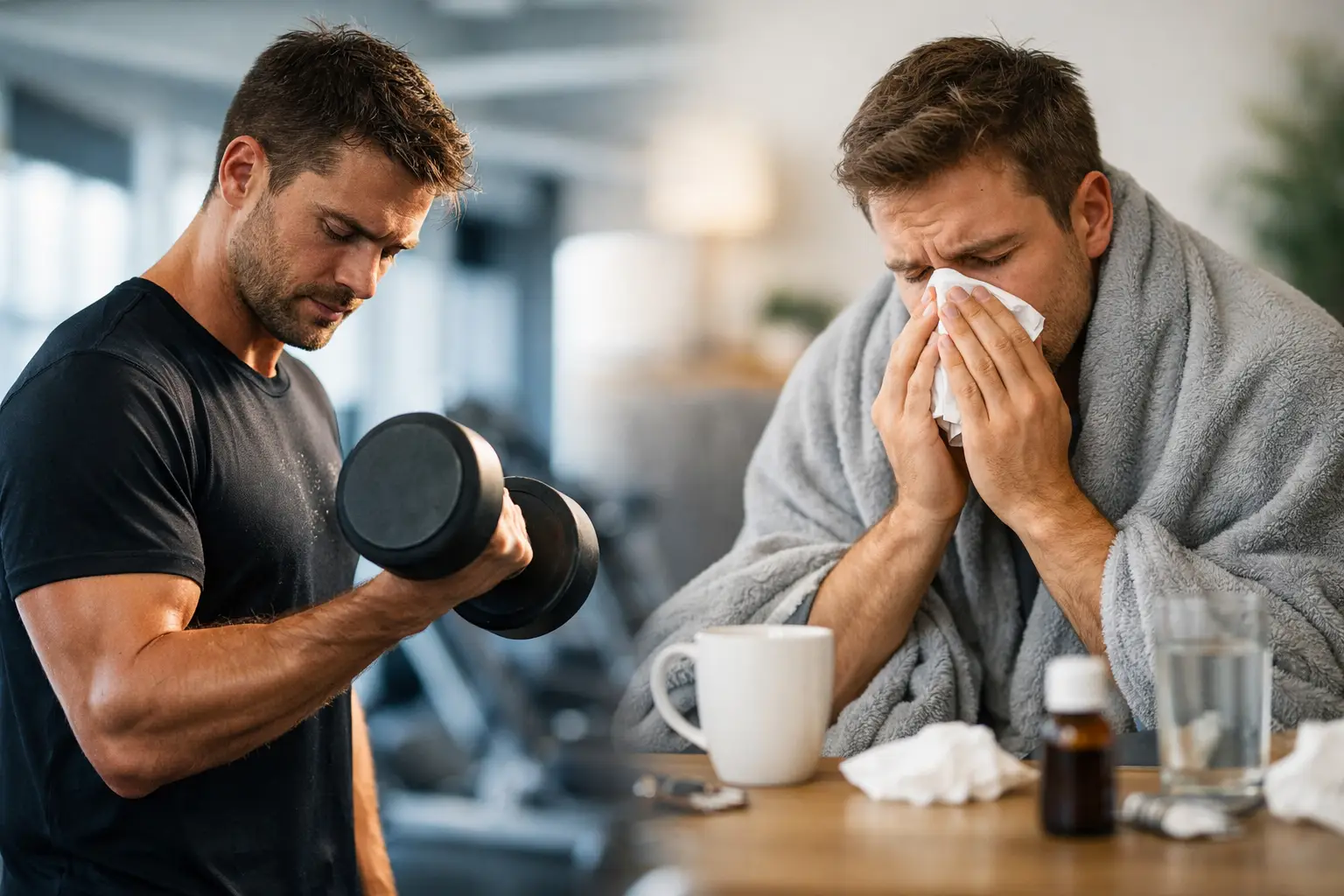
You had a workout planned, your schedule is already packed, and now you wake up with a sore throat, congestion, or a stomach that feels off. It is natural to ask, should I train when sick? For most people, the answer is not about toughness. It is about reading your symptoms, protecting your recovery, and making a choice that supports the person you want to be next week, not just the workout you wanted today.
A missed session rarely affects your fitness. Pushing through an illness that needs rest can affect how long you feel unwell, how safely you move, and whether you expose other people to something contagious.
Table of Contents
- Why your usual workout may feel harder when you are sick
- The symptoms that mean rest is the right call
- When gentle movement may be reasonable
- How to return to training without overdoing it
- When to contact a health professional
- FAQ
Why sickness changes the workout equation
Training is a stressor, even when it is a positive one. Your muscles, heart, nervous system, and immune system all need resources to respond and recover. When you are fighting an infection, sleeping poorly, running a fever, or struggling to eat and drink normally, your body is already working harder than usual.
That does not mean every sniffle requires bed rest. A mild cold can sometimes coexist with easy movement. But a hard lifting session, interval workout, long run, or heated class adds another demand when your capacity may be lower. You may notice your heart rate climbing sooner, coordination feeling off, or weights that are normally manageable suddenly feeling unusually heavy.
For busy adults, the emotional part can be just as real. Missing a workout can feel like losing momentum or breaking a promise to yourself. Try a different frame: recovery is not a detour from your routine. It is one of the actions that makes a sustainable routine possible.
Should I train when sick? Start with your symptoms
The popular “neck rule” can offer a quick starting point: symptoms above the neck, such as a runny nose, mild congestion, or a light sore throat, may be compatible with gentle activity. Symptoms below the neck, including chest congestion, body aches, vomiting, diarrhea, or a deep, exhausting cough, are a stronger signal to rest.
Still, the neck rule is not a diagnosis and should not override common sense. Your energy, hydration, sleep, medical history, and the intensity of your symptoms all matter.
Symptoms that call for rest
Skip training and focus on recovery if you have a fever, chills, widespread body aches, significant fatigue, chest pain, shortness of breath, dizziness, vomiting, or diarrhea. Rest is also the better choice if you have a productive cough, chest tightness, or symptoms that are worsening rather than gradually improving.
Do not try to “sweat out” a fever. Fever is a sign that your body is responding to illness, and exercise can increase fluid loss and strain. If you have vomiting or diarrhea, dehydration alone can make exercise unsafe.
There is also a community-health piece. If you may be contagious, stay home from the gym, group class, team practice, and shared indoor spaces. A workout is never more important than protecting a coworker, training partner, or the older adult using the treadmill beside you.
When light movement may be reasonable
If your symptoms are mild, above the neck, and you otherwise feel steady, a low-intensity walk, gentle mobility session, or easy stretching may feel good. Keep the goal simple: move enough to check in with your body, not to prove that you can complete a full workout.
For example, someone with mild nasal congestion who slept well and has no fever might take a 15- to 20-minute walk outdoors at an easy pace. Someone with a scratchy throat and low energy may be better served by five minutes of relaxed mobility followed by a nap. Both choices count as caring for your health.
Make the decision in four practical steps
- Take an honest symptom check. Before putting on your shoes, pause for a minute. Do you have a fever, body aches, chest symptoms, digestive symptoms, or unusual exhaustion? If yes, rest. If symptoms are mild, check whether they are improving and whether you can hydrate and eat normally.
- Lower the intensity more than you think you need to. If you choose to move, leave the hard work for later. Avoid max lifts, sprints, long endurance sessions, hot yoga, and workouts that leave you breathless. Choose a pace where you can comfortably hold a conversation.
- Use a short test, then reassess. Start with 10 minutes of easy movement. Stop if your cough intensifies, you feel lightheaded, your breathing changes, or fatigue hits hard. Feeling worse during activity is useful information, not a reason to push harder.
- Give recovery the same attention as training. Drink fluids regularly, eat what you can tolerate, and prioritize sleep. Warm soup, a simple meal with protein and carbohydrates, and a quiet night may do more for your training progress than forcing a session when your body is asking for less.
Returning to workouts after you feel better
The first day you feel normal is not always the day to resume your most demanding training. Your symptoms may be gone while your energy and recovery capacity are still catching up. This is especially common after flu-like illnesses, COVID-19, stomach bugs, or any illness that disrupted sleep and appetite.
Start at roughly half of your normal volume or intensity for the first workout. If you typically run five miles, try an easy two or three. If you usually lift for an hour, choose a few familiar movements, use lighter loads, and stop well before fatigue. See how you feel later that day and the next morning before adding more.
A gradual return is not being overly cautious. It helps you notice lingering fatigue, an elevated resting heart rate, unusual breathlessness, or a return of symptoms before they become a larger setback. Athletes sometimes call this backing off; in real life, it is simply smart pacing.
When to contact a health professional
Seek medical guidance promptly for chest pain, trouble breathing, fainting, confusion, severe dehydration, blue or gray lips, or a severe headache with a stiff neck. Contact a clinician if a fever persists, symptoms worsen after initially improving, or you have a cough, fatigue, or shortness of breath that lingers beyond the expected course of a routine illness.
People with asthma, heart conditions, immune-system concerns, diabetes, or other chronic conditions may need more individualized guidance. The same is true if you are recovering from COVID-19 or another illness that has affected your breathing or cardiovascular system. When you are unsure, asking is a strength, not an interruption to your fitness plan.
The sustainable call
One workout does not create fitness, and one rest day does not erase it. The habit worth building is responding to your body with enough patience to recover well. Sometimes that means an easy walk and fresh air. Sometimes it means medicine, fluids, sleep, and no workout at all. Both are choices made by someone taking their health seriously.
FAQ
Can I lift weights with a cold?
Possibly, if your symptoms are truly mild and limited to the nose or throat, you have no fever, and your energy feels normal. Keep the session short and easy, use lighter weights, and avoid training to failure. If you have body aches, chest symptoms, fever, or unusual fatigue, skip lifting until you recover.
Can I exercise with a sore throat?
A mild sore throat without fever or other significant symptoms may allow gentle activity, but pay attention to the bigger picture. If swallowing is painful, you feel drained, your glands are swollen, or symptoms are escalating, rest and consider medical advice. Intense exercise is not the right test of whether you are getting better.
How long should I wait to work out after a fever?
Wait until you have been fever-free for at least 24 hours without fever-reducing medication, are adequately hydrated, and feel generally improved. Then return gradually rather than jumping into a hard session. If fatigue, breathing issues, or fever return, stop and contact a health professional.
Will taking a few days off make me lose progress?
No. A few recovery days will not undo the strength, endurance, or habits you have built. In many cases, returning rested helps you train better than you would have if you forced sessions while sick. Your body is not keeping score of perfection. It responds to the pattern of care you practice over time.