
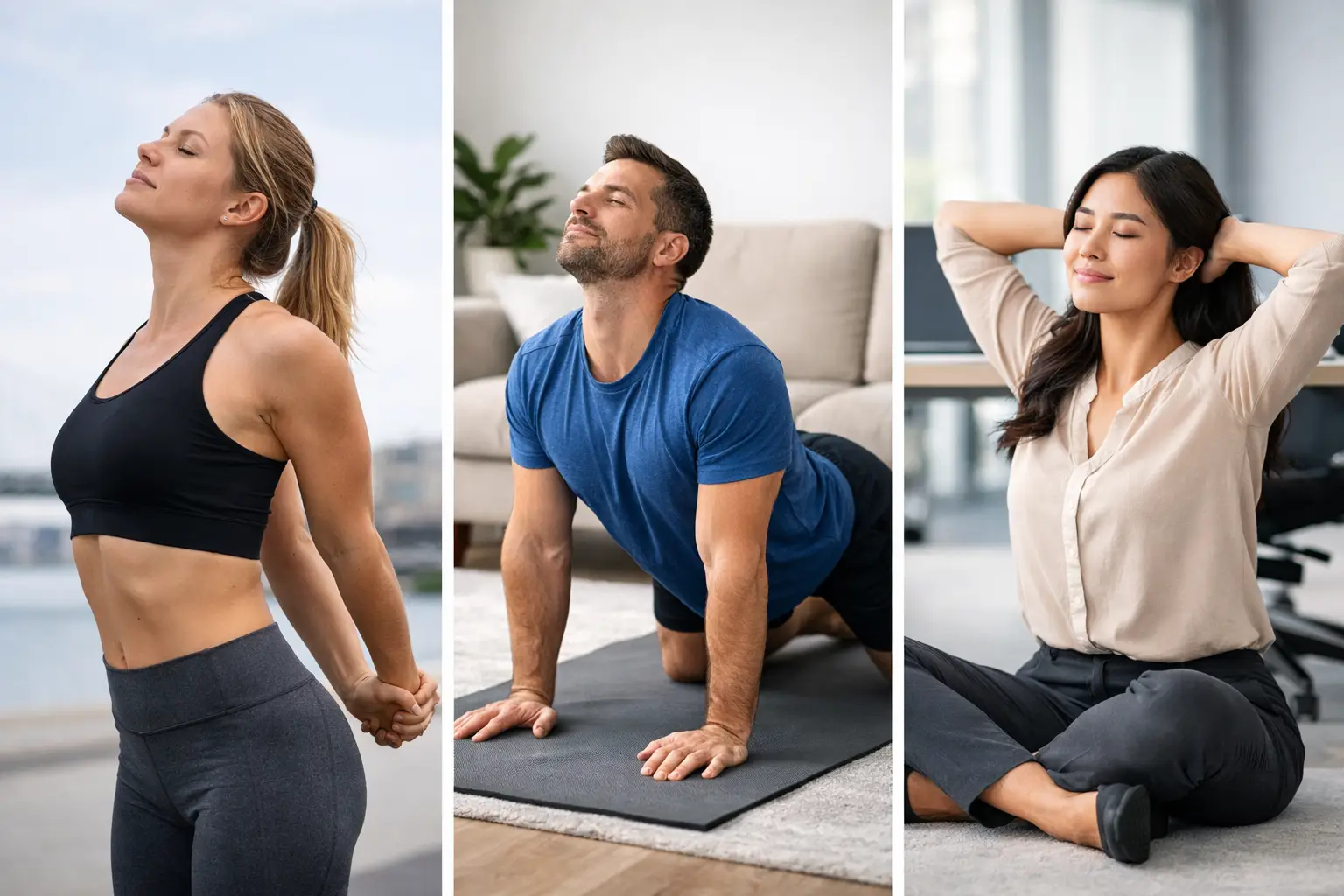
Your posture is rarely the result of one “bad” habit. It is more often the accumulated effect of long meetings, school drop-offs, driving, stress, and the way your body adapts to the positions you repeat most. The best exercises for posture do not force you to stand rigidly all day. They build the strength, mobility, and body awareness that make a comfortable, upright position easier to return to.
That distinction matters. You do not need to pull your shoulders back until they ache or spend an hour stretching after every workday. A few well-chosen movements, practiced consistently, can help your upper back, shoulder blades, core, hips, and neck share the work more effectively.
Table of Contents
- What better posture actually means
- 8 best exercises for posture
- A simple routine for busy days
- Form and safety notes
- FAQ
What better posture actually means
Good posture is not one perfectly held pose. Your body is designed to move, shift, reach, bend, and rest. A more useful goal is having enough strength and mobility to change positions without feeling stuck, strained, or exhausted.
For many desk workers and busy parents, posture work should target two common patterns: a chest and front-of-shoulder area that feels tight from reaching forward, and upper-back, deep-neck, core, and glute muscles that need more endurance. If your job keeps you on your feet, your focus may be less about sitting and more about building the hip and trunk control that supports you through long shifts.
8 best exercises for posture
Start with movements that feel manageable, not punishing. Do these exercises two to four times a week, or use a short version as a movement break on demanding days. Controlled repetitions matter more than chasing fatigue.
1. Chin Tuck
A chin tuck strengthens the small muscles that help support your head over your rib cage. It is especially useful if you notice your head drifting toward a laptop, phone, or steering wheel.
Sit or stand tall and look straight ahead. Without tilting your head down, gently slide your chin straight back, as if making a double chin. Hold for three to five seconds, then relax. Complete 8 to 12 repetitions.
Keep this motion subtle. You should feel light work at the front of your neck or near the base of your skull, not a forceful squeeze or pain.
2. Wall Angels
Wall angels teach your shoulder blades and upper back to move with control while your ribs stay stacked over your pelvis. They can be humbling, which is normal.
Stand with your back near a wall, feet a few inches forward, and knees soft. Let the back of your head, upper back, and hips touch the wall as comfortably as possible. Raise your arms into a goalpost shape, then slowly slide them upward and back down. Perform 6 to 10 slow repetitions.
Do not force your wrists or elbows to stay on the wall. The goal is smooth motion without arching your lower back, not passing a flexibility test.
3. Band Pull-Apart
This simple exercise builds endurance in the mid-back muscles that help guide your shoulder blades. A light resistance band is usually enough.
Hold the band at shoulder height with your hands slightly wider than shoulder-width. Keep your ribs relaxed as you pull the band apart, bringing your shoulder blades gently toward each other. Pause briefly, then return with control. Aim for 10 to 15 reps.
If you feel the work only in your neck, use less resistance and think about widening across your collarbones rather than yanking your shoulders backward.
4. Doorway Chest Stretch
Strength work goes farther when your shoulders also have room to move. A doorway chest stretch can reduce the sense of being pulled forward after hours at a keyboard.
Place one forearm on a doorframe with your elbow around shoulder height. Step forward gently until you feel a stretch across the chest and front of the shoulder. Hold for 20 to 30 seconds per side, breathing normally.
A deeper stretch is not automatically better. Skip the aggressive lean, particularly if you have shoulder instability, tingling, or sharp pain.
5. Thoracic Extension Over a Chair
Your thoracic spine is the middle and upper part of your back. It is meant to extend and rotate, yet it often spends the day rounded over screens, meals, and commutes.
Sit on a sturdy chair with a backrest that reaches your mid-back. Interlace your fingers behind your head, lean your upper back gently over the chair, and exhale. Return to upright without pulling on your neck. Try 6 to 8 repetitions.
Keep your lower back quiet. You are looking for movement through the upper back, not a big lumbar arch.
6. Bird Dog
Posture is not only about the shoulders. Your trunk needs to stabilize while your arms and legs move, which is exactly what bird dog practices.
Begin on hands and knees, with hands under shoulders and knees under hips. Reach one arm forward and the opposite leg back. Pause for a breath, then return and switch sides. Complete 6 to 10 controlled reps per side.
Imagine balancing a glass of water on your low back. If your hips twist or ribs flare, shorten the reach. A smaller, steadier movement is the stronger choice.
7. Glute Bridge
Your glutes help support hip position during walking, lifting, stairs, and standing. When they are underused, the lower back often tries to do more than its share.
Lie on your back with knees bent and feet about hip-width apart. Press through your feet and lift your hips until your body forms a comfortable line from shoulders to knees. Pause, then lower slowly. Do 10 to 15 reps.
Avoid pushing into a high backbend. Think of lifting from the hips while keeping your ribs gently down.
8. Suitcase Carry
Carries turn posture practice into something useful: staying organized through your torso while you walk. They are a smart option for people who want practical strength without a complicated workout.
Hold one moderately heavy dumbbell, kettlebell, or grocery bag at your side. Stand tall, keep your shoulders level, and walk slowly for 20 to 40 seconds. Switch sides and repeat for two to three rounds.
Choose a load that challenges you without making you lean or shrug. If you are new to strength training, start lighter than you think and build gradually.
A 10-minute posture routine for busy days
You do not need to complete all eight exercises every time. On a packed day, choose a short sequence you can repeat instead of waiting for the ideal workout window.
- Do 8 chin tucks and 8 wall angels.
- Complete 12 band pull-aparts and a 30-second doorway stretch per side.
- Perform 8 bird dogs per side and 12 glute bridges.
- Finish with one 30-second suitcase carry per side, if you have a weight available.
Use this routine after your workday, between meetings, or before an evening walk. It can also be helpful to stand up for a minute or two every hour. Those brief changes of position are not a replacement for exercise, but they keep one posture from becoming your only posture.
Form and safety notes
Posture exercises should leave you feeling more capable, not braced and sore. Mild muscular effort is expected, but sharp pain, numbness, dizziness, radiating symptoms, or a worsening headache are reasons to stop and speak with a qualified health professional.
If you have a recent injury, osteoporosis, a history of shoulder dislocation, persistent neck or back pain, or symptoms following a fall or accident, individualized guidance is worth getting. The right exercise can vary depending on what is driving your discomfort.
Also give yourself credit for the parts outside the workout. A screen raised closer to eye level, a headset for frequent calls, comfortable supportive shoes, a few minutes of walking, and enough recovery can make your exercise practice work better. Posture responds to your full routine, not just your gym session.
FAQ
How long does it take for posture exercises to work?
Many people notice less stiffness or better body awareness within a few weeks of consistent practice. Visible changes and improved endurance usually take longer. Your work setup, sleep, stress, training history, and the amount of time you spend in one position all affect the timeline.
Should I do posture exercises every day?
Gentle mobility work, chin tucks, and short movement breaks can be done most days if they feel good. Strength-focused exercises such as carries, bridges, and band work often fit well two to four times weekly. Recovery still counts, especially when muscles feel sore.
Can exercise fix a rounded upper back?
Exercise can improve mobility, strength, and your ability to hold a more comfortable position. But it may not fully change structural differences in the spine, particularly those related to age, bone health, or a diagnosed condition. Focus on comfort, function, and confidence rather than chasing a perfect silhouette.
What is the best posture when sitting?
The best sitting posture is one you change regularly. Set up your chair so your feet are supported, your screen is easier to see without craning your neck, and your shoulders can relax. Then give yourself permission to shift, stand, and move throughout the day.
Better posture is not a performance you have to maintain from morning to night. It is a capacity you build one repeat, one walk, and one realistic reset at a time.