
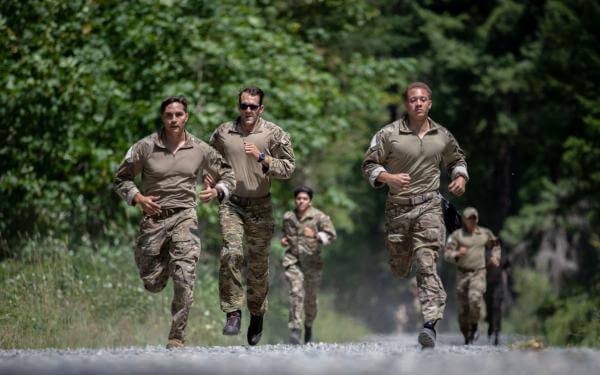
Most fitness programs focus on one thing. Some build strength. Others build endurance. Many are designed primarily to improve appearance.
Air Force Special Operations training takes a different approach.
Pararescuemen (PJs) and Combat Controllers (CCTs) must be prepared to run long distances, swim in open water, carry heavy equipment, navigate difficult terrain, and perform demanding missions in some of the world’s harshest environments. PJs are combat rescue specialists responsible for recovering and treating injured personnel, while CCTs deploy into hostile areas to establish air traffic control and command-and-control capabilities. Together, they represent some of the most versatile tactical athletes in the U.S. military.
What makes their approach to fitness so compelling is that it prioritizes performance over appearance. The goal isn’t to look fit. The goal is to be fit enough to accomplish the mission, regardless of conditions.
While most of us will never parachute into a combat zone or conduct a rescue operation in hostile territory, there is a great deal we can learn from how these elite operators train.
The Five Pillars of Air Force Spec Ops Workouts
Air Force Spec Ops workouts develop athletes across multiple domains simultaneously.
Their preparation focuses on:
- Endurance
- Swimming proficiency
- Functional strength
- Load-carrying ability
- Mental resilience
Candidates entering the training pipeline are encouraged to arrive capable of running three miles in under 21 minutes, swimming 1,000 meters continuously, performing 40 to 50 push-ups, 40 to 60 sit-ups, and completing 8 to 10 pull-ups. These are considered baseline preparation standards and not elite-level performance.
The underlying philosophy is simple: capability matters more than specialization.
Endurance: The Foundation of Operational Fitness
One of the biggest misconceptions about military fitness is that it’s centered around strength.
In reality, endurance forms the foundation of everything.
Whether carrying equipment, navigating long distances, or operating under fatigue, special operators must sustain performance for extended periods. Air Force Special Operations training places significant emphasis on running and aerobic conditioning because endurance supports every aspect of mission performance.
Workout #1: Special Operator Running Program
Workout A: Tempo Run
Purpose: Improve sustained endurance and pacing ability.
Frequency: Once per week
- 5-minute easy jog
- 3-mile run at a challenging pace
- 5-minute cooldown walk
Goal: Gradually improve your 3-mile time.
Workout B: Tactical Intervals
Purpose: Increase speed, cardiovascular capacity, and recovery.
Frequency: Once per week
- Run 800 meters fast
- Rest 2 minutes
- Repeat 4-6 rounds
Advanced Version
- Run 800 meters fast
- Rest 90 seconds
- Repeat 8 rounds
Training Tip
Track your 3-mile time monthly.
Consistent improvement is one of the clearest indicators that your conditioning is improving.
Why Swimming Matters
Swimming is one of the defining characteristics of Air Force Special Operations fitness.
Unlike many conventional fitness programs, PJ and CCT preparation places heavy emphasis on aquatic competence. Candidates may swim thousands of meters weekly and are routinely tested on both swimming performance and water confidence skills. Training standards progress to fin swims of up to 4,000 meters.
Swimming develops:
- Cardiovascular endurance
- Total-body conditioning
- Breath control
- Mental composure
- Joint-friendly work capacity
Many highly fit athletes discover weaknesses in the water because swimming exposes inefficiency quickly.
Workout #2: Combat Swim Session
Beginner Session
- 200m warmup
- 4 × 100m moderate pace
- 100m cooldown
Total Distance: 700m
Intermediate Session
- 500m warmup
- 5 × 200m swim
- 500m continuous swim
Total Distance: 2,000m
Water Confidence Finisher
- Tread water continuously for 3-5 minutes
Focus on remaining calm and relaxed.
The objective is efficiency, not exhaustion.
Functional Strength Beats Gym Strength
In the real world, operators may need to climb obstacles, move casualties, carry equipment, or perform technical tasks under fatigue.
That’s why Air Force Special Operations training emphasizes bodyweight movements and muscular endurance instead of bodybuilding-style training. Push-ups, pull-ups, sit-ups, flutter kicks, and circuit training play major roles throughout the pipeline.
Workout #3: PJ/CCT Strength Circuit
Complete 4 rounds:
- 10 Pull-Ups
- 20 Push-Ups
- 25 Air Squats
- 20 Walking Lunges
- 30-Second Plank
Rest: 90 seconds between rounds
Progression
Weeks 1-4:
- Complete 4 rounds
Weeks 5-8:
- Complete 5 rounds
Weeks 9-12:
- Complete 6 rounds
This develops functional strength and muscular endurance without excessive equipment.
The Military Calisthenics Test
Calisthenics remain one of the best ways to assess overall readiness.
Air Force Special Operations candidates are routinely evaluated using bodyweight exercises because they reveal strength, endurance, recovery ability, and discipline. Training standards increase throughout the selection process.
Workout #4: Monthly Calisthenics Challenge
Test Protocol
2 Minutes
- Maximum Push-Ups
2 Minutes
- Maximum Sit-Ups
1 Minute
- Maximum Pull-Ups
Performance Goals
Push-Ups: 65+
Sit-Ups: 75+
Pull-Ups: 13+
Record results monthly and compare progress.
Rucking: The Most Underrated Workout
Special operators rarely move without equipment.
Historical examples from PJ and CCT operations describe personnel carrying substantial loads during missions, airborne insertions, and combat operations.
Rucking develops:
- Leg strength
- Core stability
- Work capacity
- Mental toughness
- Joint durability
Workout #5: Tactical Ruck Program
Beginner
- 2 Miles
- 25-Pound Pack
Intermediate
- 4 Miles
- 35-Pound Pack
Advanced
- 6 Miles
- 45-Pound Pack
Rules
- Walk briskly
- Maintain posture
- Keep shoulders relaxed
- Do not jog
Simple doesn’t mean easy.
Few activities build real-world durability like regular rucking.
Mental Toughness: The Ultimate Performance Enhancer
The Air Force training repeatedly emphasizes attitude, perseverance, adaptability, and determination.
Candidates encounter situations designed to test their ability to continue performing under fatigue, discomfort, and stress. Success depends as much on mental resilience as physical capability.
Three Ways to Build Mental Toughness
1. Train in Imperfect Conditions
Occasionally train when:
- It’s raining
- It’s cold
- You’re tired
- The conditions aren’t ideal
Learn that discomfort is not an emergency.
2. Finish What You Start
If a workout becomes difficult, slow down if necessary, but finish.
Completing difficult work builds confidence.
3. Practice Tactical Breathing
After a hard effort:
- Inhale 4 seconds
- Hold 4 seconds
- Exhale 4 seconds
- Hold 4 seconds
Repeat 10 cycles.
This improves emotional control during stressful situations.
Don’t Forget Mobility
Running, swimming, parachuting, climbing, and carrying equipment place significant demands on the body.
The Special Operations training materials emphasize flexibility and injury prevention as important components of long-term performance.
Workout #6: Daily Mobility Routine
Perform daily.
- Hip Flexor Stretch: 1 minute per side
- Hamstring Stretch: 1 minute per side
- Shoulder Stretch: 1 minute per side
- Deep Squat Hold: 1 minute
- Thoracic Rotation: 10 reps per side
Total Time: Approximately 10 minutes
Teamwork Is a Fitness Skill
One of the most overlooked aspects of Air Force Special Operations training is teamwork.
Pararescuemen and Combat Controllers operate in small teams where trust, communication, and reliability are essential. The training pipeline intentionally develops team performance alongside physical performance.
Workout #7: Team Conditioning Challenge
Complete 5 rounds:
- 400m Run
- 20 Push-Ups Each
- 20 Sit-Ups Each
- 50m Partner Carry
Team Rule
Nobody finishes until everyone finishes.
This simple standard builds accountability, leadership, and resilience.
Sample Weekly Air Force Special Operations Training Plan
| MONDAY Speed & Conditioning | • 800m Intervals • Pull-Ups • Push-Ups • Core Work | FRIDAY Endurance Day | • 3-Mile Tempo Run • Calisthenics Assessment |
| TUESDAY Water Day | • 1,500-2,000m Swim • Mobility Routine | SATURDAY Long Duration Work | Choose One: • Trail Run • Long Ruck • Open Water Swim |
| WEDNESDAY Strength & Load Carrying | • PJ/CCT Strength Circuit • 2-4 Mile Ruck | SUNDAY Recovery | • Walking • Stretching • Foam Rolling • Mobility Work |
| THURSDAY Swim Core | • Interval Swim Session • Flutter Kicks • Planks • Stretching |
The Air Force Special Operations Fitness Challenge
Want to test yourself?
Complete the following for total time:
| EVENT 1 | Run 1 Mile | EVENT 4 | 10 Pull-Ups |
| EVENT 2 | 50 Push-Ups | EVENT 5 | 500m Swim |
| EVENT 3 | 50 Sit-Ups | EVENT 6 | 2-Mile Ruck with 35 lb |
Record your result and repeat every 30 days.
The goal is simple: become more capable than you were last month.
Final Thoughts
The fitness philosophy of Air Force Pararescue and Combat Control isn’t about building the biggest muscles or posting impressive numbers on social media.
It’s about becoming capable in any environment.
These operators train to run farther, swim longer, carry more, recover faster, and continue performing when circumstances become difficult. Their preparation creates athletes who are adaptable, resilient, and mission-focused.
Whether you’re preparing for military service, improving your health, or simply looking for a fitness challenge beyond the gym, the lessons from Air Force Special Operations remain remarkably relevant:
Run. Swim. Carry weight. Build strength. Improve mobility. Develop resilience.
Train for capability, and performance will follow.
Air Force Special Operations Exercise Glossary
Pull-Up
Click for description
Purpose: Develops the back, grip, shoulders, and biceps.
How to Perform
- Hang from a pull-up bar with palms facing away from you.
- Hands should be slightly wider than shoulder width.
- Start with arms fully extended.
- Pull yourself upward until your chin clears the bar.
- Lower under control until your arms are fully extended again.
- Repeat.
Common Mistakes
- Kipping or swinging excessively
- Partial range of motion
- Shrugging shoulders toward ears
Easier Option
Use resistance bands or an assisted pull-up machine.
Push-Up
Click for description
Purpose: Builds chest, shoulders, triceps, and core stability.
How to Perform
- Start in a high plank position.
- Hands slightly wider than shoulder width.
- Keep your body in a straight line from head to heels.
- Lower your chest toward the floor.
- Press back to the starting position.
Common Mistakes
- Sagging hips
- Flaring elbows excessively
- Partial repetitions
Easier Option
Perform on your knees or against an elevated surface.
Sit-Up
Click for description
Purpose: Strengthens the core and hip flexors.
How to Perform
- Lie on your back with knees bent.
- Place hands lightly behind your head or across your chest.
- Lift your upper body until your torso is nearly upright.
- Return under control.
Common Mistakes
- Pulling on the neck
- Using momentum
- Slamming back to the ground
Air Squat
Click for description
Purpose: Builds lower-body endurance and mobility.
How to Perform
- Stand with feet shoulder-width apart.
- Push hips back and bend knees.
- Lower until thighs are at least parallel to the floor.
- Drive through heels to stand.
Common Mistakes
- Heels lifting off the floor
- Knees collapsing inward
- Shallow depth
Walking Lunge
Click for description
Purpose: Strengthens legs, glutes, and balance.
How to Perform
- Step forward with one leg.
- Lower until both knees reach approximately 90 degrees.
- Push through the front foot.
- Bring the rear leg forward into the next step.
- Continue alternating.
Common Mistakes
- Leaning excessively forward
- Short steps
- Allowing the front knee to collapse inward
Plank
Click for description
Purpose: Develops core stability.
How to Perform
- Assume a forearm plank position.
- Elbows directly beneath shoulders.
- Keep body straight from head to heels.
- Brace the abdominal muscles.
- Hold the position without sagging.
Common Mistakes
- Hips too high
- Hips too low
- Holding breath
Flutter Kick
Click for description
Purpose: Develops lower abdominal and hip-flexor endurance.
How to Perform
- Lie on your back.
- Place hands beneath hips.
- Raise feet approximately 6 inches off the ground.
- Alternate kicking feet up and down.
- Keep legs straight and core engaged.
Common Mistakes
- Bending knees excessively
- Raising feet too high
- Arching the lower back
Tempo Run
Click for description
Purpose: Improves aerobic endurance and pacing.
How to Perform
- Begin with an easy jog warmup.
- Run at a comfortably hard pace where conversation becomes difficult.
- Maintain the pace throughout the prescribed distance.
- Cool down afterward.
Training Focus
- Sustained effort
- Cardiovascular conditioning
- Mental toughness
800-Meter Interval Run
Click for description
Purpose: Increases speed and recovery capacity.
How to Perform
- Run 800 meters at a fast pace.
- Recover by walking or lightly jogging.
- Repeat for multiple rounds.
Training Focus
- VO2 max development
- Speed endurance
- Race pacing
Ruck March
Click for description
Purpose: Builds endurance, durability, and load-bearing capacity.
How to Perform
- Place weight in a secure backpack or rucksack.
- Maintain upright posture.
- Walk briskly.
- Keep shoulders relaxed.
- Focus on steady movement.
Common Mistakes
- Running with the pack
- Poor posture
- Starting with excessive weight
Partner Carry
Click for description
Purpose: Develops total-body strength and teamwork.
How to Perform
- Safely lift a partner using a fireman’s carry, piggyback carry, or supported carry.
- Maintain a stable torso.
- Walk the prescribed distance.
- Switch partners.
Safety Note
Practice with a willing partner and begin with short distances.
Treading Water
Click for description
Purpose: Develops water confidence and endurance.
How to Perform
- Remain upright in the water.
- Use a gentle scissor kick or eggbeater kick.
- Make small circular motions with your hands.
- Focus on staying relaxed and conserving energy.
Common Mistakes
- Panicking
- Kicking too aggressively
- Looking down instead of forward
Freestyle Swimming
Click for description
Purpose: Primary conditioning stroke used in swim workouts.
How to Perform
- Keep body horizontal and streamlined.
- Alternate arm strokes.
- Perform a flutter kick.
- Rotate slightly to breathe to the side.
- Exhale underwater.
Keys to Efficiency
- Long strokes
- Relaxed breathing
- Consistent rhythm
Hip Flexor Stretch
Click for description
Purpose: Improves mobility for running, squatting, and rucking.
How to Perform
- Assume a lunge position.
- Place rear knee on the ground.
- Shift hips forward gently.
- Hold 30-60 seconds.
Hamstring Stretch
Click for description
Purpose: Improves flexibility of the posterior chain.
How to Perform
- Extend one leg forward.
- Hinge at the hips.
- Reach toward the foot while keeping your back neutral.
- Hold 30-60 seconds.
Deep Squat Hold
Click for description
Purpose: Improves hip, ankle, and lower-back mobility.
How to Perform
- Lower into your deepest comfortable squat.
- Keep feet flat on the floor.
- Push knees gently outward.
- Hold while breathing steadily.
Duration
30-60 seconds.
Thoracic Rotation
Click for description
Purpose: Improves upper-back mobility and posture.
How to Perform
- Begin on hands and knees.
- Place one hand behind your head.
- Rotate elbow upward toward the ceiling.
- Return to start.
- Repeat for prescribed repetitions.
Coaching Tip
For aspiring tactical athletes, focus on mastering movement quality before increasing volume or intensity. Air Force Special Operations training rewards efficient movement, endurance, and resilience far more than raw strength alone.
For more, get a copy of The Official United States Air Force Elite Workout.
Looking for more exercise descriptions? Look here.