
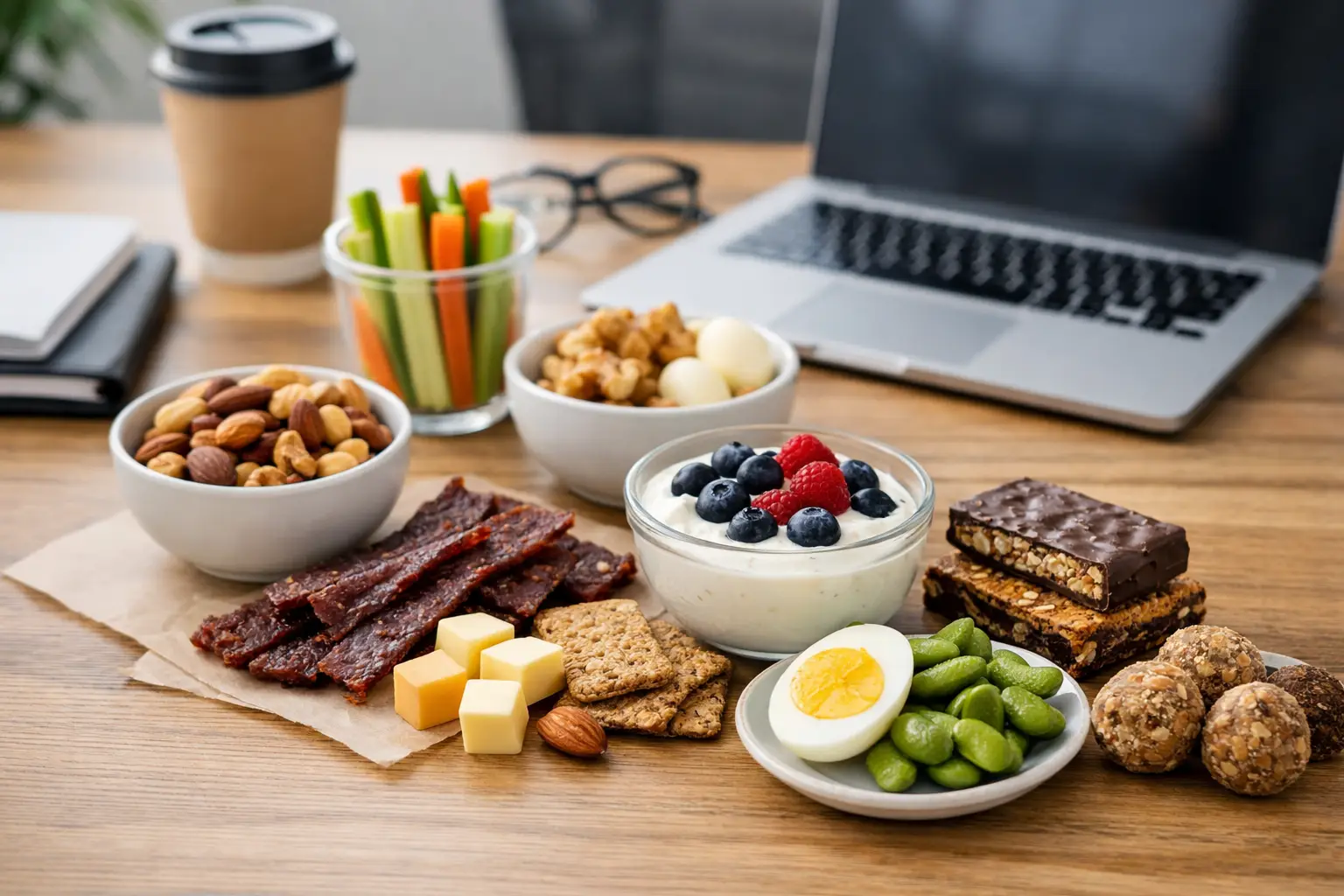
That 3 p.m. slump is rarely a character flaw. It is often what happens when a rushed breakfast, back-to-back meetings, and a lunch eaten between emails leave you running on coffee and willpower. The best protein snacks for work can help close that gap with something satisfying enough to steady your energy, not just distract you until dinner.
Protein is not a magic answer to fatigue, and no snack can make up for chronic sleep loss or an overloaded schedule. But a reliable snack routine can make it easier to concentrate, support workout recovery, and arrive home less likely to eat past the point of comfort. The goal is practical nourishment, not turning your desk drawer into a nutrition project.
Table of Contents
- Why protein snacks help during the workday
- How to choose a snack that works for you
- 12 best protein snacks for work
- Smart ways to stock your desk, bag, or break-room fridge
- Frequently asked questions
Why protein snacks can make the workday easier
Protein helps slow digestion and supports fullness, especially when it is paired with fiber-rich carbohydrates or healthy fats. That is why an apple with peanut butter tends to hold you longer than a handful of candy, and why yogurt with fruit feels more substantial than yogurt alone.
For many adults, the most useful time to have a protein snack is when there is a long stretch between meals, before a commute, or after a workout that lands before dinner. If you are a shift worker, it may be the snack that prevents a vending-machine dinner at 2 a.m. If you are a parent working from home, it may be the food you can grab before the school pickup scramble starts.
The right amount depends on your appetite, activity level, and what else you have eaten. A snack with roughly 10 to 20 grams of protein works well for many people, but there is no prize for choosing the highest number on the label. A snack you enjoy and can keep available is more valuable than a perfect option that stays in your cart online.
How to choose protein snacks you will actually eat
Before buying a box of anything, think about your real work conditions. Do you have a refrigerator? Are meetings unpredictable? Do strong smells bother your coworkers? Do you need something you can eat with one hand between calls?
Use these four filters to build a short list that fits your routine:
- Look for staying power. Protein is helpful, but pairing it with fruit, whole grains, vegetables, or fats often makes a snack more satisfying.
- Match the format to your workday. Shelf-stable snacks are useful for commutes and desk drawers. Refrigerated foods can be great if you have dependable access to a fridge.
- Check the label without overthinking it. Watch for added sugar if sweet snacks leave you hungry soon after. Sodium may matter if you eat packaged snacks often or have been advised to limit it.
- Respect food preferences and access. Dairy-free, nut-free, vegetarian, halal, and budget-friendly options all belong in a healthy snack plan. Consistency matters more than following someone else’s rules.
12 best protein snack ideas
Protein snack # 1: Greek yogurt with berries
Plain or lightly sweetened Greek yogurt is a convenient high-protein option, and berries add fiber and a little natural sweetness. Keep a small container of granola or chopped nuts nearby if you want more crunch. Cottage cheese can fill the same role if you prefer a savory option.
Protein snack #2: Apple slices with peanut or almond butter
This classic pairing earns its place because it is simple, portable, and genuinely filling. Single-serve nut butter packets are useful when you do not want an open jar at your desk. If your workplace is nut-free, try sunflower seed butter instead.
Protein snack #3. Hard-boiled eggs and whole-grain crackers
Eggs are affordable, widely available, and easy to prep in advance. Two eggs with a few whole-grain crackers can bridge a long afternoon without feeling like a second lunch. Because of the smell, this one may be better for a break room or outdoor break than an open-plan office.
Protein snack #4: Roasted chickpeas
Roasted chickpeas are shelf-stable, crunchy, and offer both protein and fiber. They are a strong choice for people who want a plant-based snack that feels more substantial than pretzels. Choose a flavor you like, but compare sodium levels if you snack on them daily.
Protein snack #5: Cottage cheese with pineapple or tomatoes
Cottage cheese has made a deserved comeback because it is versatile and protein-rich. Add pineapple for a sweet option, or cherry tomatoes and black pepper for something savory. Individual cups make portioning and office storage easier.
Protein snack #6: Tuna or salmon packets with crackers
Single-serve fish packets are one of the most protein-dense desk-friendly choices, especially when paired with whole-grain crackers. They also provide omega-3 fats in many cases. The trade-off is obvious: fish can be polarizing in shared spaces, so save it for a private lunch area or a day you are working remotely.
Protein snack #7: Edamame
Frozen shelled edamame can be thawed overnight and packed in a small container with a pinch of salt or seasoning. It provides plant protein and fiber, and it is more satisfying than many crunchy snacks. Dry-roasted edamame is another shelf-stable choice for your bag.
Protein snack #8: Cheese sticks with fruit
A cheese stick, mini Babybel-style cheese, or sliced cheese paired with grapes, an orange, or pear is easy to assemble. This option is especially useful for busy parents and commuters because it requires almost no preparation. Choose lower-sodium varieties if that is a health priority for you.
Protein snack #9: Turkey roll-ups
Roll deli turkey around a slice of cheese, cucumber sticks, or a little hummus. It is fast, familiar, and easy to adjust to your appetite. Deli meat can be higher in sodium, so consider this a convenient rotation option rather than the only protein you keep on hand.
Protein snack #10: Hummus with vegetables and pita
Hummus does not provide as much protein as Greek yogurt or eggs, but it becomes a more balanced snack when paired with whole-wheat pita and crisp vegetables. It is a good choice when you want something savory and plant-forward. Pre-portioned cups can help reduce the mess factor at work.
Protein snack #11: Protein bars with recognizable ingredients
Protein bars are useful for travel days, long meetings, and emergency desk-drawer hunger. They are not automatically better than regular food, and some can be more like candy bars with added protein. Look for one that tastes good to you, has a meaningful amount of protein, and does not leave your stomach feeling uncomfortable.
Protein snack #12: A simple protein smoothie
A smoothie can work when chewing feels unappealing or you need something quickly after a morning workout. Blend milk or a fortified dairy-free alternative with Greek yogurt, protein powder, fruit, and spinach if you like. For the office, make it at home and use an insulated bottle rather than trying to run a blender between meetings.
Make your protein snack routine easy
A little preparation can prevent the all-or-nothing pattern of eating whatever is closest when you are stressed. Keep two or three shelf-stable options at work, such as roasted chickpeas, protein bars, and nut or seed butter packets. Then stock a few refrigerated favorites at home for the days you remember to pack them.
It also helps to plan for the moment you are most vulnerable to skipping meals. If you routinely have meetings from noon to 3 p.m., eat a snack before that block starts instead of waiting until you are depleted. If you train after work, place your snack in your bag the night before. These small cues reduce the number of food decisions you have to make when your attention is already stretched.
Try not to judge yourself if a packaged bar or drive-through snack is what gets you through a demanding day. Health is built through patterns, and a workable pattern includes convenience. The most supportive choice is often the one that helps you care for your future self without adding more pressure to an already full day.
Frequently Asked Questions
How much protein should a snack have?
Many people feel satisfied with 10 to 20 grams of protein in a snack, particularly when it includes fiber or healthy fats. Your needs may be higher if you are very active, older, recovering from illness, or using a snack after training. A registered dietitian can offer individualized guidance if you have medical conditions or specific performance goals.
Are protein shakes better than protein bars?
Neither is automatically better. Shakes can be convenient and easier to digest after exercise, while bars are easier to keep in a desk drawer or car. Choose based on what fits your schedule, budget, and appetite, and use whole-food options when they are convenient and enjoyable.
What are good vegetarian protein snacks?
Greek yogurt, cottage cheese, edamame, roasted chickpeas, hummus with pita, cheese and fruit, and seed butter with an apple are all practical vegetarian choices. For vegan options, try roasted edamame, chickpeas, hummus, soy yogurt, or a plant-based protein shake.
Can a protein snack help with afternoon cravings?
It can, especially if cravings show up after a light lunch or a long gap without food. Pairing protein with fiber, such as yogurt and berries or cheese and fruit, tends to be more satisfying than protein alone. Start with one snack you can repeat this week, then let that small, steady habit make the rest of your workday feel a little more supported.
For more nutrition ideas, read The Vegan Athlete’s Nutrition Handbook: The Essential Guide for Plant-Based Performance by Nichole Dandrea-Russert RDN.